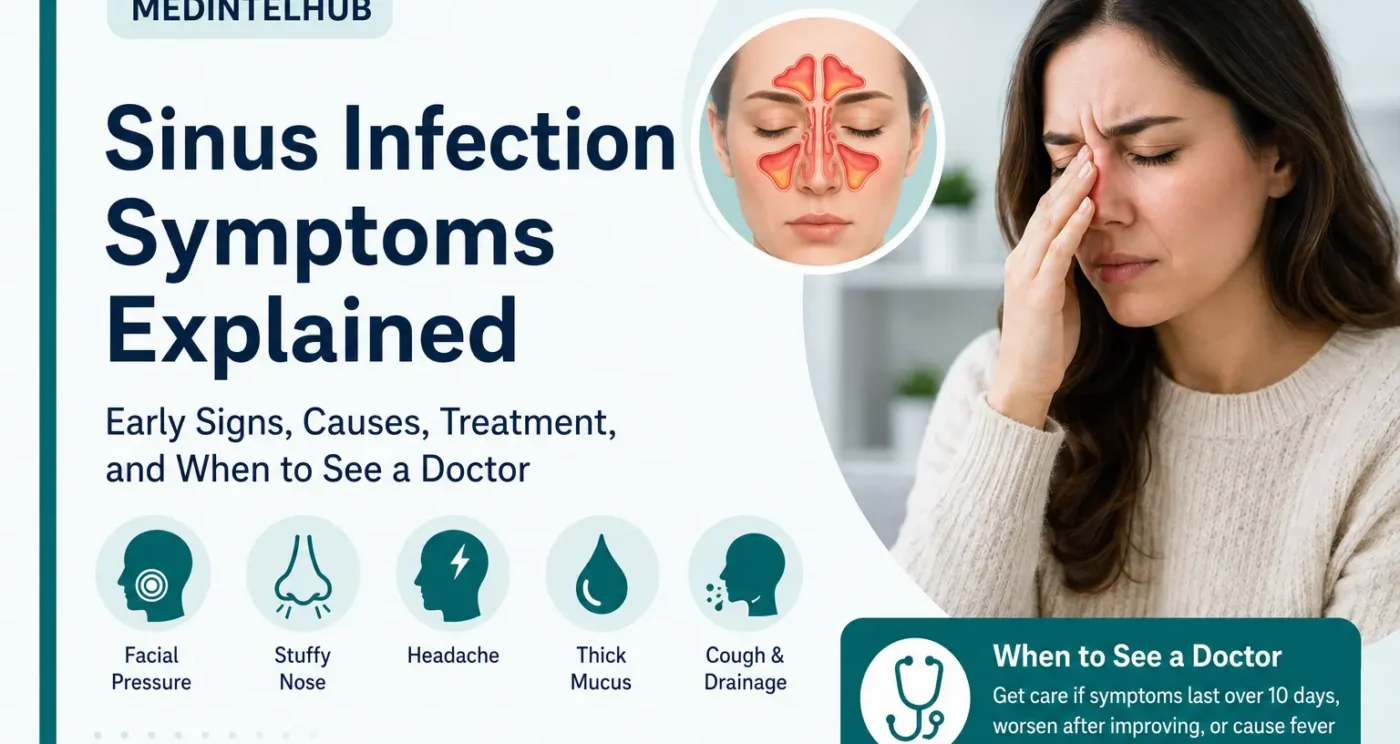
A sinus infection often starts in a way that feels completely ordinary. Your nose gets stuffy, your head feels heavy, and there may be pressure across your cheeks or forehead. Maybe you have a cough that gets worse at night or mucus draining into the back of your throat.
At first, it can be difficult to tell whether you have a cold or something involving the sinuses. In fact, most short-term sinus infections begin with a virus, not bacteria. That means antibiotics usually aren’t the first thing someone needs.
What doctors pay closer attention to is how the illness behaves over time. Symptoms that hang around for more than 10 days without getting better, become unusually severe, or improve and then suddenly worsen are more suggestive of a bacterial sinus infection.
Most cases clear without serious problems. Still, sinus infections sit close to the eyes and brain, so certain symptoms—such as swelling around an eye, vision changes, confusion, a severe worsening headache, or a stiff neck—shouldn’t be ignored.
What Is a Sinus Infection?
A sinus infection is usually called sinusitis or rhinosinusitis.
Your sinuses are small, air-filled spaces around the nose, cheeks, forehead, and eyes. They normally make mucus that drains through small openings into the nasal passages.
When the lining of those spaces becomes swollen, drainage can slow down or become blocked. Mucus then builds up, and that can leave you feeling congested, pressured, or achy.
Viruses are the most common trigger for acute sinusitis. Bacteria sometimes become involved later. Allergies, nasal polyps, structural problems inside the nose, and other conditions are more likely to play a role when symptoms keep returning or continue for months.
What Are the Most Common Sinus Infection Symptoms?
Sinusitis doesn’t look exactly the same in everyone.
Some people mainly notice pressure and congestion. Others are bothered more by drainage or a cough.
Common symptoms include:
- A blocked or stuffy nose
- Runny nose
- Thick nasal mucus
- Pressure or pain in the cheeks or forehead
- Headache
- Postnasal drip
- Cough
- Sore or irritated throat
- Reduced sense of smell
- Bad breath
- Fatigue
- Ear pressure
- Upper tooth discomfort
- Fever in some cases
You don’t need to have all of these symptoms to have sinusitis.
What Are the Early Signs of a Sinus Infection?
The early stages usually look a lot like a cold.
You may notice congestion, nasal drainage, pressure around the face, a mild headache, cough, or a feeling that mucus is constantly running down the back of your throat.
At this point, there often isn’t a reliable way to tell whether the sinuses are simply inflamed from a viral illness or whether a bacterial infection will eventually develop.
That’s why doctors generally don’t diagnose a bacterial sinus infection just because someone has been sick for two or three days.
The timeline becomes more useful later.
What Does Sinus Pressure Feel Like?
Sinus pressure is often described as fullness, heaviness, tenderness, or an ache behind the face.
It may be felt:
- Across the forehead
- Around the bridge of the nose
- Under the eyes
- In the cheeks
- Behind or around the eyes
- In the upper jaw or teeth
Some people notice it more when they bend forward.
Pressure alone doesn’t tell you whether the infection is viral or bacterial. Even an ordinary cold can cause significant sinus pressure for several days.
Can a Sinus Infection Cause a Headache?
Yes.
Inflamed or blocked sinuses can contribute to pain across the forehead, cheeks, or face.
But there is an important catch: not every headache that feels like a “sinus headache” is caused by sinusitis.
Migraine, for example, can cause facial pressure, nasal symptoms, headache, nausea, and sensitivity to light. People who repeatedly experience severe “sinus headaches” without much congestion or drainage may benefit from having the diagnosis reconsidered rather than repeatedly treating the problem as an infection.
Can Sinusitis Cause Tooth Pain?
It can.
The roots of the upper teeth sit close to the maxillary sinuses, which are located inside the cheeks. When those sinuses become inflamed, pressure can sometimes feel as though it is coming from the teeth.
Sinus-related tooth discomfort is more likely to affect several upper teeth rather than one isolated tooth.
Pain that stays focused around a single tooth—especially with gum swelling or pain when biting—may point toward a dental problem instead.
Can Sinusitis Make Your Ears Feel Blocked?
Yes.
The nose, throat, sinuses, and middle ears are closely connected. Swelling in the upper respiratory tract can interfere with normal pressure equalization in the ears.
That may cause:
- Fullness
- Popping
- Mild discomfort
- Temporarily muffled hearing
Severe ear pain, drainage from the ear, or significant hearing loss deserves its own medical evaluation.
Does Green or Yellow Mucus Mean You Need Antibiotics?
No.
Mucus color is one of the easiest things to misinterpret.
Yellow or green mucus can appear during an ordinary viral cold. The color can change as immune cells and other substances collect in nasal secretions.
So this:
green mucus = bacterial infection = antibiotics
is not a reliable rule.
Doctors pay more attention to how long symptoms have lasted, whether they’re getting better or worse, how high the fever is, and whether significant facial pain is present.
Can a Sinus Infection Cause Fever?
Yes, but fever isn’t always present.
A mild fever can occur during a viral respiratory illness.
A higher fever becomes more concerning for bacterial sinusitis when it occurs alongside more severe symptoms.
One pattern clinicians watch for is a fever of around 102°F (39°C) or higher with significant facial pain or thick, pus-like nasal drainage lasting several consecutive days.
Even then, the entire clinical picture matters.
Can Sinusitis Cause a Cough?
Absolutely.
A lot of sinus-related coughing comes from postnasal drip.
Instead of draining forward through the nose, mucus runs down the back of the throat. That can trigger coughing, throat clearing, or irritation.
People often notice the cough more:
- At night
- After lying down
- First thing in the morning
A lingering cough can continue even after the worst of the congestion has started to improve.
Can a Sinus Infection Cause a Sore Throat?
Yes.
Postnasal drainage can irritate the throat and leave it feeling scratchy or sore.
A sore throat by itself, however, doesn’t point specifically to sinusitis. Colds, flu, COVID-19, strep throat, allergies, and other conditions can all cause throat symptoms.
Can a Sinus Infection Affect Your Sense of Smell?
It can.
When the inside of the nose becomes swollen or blocked, odors have a harder time reaching the receptors involved in smell.
You may notice that food seems bland or that you can’t smell as well as usual.
This can happen with short-term sinusitis, but persistent loss of smell is particularly associated with chronic sinus disease and nasal polyps.
If your sense of smell doesn’t return after the rest of the illness has resolved, it’s worth bringing up with a healthcare professional.
This is probably the most important distinction in the entire article.
Most acute sinus infections are viral.
Bacterial sinus infections are much less common.
| Pattern | More Typical of Viral Illness | More Suggestive of Bacterial Sinusitis |
|---|---|---|
| First several days | Very common | Possible |
| Symptoms gradually improving | Common | Less typical |
| Symptoms >10 days without improvement | Less typical | More concerning |
| High fever + significant facial pain | Can occur | More concerning |
| Green/yellow mucus | Can occur | Can occur |
| Better, then clearly worse again | Less typical | More suggestive |
CDC clinical guidance estimates that roughly 90% to 98% of acute rhinosinusitis cases are viral.
CDC: Adult Outpatient Antibiotic Guidance
How Can Doctors Tell When Sinusitis May Be Bacterial?
There isn’t one perfect symptom.
Instead, doctors often look for one of three patterns.
Symptoms Don’t Improve After About 10 Days
A cold normally begins turning a corner before this point.
If congestion, drainage, facial pressure, or other symptoms continue beyond roughly 10 days with no meaningful improvement, bacterial sinusitis becomes more likely.
Symptoms Are Severe From the Beginning
Another concerning pattern is several days of high fever with pronounced facial pain or thick purulent drainage.
You Get Better—Then Worse Again
This pattern is sometimes called double worsening.
For example, you might feel sick for five days, begin to recover, and then suddenly develop stronger facial pressure, worsening congestion, fever, or a heavier cough.
That second wave makes a bacterial complication more plausible.
Is “Double Worsening” the Same as a Second Cold?
Not necessarily.
It can feel like you’ve caught another illness because you may genuinely start feeling better before symptoms return.
Clinicians use the overall timing and symptom pattern to decide whether bacterial sinusitis has become more likely.
It isn’t something you need to diagnose yourself. The important point is that getting distinctly worse after initial improvement is a good reason to contact a healthcare professional.
Sinus Infection vs. a Common Cold
Early on, there may be almost no difference.
Both can cause:
- Congestion
- Runny nose
- Cough
- Sore throat
- Headache
- Facial pressure
- Fatigue
- Colored nasal mucus
What separates them is often the course of the illness.
A viral cold usually begins improving within about a week.
Symptoms that refuse to improve past 10 days—or get significantly worse after beginning to improve—deserve another look.
Sinus Infection vs. Allergies
Allergies can mimic sinusitis surprisingly well.
They can cause congestion, runny nose, pressure, postnasal drip, and reduced smell.
You’re more likely to suspect allergies when the symptoms also include:
- Frequent sneezing
- Itchy nose
- Itchy or watery eyes
- Symptoms tied to pollen, pets, dust, or another trigger
- Symptoms that return during the same season each year
Allergies can also contribute to sinus problems by keeping the lining of the nose swollen for long periods.
Sinus Infection vs. COVID or Flu
COVID-19 and flu can both cause symptoms that overlap with sinusitis.
These may include congestion, headache, cough, sore throat, fever, and fatigue.
Flu often brings more prominent body aches, fever, chills, and sudden exhaustion. COVID can vary considerably from person to person.
Symptoms alone don’t always provide a reliable answer.
Testing may make sense when COVID or influenza is possible, particularly if the result would affect treatment or decisions about protecting people around you.
How Long Does a Sinus Infection Last?
The answer depends on what type you’re dealing with.
Acute Sinusitis
Acute sinusitis lasts less than four weeks. Many viral cases start improving well before that.
Chronic Sinusitis
Chronic rhinosinusitis lasts 12 weeks or longer.
That’s a very different situation from having a cold that simply hangs around for an extra few days.
What Is Chronic Sinusitis?
Chronic sinusitis isn’t just “an infection that never went away.”
Long-term sinus symptoms often involve persistent inflammation rather than an ongoing bacterial infection.
People with chronic sinusitis may have:
- Constant congestion
- Thick drainage
- Postnasal drip
- Reduced smell
- Facial pressure
- Cough
- Fatigue
Possible contributors include nasal polyps, allergies, structural narrowing inside the nose, and certain immune or mucus-clearing disorders.
Current ENT guidance recommends confirming chronic rhinosinusitis with objective signs of inflammation rather than diagnosing it only from symptoms.
How Is a Sinus Infection Diagnosed?
For most uncomplicated cases, the diagnosis doesn’t require fancy testing.
A healthcare professional may ask:
- When did the symptoms start?
- Are they improving?
- Did you improve and then get worse again?
- Is the pain mostly on one side?
- Have you had a fever?
- Do you have allergies?
- Have you had repeated sinus infections before?
They may also examine the nose, throat, ears, eyes, and face.
The story of the illness is often just as useful as what the nose looks like during the exam.
Do You Need a CT Scan?
Usually not for a straightforward acute sinus infection.
Routine imaging isn’t recommended simply to confirm ordinary acute sinusitis.
A CT scan becomes more useful when doctors are concerned about:
- Chronic symptoms
- Repeated infections
- Structural problems
- Complications
- A diagnosis that remains unclear
- Planning for sinus surgery
Avoiding unnecessary imaging also prevents harmless anatomical variations from being mistaken for the cause of symptoms.
How Is a Sinus Infection Treated?
Treatment depends on what’s causing it.
For the large majority of acute viral cases, care is aimed at making the person more comfortable while the infection runs its course.
That may include:
- Fluids
- Rest
- Saline nasal spray or rinses
- Warm compresses
- Appropriate pain medication
- Intranasal steroid sprays in selected people
Not everyone needs every treatment.
And some medicines that are sold over the counter aren’t appropriate for people with certain health conditions, so a pharmacist or clinician can be useful if you’re unsure.
Do Sinus Infections Need Antibiotics?
Most do not.
Antibiotics target bacteria. They don’t shorten a viral sinus infection.
Taking an antibiotic when it isn’t necessary can lead to side effects such as diarrhea or allergic reactions, and it also contributes to antibiotic resistance.
Even when acute bacterial sinusitis is suspected, immediate antibiotics aren’t always required.
Updated adult sinusitis guidance supports watchful waiting for many uncomplicated cases when the person can be followed reliably.
AAO-HNS: Adult Sinusitis Clinical Practice Guideline
What Does Watchful Waiting Mean?
It sounds passive, but it isn’t.
Watchful waiting means controlling symptoms and giving the illness a little more time while monitoring closely for improvement or deterioration.
If the person starts recovering, an antibiotic may never be needed.
If symptoms continue or worsen, treatment can be reconsidered.
This approach makes sense only when the illness is uncomplicated and follow-up is available.
Which Antibiotic Is Commonly Used for Bacterial Sinusitis?
When an antibiotic is appropriate for uncomplicated bacterial sinusitis in an adult, current U.S. guidance commonly uses amoxicillin with or without clavulanate as a first-line option.
For many adults, the treatment course is around 5 to 7 days.
That does not mean everyone with sinus symptoms should take amoxicillin.
Allergies, kidney function, pregnancy, previous antibiotic exposure, other medications, and local resistance patterns can all change the choice.
Never use someone else’s prescription or leftover antibiotics from a previous illness.
Can Saline Rinses Help?
Many people find them useful.
A saline rinse can loosen thick secretions and wash mucus and allergens from the nasal passages.
But there’s an important safety detail that deserves more attention than it usually gets:
Do not use untreated tap water for nasal irrigation.
CDC recommends using:
- Distilled water
- Sterile water
- Tap water that has been boiled and allowed to cool
CDC: How to Safely Rinse Your Sinuses
Rare but serious infections have occurred when unsafe water was introduced deep into the nasal passages.
The rinse bottle or neti pot should also be cleaned and allowed to dry according to the manufacturer’s instructions.
What About Nasal Steroid Sprays?
Intranasal corticosteroid sprays can reduce inflammation inside the nose.
They can be particularly useful when symptoms are associated with:
- Allergies
- Chronic sinusitis
- Nasal polyps
They aren’t instant decongestants. Their benefit often builds with regular use.
If you’re uncertain about how to use one correctly, ask a clinician or pharmacist. Technique matters.
Are Decongestant Sprays Safe?
Some are useful for a short time.
The problem comes when products such as oxymetazoline are used day after day.
Prolonged use can trigger rebound congestion, meaning the nose feels even more blocked when the medicine wears off.
For that reason, these sprays are typically limited to only a few consecutive days unless a clinician gives different instructions.
Oral decongestants also aren’t ideal for everyone, particularly people with certain heart conditions, high blood pressure, pregnancy, or medication interactions.
What Can You Do at Home?
If symptoms are mild and there are no warning signs, simple measures may be enough.
You might try:
- Drinking enough fluids
- Getting extra rest
- Applying a warm compress over the face
- Using saline spray
- Using safe nasal irrigation
- Running a humidifier
- Taking an appropriate pain reliever if you can use one safely
These measures don’t “kill” a sinus infection. Their purpose is to make the recovery period easier.
When Should You See a Doctor?
It makes sense to get medical advice when:
- Symptoms last more than about 10 days without improvement
- You start feeling better and then become clearly worse
- Facial pain is severe
- Headache is unusually severe
- Fever continues for several days
- You keep getting sinus infections
- Symptoms are interfering significantly with sleep or daily life
A new medical problem also doesn’t have to wait until your next routine checkup. MedIntelHub’s guide to what actually gets checked during an annual physical explains the difference between preventive visits and appointments for new symptoms.
Can a Sinus Infection Be Evaluated Through Telehealth?
Sometimes.
A clinician can learn a lot simply by asking about the timeline:
- How long have you been sick?
- Did you improve before getting worse?
- How high has the fever been?
- Where is the facial pain?
- Are you having eye symptoms?
- What treatments have you already tried?
For uncomplicated symptoms, that may be enough to decide what to do next.
An in-person visit becomes more important when someone needs a detailed examination of the nose, ears, eyes, face, or throat—or when there are signs that the problem may be more complicated.
MedIntelHub’s guide to telehealth in primary care explains when a virtual visit can be useful and when hands-on evaluation is more appropriate.
When Should You See an ENT?
An ENT, or ear, nose, and throat specialist, may become useful when:
- Symptoms continue for 12 weeks or longer
- Sinus infections keep coming back
- You have persistent smell loss
- Nasal polyps are suspected
- Structural blockage may be present
- Standard treatment isn’t working
- Surgery is being considered
If you reach that point, keeping track of previous medications, symptom dates, allergy history, and imaging can make the visit more productive.
MedIntelHub’s guide on preparing questions before a specialist appointment may help.
Can a Sinus Infection Spread to the Eye?
Rarely, yes.
The sinuses are located very close to the eye sockets. An infection can occasionally spread into the tissues around an eye.
Seek urgent medical attention for:
- Swelling around an eye
- Redness around an eye
- Pain with eye movement
- Double vision
- Reduced vision
- Difficulty moving the eye normally
Those aren’t symptoms to manage with steam or a nasal rinse at home.
Can a Sinus Infection Spread to the Brain?
This is uncommon, but it can happen.
Rare complications include infections involving tissues around the brain, including meningitis.
The possibility shouldn’t make you panic over ordinary sinus pressure. Serious complications are unusual.
What matters is recognizing the symptoms that don’t belong to a routine sinus infection.
When Is a Sinus Infection an Emergency?
Get urgent or emergency care if sinus symptoms occur with:
- New swelling or redness around the eye
- Double vision
- Loss or reduction of vision
- Confusion
- Severe or rapidly worsening headache
- Significant forehead swelling
- Stiff neck
- Other new neurological symptoms
- A rapidly worsening overall illness
When these symptoms appear, the concern is no longer simply whether the infection is viral or bacterial. Doctors need to rule out spread beyond the sinuses.
Frequently Asked Questions
What are the first signs of a sinus infection?
Congestion, runny nose, facial pressure, postnasal drip, headache, cough, and reduced smell are common early symptoms.
At first, sinusitis may feel exactly like a regular cold.
How can I tell whether my sinus infection is bacterial?
You usually can’t tell from one symptom.
Doctors become more suspicious of bacterial sinusitis when symptoms last more than 10 days without improving, are severe from the beginning, or improve and then become worse again.
Does green mucus mean the infection is bacterial?
No.
Viral illnesses can also produce yellow or green nasal mucus.
Color alone isn’t a reason to prescribe antibiotics.
Can you have a sinus infection without fever?
Yes.
Many people with sinusitis never develop a noticeable fever.
Can sinusitis make your teeth hurt?
Yes.
Pressure in the maxillary sinuses can feel like pain in the upper teeth.
Pain isolated to one tooth, however, may have a dental cause.
Is sinusitis contagious?
Sinusitis itself is inflammation of the sinuses.
The viruses that frequently cause acute sinusitis are contagious, but you don’t usually “catch a sinus infection” from another person in the same way you catch a cold.
Many viral cases begin improving within roughly 7 to 10 days.
Symptoms lasting beyond 10 days without improvement deserve another look.
Does every bacterial sinus infection need antibiotics?
No.
Some uncomplicated cases can initially be managed with watchful waiting when follow-up is available.
Can I take leftover antibiotics?
No.
The medicine could be unnecessary, inappropriate for the bacteria involved, or an incomplete course.
Use antibiotics only when prescribed for the current illness.
Are neti pots safe?
They can be, provided they’re used correctly.
Use distilled, sterile, or previously boiled and cooled water and clean the device properly after use.
Never rinse your sinuses with untreated tap water.
What is the difference between acute and chronic sinusitis?
Acute sinusitis is short term.
Chronic rhinosinusitis lasts 12 weeks or longer and often involves persistent inflammation rather than simply one long bacterial infection.
When should I worry about a sinus infection?
Eye swelling, vision problems, confusion, stiff neck, a severe worsening headache, forehead swelling, or other neurological symptoms warrant urgent medical attention.
Conclusion
A sinus infection can make your whole face feel heavy, but most cases aren’t caused by bacteria.
Congestion, facial pressure, thick drainage, headache, postnasal drip, cough, and reduced smell are all common. During the first few days, these symptoms are often part of a viral respiratory infection and will begin improving on their own.
The timeline tells you more than mucus color does.
Symptoms that remain for more than 10 days without improvement, become unusually severe, or get better and then worsen again are more suggestive of bacterial sinusitis.
Even then, antibiotics aren’t automatic. Many uncomplicated cases can be observed first, while others require antibiotic treatment based on symptoms and clinical assessment.
Simple measures—fluids, rest, warm compresses, saline, safe nasal irrigation, and appropriate symptom medicines—can make recovery easier.
And if you’re using a neti pot, remember the water rule: distilled, sterile, or boiled and cooled water only.
Most sinus infections stay confined to the nose and sinuses. Rare complications can involve the tissues around an eye or, even less commonly, structures around the brain. Eye swelling, vision changes, confusion, a stiff neck, or a severe rapidly worsening headache should therefore be treated differently from ordinary sinus pressure.
When in doubt, pay less attention to whether the mucus is green and more attention to how sick you feel, how long you’ve been sick, and whether you’re getting better or worse.
Resources
Centers for Disease Control and Prevention — Sinus Infection Basics
A patient-focused overview of sinusitis symptoms, causes, treatment, and when antibiotics may or may not be useful.
CDC — Adult Antibiotic Guidance
Clinical information on viral versus bacterial rhinosinusitis and appropriate antibiotic use.
CDC: Outpatient Clinical Care for Adults
American Academy of Otolaryngology–Head and Neck Surgery
Current guidance on diagnosing and treating adult sinusitis, including watchful waiting, antibiotics, nasal saline, and chronic sinusitis.
AAO-HNS: Adult Sinusitis Clinical Practice Guideline
MedlinePlus — Sinusitis
Patient information covering symptoms, treatment, different types of sinusitis, and possible complications.
CDC — Safe Sinus Rinsing
Important safety information for neti pots and other nasal-rinsing devices.
CDC: How to Safely Rinse Your Sinuses
MedIntelHub — Understanding Your Annual Physical
Understanding Your Annual Physical: What Actually Gets Checked
MedIntelHub — Telehealth in 2026
Telehealth in 2026: How Virtual Visits Are Changing Primary Care
MedIntelHub — Preparing for a Specialist Appointment
How to Prepare Questions Before a Specialist Appointment
MedIntelHub — Editorial Policy
Editorial Disclaimer
This article is intended for general education and should not be used to diagnose a sinus infection or determine whether antibiotics are appropriate for an individual.
Colds, allergies, COVID-19, influenza, migraine, dental problems, nasal polyps, and other conditions can produce symptoms that resemble sinusitis. A healthcare professional may need to consider the timing of symptoms, examination findings, medical history, medications, and other factors before deciding on a diagnosis.
Do not take leftover antibiotics or medication prescribed to someone else. Antibiotic choice and treatment duration depend on factors such as allergies, age, pregnancy, kidney function, previous antibiotic exposure, other medical conditions, and local resistance patterns.
For nasal irrigation, use distilled, sterile, or appropriately boiled and cooled water.
Seek urgent medical attention for swelling around an eye, vision changes, confusion, severe or rapidly worsening headache, forehead swelling, stiff neck, or other concerning neurological symptoms.

David Bennett
David Bennett is an author at MedIntelHub, where he creates clear, practical, and well-researched content about healthcare, medical billing, insurance, and patient education. His goal is to make complex healthcare topics easier for readers to understand and use in everyday situations. David emphasizes accuracy, transparency, and reliable sourcing, using information from trusted organizations and official healthcare resources whenever possible. Content published by David is intended for educational purposes and should not replace advice from qualified medical, legal, or healthcare professionals.