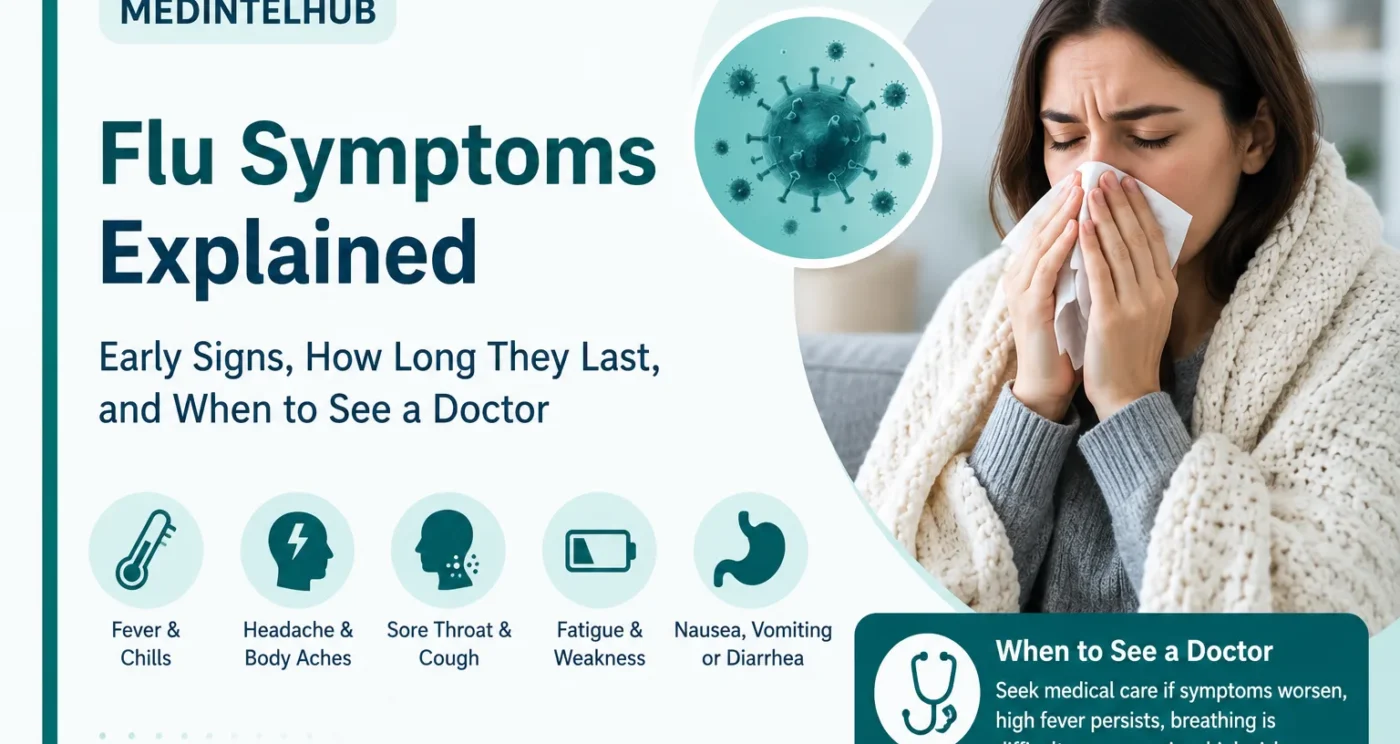
Flu symptoms can appear quickly. A person may feel relatively well in the morning and develop chills, body aches, fatigue, headache, cough, or fever later that day.
Influenza, commonly called the flu, is a contagious respiratory illness caused by influenza viruses. Illness can range from mild to severe, and some people develop complications that require medical care. Common symptoms include fever or feeling feverish, chills, cough, sore throat, runny or stuffy nose, muscle or body aches, headache, and fatigue. Vomiting and diarrhea can also occur, particularly in children. Not everyone with influenza develops a fever.
Flu symptoms can overlap with the common cold, COVID-19, and other respiratory infections. Because of that overlap, symptoms alone cannot always tell you which virus is causing the illness. Influenza testing and clinical evaluation may sometimes help identify the cause.
Understanding how flu symptoms usually begin, how long they may last, and which warning signs require medical attention can make it easier to decide when home care may be reasonable and when medical evaluation is needed.
What Are the Most Common Flu Symptoms?
Influenza can affect both the respiratory system and the rest of the body.
Common flu symptoms include:
- Fever or feeling feverish
- Chills
- Cough
- Sore throat
- Runny or stuffy nose
- Muscle aches
- Body aches
- Headache
- Fatigue or weakness
Some people also experience nausea, vomiting, or diarrhea. These gastrointestinal symptoms occur more often in children than adults.
One feature that often separates influenza from a mild common cold is how quickly symptoms develop.
Cold symptoms generally appear more gradually, while flu symptoms often begin abruptly and are more likely to include significant body aches, chills, fatigue, headache, and fever.
What Are the Early Signs of the Flu?
The early symptoms of flu may develop over a relatively short period.
CDC clinical guidance describes uncomplicated influenza as typically beginning abruptly with symptoms such as:
- Fever
- Chills
- Muscle aches
- Headache
- General weakness or malaise
- Dry cough
- Sore throat
- Runny or stuffy nose
Not everyone experiences the same symptoms or the same level of severity.
Some people first notice unusual tiredness and body aches. Others may develop chills, headache, cough, or fever first.
A sudden combination of several symptoms may suggest influenza, but no single symptom can confirm that someone has the flu.
Can You Have the Flu Without a Fever?
Yes.
Although fever is common with influenza, you can have the flu without developing a fever.
CDC specifically notes that many people with influenza virus infection do not have a fever, particularly older adults and people with weakened immune systems. Symptoms may also present differently in frail or older patients.
For this reason, the absence of fever does not rule out influenza.
Someone with sudden fatigue, body aches, headache, cough, or other compatible respiratory symptoms may still have the flu even when their temperature is normal.
Flu Symptoms in Adults
Flu in adults often causes both respiratory symptoms and whole-body symptoms.
Possible symptoms include:
- Sudden fever or chills
- Significant fatigue
- Muscle and body aches
- Headache
- Dry or persistent cough
- Sore throat
- Nasal congestion or runny nose
- Reduced appetite
- General weakness
The severity varies considerably.
One person may experience relatively mild illness, while another may feel too weak or uncomfortable to carry out normal daily activities for several days.
Influenza can also worsen existing health conditions. For example, people with asthma or other chronic lung diseases can experience worsening respiratory symptoms during influenza infection. MedlinePlus notes that flu can aggravate chronic medical conditions and can lead to complications such as pneumonia.
Flu Symptoms in Children
Children can develop many of the same flu symptoms as adults, including:
- Fever
- Chills
- Cough
- Sore throat
- Headache
- Fatigue
- Body aches
- Runny or stuffy nose
Vomiting and diarrhea occur more frequently in children with influenza than in adults.
Young children may also have difficulty explaining how they feel.
Parents and caregivers may instead notice:
- Unusual tiredness
- Reduced activity
- Irritability
- Poor appetite
- Drinking less than usual
- Changes in normal behavior
Children younger than 5 years old, particularly those younger than 2, are at increased risk of potentially serious flu complications.
Does the Flu Cause Vomiting or Diarrhea?
It can.
Vomiting and diarrhea may occur with influenza, especially in children, although influenza primarily affects the respiratory system.
This is also why the term “stomach flu” can be misleading.
What people commonly call stomach flu is usually gastroenteritis, not influenza. Influenza is caused by influenza viruses and primarily affects the nose, throat, and lungs.
Regardless of the cause, severe or persistent vomiting or diarrhea can lead to dehydration and may require medical attention.
Flu Symptoms vs. Cold Symptoms
The flu and common cold are both respiratory illnesses, but different viruses cause them.
Their symptoms can overlap, although the typical pattern is different.
| Symptom | Common Cold | Flu |
|---|---|---|
| Onset | Usually gradual | Often sudden |
| Fever | Rare | Common, but not always present |
| Body aches | Usually mild | Common and sometimes severe |
| Chills | Less common | Fairly common |
| Fatigue | Sometimes | Common |
| Headache | Less common | Common |
| Sneezing | Common | Sometimes |
| Stuffy nose | Common | Sometimes |
| Cough | Usually mild to moderate | Common and can be more severe |
CDC notes that influenza symptoms typically begin more abruptly than symptoms of a common cold.
Still, symptoms alone may not always be enough to determine which infection a person has.
Flu Symptoms vs. COVID-19 Symptoms
Influenza and COVID-19 are different diseases caused by different viruses, but they can cause many of the same symptoms.
Possible overlapping symptoms include:
- Fever
- Chills
- Cough
- Sore throat
- Fatigue
- Headache
- Body aches
- Nasal congestion
Other respiratory viruses can produce similar symptoms as well.
Because of this overlap, it may not be possible to determine whether someone has influenza, COVID-19, or another respiratory infection simply by how they feel.
CDC explains that several tests can detect influenza viruses, although clinicians may also diagnose suspected flu based on symptoms and other clinical circumstances.
Testing may be particularly helpful when the result could affect treatment decisions.
How Long Do Flu Symptoms Last?
The duration of flu symptoms varies from person to person.
CDC states that symptoms of uncomplicated influenza generally resolve within 3 to 7 days for most people.
However, cough and fatigue or malaise can persist for more than two weeks, particularly in older adults and people with chronic lung disease.
A general flu timeline may look like this:
First Few Days
Symptoms can begin suddenly and may include fever, chills, body aches, headache, fatigue, cough, and sore throat.
Days 3–7
For many people with uncomplicated influenza, fever and other major symptoms begin improving.
After One Week
Many people feel considerably better, although cough, tiredness, or weakness may remain.
Two Weeks or Longer
A lingering cough or fatigue can continue after the main illness has resolved in some people.
This timeline is only a general pattern.
Symptoms that are severe, progressively worsening, or improve and then suddenly return deserve additional attention.
Why Can a Cough Last After Other Flu Symptoms Improve?
Respiratory symptoms do not always disappear when fever and body aches resolve.
CDC notes that cough and malaise can persist for more than two weeks after otherwise uncomplicated influenza.
A lingering cough can therefore occur during recovery.
However, a cough that improves and then becomes worse—especially if accompanied by new fever, difficulty breathing, chest discomfort, or significant weakness—can be a warning sign of a complication and should not automatically be assumed to be part of normal recovery.
What Complications Can the Flu Cause?
Most people recover from influenza without serious complications.
However, flu can occasionally cause significant illness.
Possible complications include:
- Pneumonia
- Bronchitis
- Sinus infections
- Ear infections
- Worsening of asthma or other chronic conditions
- Inflammation of the heart, known as myocarditis
- Inflammation of the brain, known as encephalitis
- Muscle inflammation or muscle injury
MedlinePlus notes that some influenza complications can be serious or even life-threatening.
People at increased risk of complications should contact a healthcare professional early when flu symptoms develop.
Who Is at Higher Risk for Flu Complications?
Anyone can become seriously ill with influenza, but certain people have a higher risk of developing complications.
Higher-risk groups include:
- Adults age 65 and older
- Children younger than 5, especially those younger than 2
- Pregnant people
- People with asthma
- People with chronic lung disease
- People with diabetes
- People with heart disease
- People with certain neurologic conditions
- People with certain blood disorders
- People with weakened immune systems
- People with certain other chronic health conditions
Young children deserve particular attention. CDC notes that children younger than 5—especially those younger than 2—are at increased risk of potentially serious flu complications.
People at higher risk who develop suspected flu should contact a healthcare professional early because antiviral treatment may be recommended.
When Should You See a Doctor for Flu Symptoms?
Many otherwise healthy people with mild influenza recover without needing medical care.
CDC notes that most people with mild flu do not require medical attention or antiviral medication.
However, you should consider contacting a healthcare professional early if you:
- Have a higher risk of flu complications
- Are pregnant
- Are age 65 or older
- Have a young child with flu symptoms
- Have a chronic health condition
- Have a weakened immune system
- Feel very sick
- Have symptoms that are worsening instead of improving
- Are concerned about your symptoms
People with new or concerning symptoms do not need to wait for their next preventive appointment.
MedIntelHub’s guide to annual physicals explains that a routine preventive visit and an appointment for a specific new medical problem are not always the same type of visit.
Understanding Your Annual Physical: What Actually Gets Checked
Emergency Warning Signs of Flu in Adults
Some symptoms require prompt medical attention.
CDC identifies emergency warning signs in adults that include:
- Difficulty breathing or shortness of breath
- Persistent pain or pressure in the chest or abdomen
- Persistent dizziness
- Confusion or inability to stay alert
- Seizures
- Not urinating
- Severe muscle pain
- Severe weakness or unsteadiness
- Fever or cough that improves and then returns or worsens
- Worsening of an existing chronic medical condition
This list is not exhaustive.
Seek urgent medical attention for symptoms that are severe, rapidly worsening, or otherwise concerning.
Emergency Warning Signs of Flu in Children
Emergency warning signs can look different in children.
CDC advises seeking immediate medical care for signs such as:
- Fast breathing or difficulty breathing
- Bluish lips or face
- Ribs pulling inward with each breath
- Chest pain
- Severe muscle pain
- Significant dehydration
- No urine for about 8 hours
- Dry mouth or no tears when crying
- Lack of alertness or interaction when awake
- Seizures
- Fever above 104°F that is not controlled by fever-reducing medicine
- Any fever of 100.4°F or higher in a baby younger than 12 weeks
- Fever or cough that improves and then returns or worsens
Parents and caregivers should seek care whenever a child’s symptoms appear severe or concerning, even if a particular symptom is not listed above.
Can Flu Symptoms Improve and Then Get Worse Again?
Yes, and that pattern deserves attention.
CDC includes a fever or cough that improves but then returns or worsens among warning signs of respiratory-virus complications.
For example, someone may initially appear to recover and later develop a new fever, worsening cough, shortness of breath, or significant weakness.
This pattern does not automatically mean that a serious complication has occurred, but it warrants medical evaluation rather than simply assuming that the flu is lingering.
How Is the Flu Diagnosed?
Symptoms can suggest influenza, but they do not always confirm it.
Several tests are available to detect influenza viruses.
Depending on the clinical situation, a healthcare professional may order a flu test or make a diagnosis based on symptoms, examination, local flu activity, and other information.
A negative influenza test does not always completely rule out flu. Similarly, a positive result does not exclude the possibility of another illness occurring at the same time. FDA guidance emphasizes that laboratory results should be interpreted together with clinical evaluation.
Testing may be especially useful when the diagnosis could change treatment decisions.
How Are Flu Symptoms Treated?
Many people with uncomplicated influenza recover with supportive care.
This may include:
- Getting adequate rest
- Drinking enough fluids
- Using appropriate over-the-counter medicines for symptom relief when suitable
- Monitoring symptoms for improvement or warning signs
- Avoiding close contact with other people while sick
FDA notes that many people with uncomplicated influenza use rest, fluids, and over-the-counter medicines to help relieve symptoms.
Antibiotics do not treat influenza, because influenza is caused by a virus rather than bacteria.
Antibiotics may be prescribed when a healthcare professional diagnoses a separate bacterial infection.
Prescription antiviral medicines are available to treat influenza.
CDC states that flu antivirals can make symptoms milder and shorten the time a person is sick.
They generally work best when started within 1 to 2 days after flu symptoms begin.
Antiviral treatment is particularly important for people who:
- Are hospitalized with flu
- Have severe, complicated, or worsening illness
- Have a higher risk of serious flu complications
People in these groups should contact a healthcare professional promptly when flu is suspected.
Flu antiviral medicines are prescription drugs and are different from antibiotics.
Timing matters.
People at increased risk of complications should contact a healthcare professional early after flu symptoms begin.
CDC states that antiviral drugs provide the greatest benefit when started within the first 1 to 2 days of illness, although treatment may still be beneficial later in people with severe illness or increased risk of complications.
If you are in a higher-risk group, do not assume that you need to wait until symptoms become severe before contacting a clinician.
For otherwise healthy people with mild illness, a healthcare professional can determine whether antiviral treatment is appropriate based on symptoms, timing, risk factors, and clinical circumstances.
When Can You Return to Work, School, or Normal Activities?
CDC’s current respiratory-virus guidance recommends staying home and away from others when you are sick.
You can generally return to normal activities when, for at least 24 hours, both of these conditions are true:
- Your symptoms are improving overall.
- You have been fever-free without using fever-reducing medication.
CDC recommends taking additional precautions for the next 5 days, because it may still be possible to spread the virus after you begin feeling better.
Additional precautions may include:
- Improving ventilation
- Practicing good hand and respiratory hygiene
- Wearing a well-fitting mask
- Keeping some distance from others when possible
- Testing when appropriate
If your fever returns or your symptoms become worse after resuming normal activities, stay home again and follow the same criteria before returning.
How Can You Reduce Your Risk of Flu?
Annual influenza vaccination is one of the main strategies for reducing the risk of flu and serious flu complications.
CDC recommends annual flu vaccination for everyone age 6 months and older who does not have a contraindication.
For the 2026–2027 flu season, vaccines are available for people age 6 months and older, and the vaccine composition has been updated for anticipated circulating influenza viruses.
Your vaccination needs can be reviewed during routine preventive care.
MedIntelHub’s annual physical guide explains how vaccine review can fit into a broader preventive visit.
Understanding Your Annual Physical: What Actually Gets Checked
Vaccination does not guarantee that a person will never get influenza, but CDC notes that vaccination can reduce flu illness and help reduce serious outcomes such as hospitalization.
Frequently Asked Questions
What Are the First Symptoms of the Flu?
Flu symptoms often begin suddenly.
Early symptoms may include fever or chills, body aches, headache, fatigue, cough, sore throat, and nasal symptoms.
Some people with influenza do not develop a fever.
How Do Flu Symptoms Usually Start?
Flu symptoms generally begin more abruptly than symptoms of the common cold.
Someone may develop several symptoms—such as fatigue, headache, chills, body aches, fever, and cough—over a relatively short period.
How Long Does the Flu Last?
For most people with uncomplicated influenza, the primary symptoms improve within approximately 3 to 7 days.
Cough and fatigue can persist for more than two weeks in some people.
Can You Have Flu Without a Fever?
Yes.
Not everyone with influenza develops a fever, particularly some older adults and people with weakened immune systems.
Does the Flu Cause Diarrhea?
It can.
Vomiting and diarrhea sometimes occur with influenza, particularly in children, although flu is primarily a respiratory illness.
What Is the Difference Between Flu and a Cold?
Flu symptoms typically appear more suddenly and are more likely to include significant body aches, chills, headache, fatigue, and fever.
Cold symptoms tend to develop more gradually and are more commonly associated with sneezing and nasal congestion.
Can You Tell the Difference Between Flu and COVID-19 From Symptoms?
Not reliably in every case.
The illnesses share several symptoms, and other respiratory viruses can cause similar illness. Testing and clinical evaluation may help determine the cause.
When Should You See a Doctor for Flu Symptoms?
Contact a healthcare professional early if you are at increased risk of complications, feel very sick, have symptoms that are becoming worse, or are concerned about your illness.
Early medical contact is especially important for higher-risk patients because antiviral treatment provides the greatest benefit when started soon after symptoms begin.
When Are Flu Symptoms an Emergency?
Difficulty breathing, persistent chest or abdominal pain, confusion, seizures, severe weakness, inability to urinate, or symptoms that improve and then become worse are among warning signs that require immediate medical attention.
Children can have additional warning signs such as bluish lips or face, significant dehydration, or difficulty staying alert.
Do Antibiotics Treat the Flu?
No.
Influenza is caused by viruses, and antibiotics treat bacterial infections rather than influenza itself.
Prescription antiviral medications specifically used against influenza may be appropriate in certain circumstances.
Conclusion
Flu symptoms often appear suddenly and can affect much more than the nose and throat.
Fever or chills, cough, body aches, headache, sore throat, nasal congestion, and fatigue are among the most common symptoms. Some people—particularly children—may also experience vomiting or diarrhea, and influenza can occur without fever.
For most people with uncomplicated influenza, the main symptoms improve within several days, although cough and fatigue may continue for longer.
The pattern of symptoms matters as much as their duration. Difficulty breathing, persistent chest pain, confusion, severe weakness, dehydration, or symptoms that improve and then return or worsen should not be ignored.
People who are pregnant, older, very young, immunocompromised, or living with certain chronic medical conditions should contact a healthcare professional early when flu symptoms develop. Prescription antiviral treatment generally provides the greatest benefit when started soon after symptoms begin.
Because influenza can resemble COVID-19, the common cold, and other respiratory infections, symptoms alone cannot always identify the cause. When symptoms are severe, unusual, worsening, or associated with significant risk factors, medical evaluation is appropriate.
Resources
Centers for Disease Control and Prevention — Signs and Symptoms of Flu
CDC provides information about common flu symptoms, differences between cold and flu, complications, and emergency warning signs.
CDC: Signs and Symptoms of Flu
CDC — Clinical Signs and Symptoms of Influenza
This resource provides more detailed information about influenza presentation, fever-free flu, symptoms in children, and the usual duration of uncomplicated illness.
CDC: Clinical Signs and Symptoms of Influenza
CDC explains when prescription influenza antivirals may be recommended and why early treatment is particularly important for people at increased risk of complications.
CDC: Treating Flu With Antiviral Drugs
CDC — Respiratory Virus Guidance
CDC provides current recommendations about staying home while sick and returning to normal activities after symptoms improve.
CDC: Preventing Spread of Respiratory Viruses When Sick
FDA provides information about influenza antiviral medicines, supportive treatment, testing limitations, and situations that may require medical evaluation.
FDA: Influenza Antiviral Drugs and Related Information
MedlinePlus — Influenza
MedlinePlus provides patient-focused information about flu symptoms, complications, and the distinction between influenza and “stomach flu.”
MedIntelHub — Understanding Your Annual Physical
For more information about preventive care, vaccine review, and the difference between routine checkups and visits for new symptoms:
Understanding Your Annual Physical: What Actually Gets Checked
MedIntelHub — Editorial Policy
MedIntelHub’s Editorial Policy explains its approach to authoritative healthcare sourcing, accuracy, updates, transparency, and educational limitations.
Editorial Disclaimer
This article is provided for general educational and informational purposes only. It is not intended to diagnose influenza, recommend treatment for an individual, or replace evaluation by a qualified healthcare professional.
Flu symptoms can overlap with COVID-19, pneumonia, the common cold, and other respiratory illnesses. Symptoms, complications, testing needs, and treatment recommendations can vary based on age, pregnancy status, medical history, medications, immune status, and other individual factors.
Seek urgent medical attention for difficulty breathing, persistent chest pain or pressure, confusion, seizures, severe dehydration, severe weakness, or other symptoms that are severe or rapidly worsening.
For more information about MedIntelHub’s sourcing and editorial standards, review the MedIntelHub Editorial Policy.

David Bennett
David Bennett is an author at MedIntelHub, where he creates clear, practical, and well-researched content about healthcare, medical billing, insurance, and patient education. His goal is to make complex healthcare topics easier for readers to understand and use in everyday situations. David emphasizes accuracy, transparency, and reliable sourcing, using information from trusted organizations and official healthcare resources whenever possible. Content published by David is intended for educational purposes and should not replace advice from qualified medical, legal, or healthcare professionals.