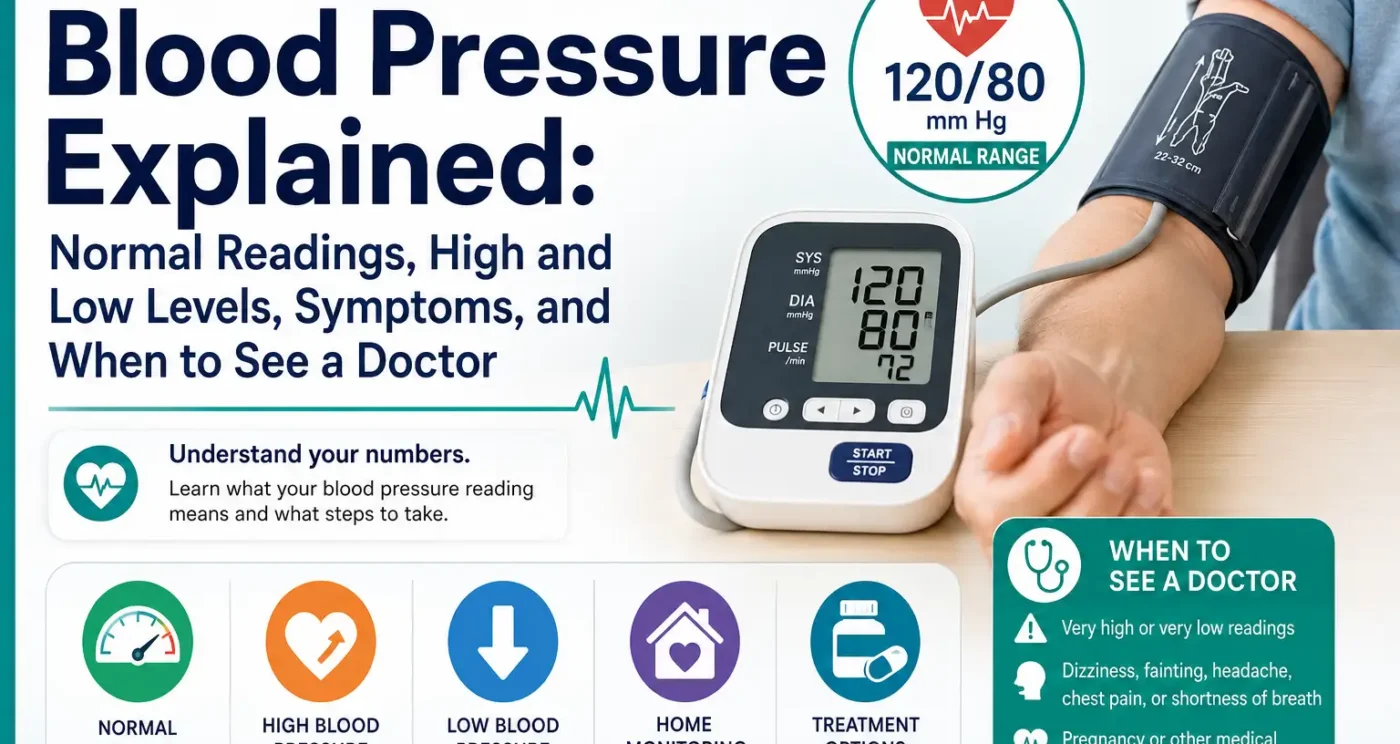
Most people have had their blood pressure checked dozens of times. The cuff tightens around the arm, two numbers appear on the screen, and a nurse or doctor writes them down.
What those numbers actually mean is not always so obvious.
A reading of 118/76 mm Hg falls within the normal range for most adults. A repeated average around 134/84 falls into the stage 1 hypertension range under current U.S. guidelines. A reading such as 88/58 may be perfectly normal for someone who feels well, but the same number could be concerning in a person who is dizzy, fainting, dehydrated, or seriously ill.
Blood pressure also moves around during the day. Exercise, caffeine, stress, pain, medications, sleep, hydration, and even the way you sit during the measurement can affect the result.
That is why healthcare professionals usually care more about a pattern of properly measured readings than one isolated number.
Current American Heart Association and American College of Cardiology guidance defines normal adult blood pressure as below 120/80 mm Hg. Hypertension begins when average blood pressure is consistently at or above 130/80 mm Hg.
At the lower end, blood pressure below about 90/60 mm Hg is commonly called hypotension. That number alone does not necessarily mean something is wrong. Symptoms and the reason for the low pressure matter.
What Is Blood Pressure?
Blood pressure describes the force of circulating blood pushing against the walls of your arteries.
Every time the heart contracts, it pushes blood into the circulation. Between beats, the heart relaxes and fills again. Those two phases produce the two numbers you see in a blood pressure reading.
A result might look like:
118/76 mm Hg
The first number is the systolic pressure. The second is the diastolic pressure.
Blood pressure is written in millimeters of mercury, or mm Hg.
What Do the Two Blood Pressure Numbers Mean?
Systolic Blood Pressure
The systolic pressure is the top number.
It reflects the pressure inside the arteries while the heart is contracting and pushing blood forward.
In a reading of 124/78, the systolic pressure is 124.
Diastolic Blood Pressure
The diastolic pressure is the bottom number.
It reflects pressure in the arteries while the heart is relaxing between beats.
In 124/78, the diastolic pressure is 78.
Both numbers count. Someone can fall into a higher blood-pressure category because the systolic number is high, the diastolic number is high, or both are high.
What Is a Normal Blood Pressure?
For most nonpregnant adults, current U.S. blood-pressure categories are:
| Category | Systolic pressure | Diastolic pressure |
|---|---|---|
| Normal | Less than 120 | and less than 80 |
| Elevated | 120–129 | and less than 80 |
| Stage 1 hypertension | 130–139 | or 80–89 |
| Stage 2 hypertension | 140 or higher | or 90 or higher |
| Severe hypertension | Higher than 180 | and/or higher than 120 |
These categories remain part of the 2025 AHA/ACC adult hypertension guideline.
The table is useful, but it should not be treated like a one-reading diagnostic test. A single result can be influenced by stress, recent exercise, caffeine, pain, poor positioning, or an incorrect cuff size.
Is 120/80 Normal?
People have used 120/80 as shorthand for “normal blood pressure” for years.
Under the current adult classification, though, normal technically means less than 120 systolic and less than 80 diastolic.
So:
118/76 = normal.
124/76 = elevated.
124/82 = stage 1 hypertension because the diastolic number has reached the 80–89 range.
That sounds surprisingly precise, but remember that a category and a diagnosis are not exactly the same thing.
One reading of 132/82 after rushing into an appointment does not automatically mean you have chronic hypertension.
Does One High Reading Mean You Have High Blood Pressure?
Usually not.
Blood pressure is sensitive to what is happening around the time it is measured.
Someone who has just climbed a flight of stairs, argued on the phone, drunk a large coffee, smoked, or sat down with a full bladder can temporarily get a higher result.
Even talking while the cuff is inflating can interfere with the measurement.
For adults without a previous hypertension diagnosis, the U.S. Preventive Services Task Force recommends confirming an elevated office result with measurements outside the clinic before treatment is started when appropriate. Home or ambulatory monitoring can help do that.
Think of one reading as a photograph.
Several properly taken readings over time give you the movie.
What Is High Blood Pressure?
High blood pressure, or hypertension, means pressure inside the arteries remains higher than recommended over time.
CDC describes hypertension in adults as blood pressure that is consistently at or above 130/80 mm Hg.
The concern is not simply that the number looks high on a monitor.
Years of increased pressure can gradually damage blood vessels and place extra strain on the heart, kidneys, brain, and eyes.
Untreated hypertension increases the risk of problems such as heart disease, stroke, kidney disease, heart failure, and other vascular complications.
Does High Blood Pressure Cause Symptoms?
Usually, no.
This is one reason hypertension can go unnoticed for years.
A person with high blood pressure may work, exercise, sleep, and feel entirely normal.
CDC notes that hypertension typically has no warning signs or symptoms. Measuring blood pressure is the reliable way to know whether it is elevated.
People sometimes assume headaches, flushing, dizziness, or nosebleeds must mean their blood pressure is high.
Those symptoms have many possible causes. They cannot tell you what your blood pressure is.
A blood-pressure cuff can.
What Causes High Blood Pressure?
For most people, there is no single cause that can be pointed to.
Primary Hypertension
Most chronic hypertension is known as primary or essential hypertension.
It develops gradually and reflects a mixture of genetics, aging, lifestyle, metabolism, diet, body weight, activity level, and other factors.
A family history may increase someone’s susceptibility, while sodium intake, physical inactivity, excess alcohol, smoking, obesity, diabetes, and other health issues can add to that risk.
Secondary Hypertension
Sometimes there is a more specific underlying cause.
This is called secondary hypertension.
Kidney disease, sleep apnea, hormonal disorders, certain adrenal problems, and some medications can raise blood pressure.
Clinicians are more likely to investigate secondary causes when hypertension appears unusually young, becomes suddenly worse, or remains difficult to control despite appropriate treatment.
What Can Increase the Risk of Hypertension?
Risk usually builds through a combination of factors rather than one behavior.
Age and family history cannot be changed. Other factors can often be modified.
Regular physical activity, maintaining an appropriate weight, avoiding tobacco, limiting excess alcohol, eating a heart-healthy diet, and controlling conditions such as diabetes can all play a part in reducing cardiovascular risk.
The 2025 AHA/ACC guideline also places considerable emphasis on lowering excess sodium and following eating patterns such as DASH.
Why Does Sodium Matter?
Sodium helps the body regulate fluid and several normal physiological processes.
Too much sodium, however, can encourage fluid retention and contribute to higher blood pressure in susceptible people.
The challenge is that most dietary sodium does not necessarily come from the salt shaker.
Processed foods, packaged foods, restaurant meals, sauces, cured meats, and convenience foods can contain large amounts before any additional salt is added.
Reducing sodium is therefore often more about looking at the overall diet than simply removing the salt shaker from the table.
What Is Low Blood Pressure?
Blood pressure below approximately 90/60 mm Hg is commonly described as hypotension.
But a low number is not automatically bad.
Some healthy people naturally run around 90/60 or slightly lower and never feel dizzy or unwell.
What gets a clinician’s attention is often the combination of a low number plus symptoms, or a sudden decline from that person’s usual pressure.
Someone who normally runs around 125/75 and suddenly falls to 88/52 while feeling weak and faint is very different from a healthy person whose usual reading has always been around 92/60.
What Are the Symptoms of Low Blood Pressure?
When pressure falls enough to reduce blood flow to the brain or other organs, a person may feel lightheaded, weak, nauseated, or unusually tired.
Blurred vision and fainting can occur as well.
More significant hypotension may cause confusion or other signs that vital organs are not receiving enough circulation.
The cause matters.
Low pressure after standing up quickly is different from low pressure caused by severe bleeding, infection, dehydration, or a heart problem.
Is 90/60 Too Low?
Not necessarily.
A blood pressure around 90/60 can be entirely acceptable in someone who feels well and whose readings have always run low.
It deserves more attention when the person develops dizziness, fainting, blurred vision, weakness, confusion, or another new symptom.
A sudden drop also matters.
Blood pressure should be interpreted relative to the person, not only against a chart.
What Can Cause Low Blood Pressure?
There are many possibilities.
Dehydration is a common one. If the body loses enough fluid, circulating blood volume falls and pressure can drop.
Certain medications can also contribute, including medicines specifically prescribed to lower blood pressure.
Other causes include blood loss, heart problems, pregnancy, disorders affecting the autonomic nervous system, severe allergic reactions, and serious infections.
NHLBI notes that low blood pressure can become dangerous when organs are no longer receiving enough blood flow.
What Is Orthostatic Hypotension?
Some people feel fine while sitting or lying down but become lightheaded when they stand.
That pattern may be caused by orthostatic hypotension, also called postural hypotension.
When you stand, gravity shifts blood toward the lower body. Normally, the nervous system and blood vessels quickly compensate.
If that response is too slow or insufficient, blood pressure may fall and cause dizziness, blurred vision, weakness, or fainting.
Medications, dehydration, age-related changes, and nervous-system conditions are among the possible contributors.
Can Blood Pressure Change During the Day?
Yes—often quite a bit.
Blood pressure is usually lower during sleep. It increases when you become active and can rise temporarily during stress, exercise, pain, or stimulation.
Food, caffeine, nicotine, alcohol, medication timing, hydration, and body position can also change individual readings.
That variability is normal.
What doctors are usually trying to determine is whether your average resting pressure is consistently too high or whether meaningful episodes of low pressure are occurring.
Can Stress Raise Blood Pressure?
It can raise it temporarily.
During stress, the body releases hormones that increase heart rate and tighten blood vessels. Blood pressure can rise as part of that short-term “fight or flight” response.
Once the stress settles, pressure often moves back toward baseline.
That is different from chronic hypertension, although long-term stress can indirectly influence blood pressure through sleep, diet, physical activity, alcohol use, and other behaviors.
Can Caffeine Raise Blood Pressure?
For some people, yes.
The effect is generally temporary and varies widely.
Someone who rarely consumes caffeine may notice a larger change than someone who drinks coffee regularly.
Because caffeine can influence the measurement, the American Heart Association advises avoiding caffeinated drinks for at least 30 minutes before checking resting blood pressure.
Can Exercise Raise Blood Pressure?
During exercise, systolic pressure normally rises.
Your muscles need more oxygen, so the heart pumps harder and faster.
That temporary rise is expected.
Regular exercise, however, can help improve long-term blood-pressure control.
The important thing is not to measure your “resting” blood pressure immediately after a workout and then compare it with a reading taken while relaxed.
Can Pain Raise Blood Pressure?
Yes.
Acute pain activates the body’s stress response.
Someone who has just injured a shoulder, broken a bone, or arrived in an emergency department with severe abdominal pain may temporarily have a much higher reading than usual.
That does not mean persistent hypertension should be ignored, but it is one reason clinicians consider what was happening when the measurement was taken.
How Do You Measure Blood Pressure Correctly?
A home monitor can produce useful information only if the measurement is taken properly.
The basic routine is simple: avoid smoking, caffeine, and exercise for about 30 minutes beforehand; empty your bladder; sit quietly for roughly five minutes; keep your back supported and feet flat on the floor; place the cuff on bare skin; support the arm at heart level; and stay quiet while the reading is being taken.
When monitoring at home, two readings about one minute apart are commonly recommended.
That may sound overly particular, but small mistakes can noticeably alter the number.
Why Does Cuff Size Matter?
A blood-pressure cuff needs to fit the arm correctly.
A cuff that is too small can produce a reading that looks higher than the person’s actual blood pressure.
This can be especially relevant for people with larger upper arms who are measured using a standard cuff that does not fit properly.
AHA recommends choosing a validated upper-arm monitor with the correct cuff size.
Is a Home Blood Pressure Monitor Worth Using?
For many people, yes.
Home readings can show what pressure looks like during normal daily life instead of during a few minutes in a clinic.
They can help doctors evaluate whether treatment is working and can also uncover situations where office and home readings do not match.
Current AHA/ACC guidance considers home monitoring an important tool in blood-pressure management. It also advises against depending on cuffless smartwatch-style blood-pressure measurements for clinical decisions until those technologies demonstrate better accuracy.
What Is White-Coat Hypertension?
Some people’s blood pressure rises primarily in medical settings.
The anxiety or tension surrounding an appointment can contribute to higher clinic readings, while home measurements remain lower.
This is known as white-coat hypertension.
It is one reason a clinician may ask for home readings rather than immediately deciding that one elevated office result represents chronic hypertension.
What Is Masked Hypertension?
Masked hypertension is nearly the opposite.
The clinic reading looks reassuring, but blood pressure outside the office is consistently higher.
This can be harder to detect because the routine checkup appears normal.
Home or ambulatory monitoring can uncover the difference.
What Is Ambulatory Blood Pressure Monitoring?
Ambulatory monitoring uses a portable cuff that automatically checks blood pressure at regular intervals while a person goes about the day—and often while sleeping.
Instead of receiving one reading, clinicians get dozens.
That can help confirm hypertension and identify patterns that an office reading cannot show.
The USPSTF recognizes ambulatory and home blood-pressure monitoring as appropriate ways to confirm hypertension outside the clinic.
How Is High Blood Pressure Diagnosed?
There is no special blood test that simply says “hypertension: positive.”
The diagnosis comes primarily from repeated blood-pressure measurements.
A healthcare professional may combine office readings with home or ambulatory measurements, review medications and health history, and consider whether another medical condition could be raising the pressure.
Blood and urine tests may be used to look for kidney disease, diabetes, electrolyte problems, or other related issues, but they do not replace the actual blood-pressure measurements.
What Changed in the 2025 Blood Pressure Guideline?
The basic categories did not change.
Normal remains below 120/80, and hypertension still begins at 130/80.
What changed more substantially was how treatment decisions are individualized.
Under the 2025 AHA/ACC guideline, medication is recommended along with lifestyle changes for all adults whose average blood pressure is at least 140/90 mm Hg. Treatment may begin at 130/80 or above in people with cardiovascular disease, prior stroke, diabetes, chronic kidney disease, or sufficiently elevated calculated cardiovascular risk.
Lower-risk adults with an average of at least 130/80 may first try lifestyle changes. If the pressure remains elevated after roughly three to six months, medication may then be recommended.
The general treatment goal is below 130/80 mm Hg for most adults receiving treatment, although individual circumstances still matter.
How Is High Blood Pressure Treated?
Treatment is rarely one single intervention.
Lifestyle changes form the foundation. Medication is added when the blood pressure level, cardiovascular risk, or medical history makes it appropriate.
Someone with mild stage 1 hypertension and low cardiovascular risk may begin differently from someone with diabetes, kidney disease, previous stroke, or stage 2 hypertension.
That is why two people with the same office reading may receive different treatment plans.
Lifestyle Changes
The 2025 guideline recommends measures such as following a heart-healthy eating pattern, reducing excess sodium, staying physically active, managing weight when needed, limiting alcohol, managing stress, and avoiding tobacco.
The DASH eating pattern is often recommended because it emphasizes fruits, vegetables, whole grains, legumes, nuts, low-fat dairy, and other nutrient-dense foods while limiting excess sodium and saturated fat.
Blood Pressure Medicines
Several medication groups are commonly used.
These include thiazide-type diuretics, ACE inhibitors, angiotensin receptor blockers, and calcium-channel blockers.
Other medicines may be chosen when someone has heart disease, heart failure, kidney problems, pregnancy, abnormal potassium levels, or another condition that affects the treatment choice.
Stage 2 hypertension often requires more than one medicine. Current guidance favors two first-line agents from different classes in many adults with stage 2 hypertension.
Can You Stop Blood Pressure Medicine When Your Numbers Improve?
Do not make that decision on your own.
A normal reading while taking medication may simply mean the medication is working.
Stopping it can allow pressure to climb again.
Some people eventually need less medication after weight loss, dietary changes, improved fitness, treatment of another condition, or other health changes. That adjustment should still be made with the prescriber.
What Happens if High Blood Pressure Is Left Untreated?
The damage is usually gradual.
High pressure can injure artery walls and place ongoing stress on organs supplied by those vessels.
Over time, hypertension contributes to the risk of heart attack, stroke, kidney disease, heart failure, eye problems, and other cardiovascular complications. CDC notes that the heart, brain, kidneys, and eyes can all be affected even while a person feels well.
This is why hypertension treatment is about protecting future health, not simply improving the number displayed on today’s monitor.
How Are Blood Pressure and Kidney Disease Connected?
The relationship goes both ways.
High blood pressure can damage the small vessels that allow the kidneys to filter blood.
Kidney disease can also make blood pressure harder to regulate because the kidneys play an important role in fluid, sodium, and hormonal balance.
When someone has both conditions, managing blood pressure becomes especially important.
Is Blood Pressure Different During Pregnancy?
Pregnancy requires special attention because the thresholds and risks are not identical to those used for routine nonpregnant adult care.
ACOG defines gestational hypertension as blood pressure of at least 140/90 mm Hg that first develops after 20 weeks of pregnancy in someone whose blood pressure had previously been normal.
Severe hypertension in pregnancy begins at 160 systolic and/or 110 diastolic.
Preeclampsia can also cause severe headache, vision changes, upper abdominal pain, abnormal kidney or liver function, low platelets, or fluid in the lungs.
Pregnant and recently postpartum patients should therefore not wait for the nonpregnant 180/120 threshold before seeking help for concerning symptoms.
What Does a Reading Above 180/120 Mean?
For a nonpregnant adult, a reading higher than 180 systolic and/or 120 diastolic falls into the severe-hypertension range.
If you feel well, sit quietly and repeat the measurement after at least a minute.
If it remains that high, contact a healthcare professional promptly.
What determines whether the situation becomes a true emergency is not only the number—it is whether there are symptoms suggesting acute damage to the brain, heart, blood vessels, or other organs.
When Should You Call 911 for High Blood Pressure?
Call 911 when a blood pressure above 180/120 is accompanied by symptoms such as chest pain, severe shortness of breath, new weakness or numbness, difficulty speaking, significant vision changes, or other signs of an acute cardiovascular or neurological emergency.
Do not stay home repeatedly checking the monitor while serious symptoms continue.
A very high reading with those symptoms can occur with conditions such as stroke, heart attack, acute heart failure, or other vascular emergencies.
When Is Low Blood Pressure an Emergency?
Again, symptoms and cause are more important than the exact number.
Seek urgent medical help if low blood pressure occurs with fainting that does not resolve, severe confusion, significant breathing difficulty, chest pain, heavy bleeding, cold clammy skin, or signs of shock.
Severe dehydration, major blood loss, serious allergic reactions, and overwhelming infection can all cause dangerous falls in blood pressure.
When Should You See a Doctor About High Blood Pressure?
Make an appointment if home readings repeatedly reach or exceed 130/80, especially if the pattern continues over several days or weeks.
Persistent readings in the stage 2 range deserve particular attention.
You should also discuss blood pressure sooner if you have diabetes, kidney disease, cardiovascular disease, are pregnant, or have recently started a medication that can affect blood pressure.
A preventive visit is also a good time to review trends rather than just one measurement. MedIntelHub’s guide to what gets checked during an annual physical explains how blood pressure and other cardiovascular risk factors fit into routine preventive care.
When Should You See a Doctor About Low Blood Pressure?
Repeated low readings deserve evaluation when they are accompanied by dizziness, fainting, falls, weakness, blurred vision, palpitations, or symptoms that consistently appear after standing.
A clinician may review medications, hydration, heart rhythm, blood loss, endocrine conditions, or nervous-system causes depending on the situation.
Low blood pressure that causes no symptoms and has always been normal for you may require little or no treatment.
Can Blood Pressure Follow-Up Be Done Through Telehealth?
Often, yes.
Hypertension is one condition where home measurements can make virtual follow-up particularly useful.
A patient can record several properly obtained readings and review them with a clinician without relying on the pressure measured during one office visit.
Medication effects, home trends, lifestyle changes, and questions can often be discussed virtually.
MedIntelHub’s Telehealth in 2026: How Virtual Visits Are Changing Primary Care explains where virtual care can be useful and where hands-on evaluation is still needed.
A hypertensive emergency, severe symptomatic hypotension, chest pain, stroke symptoms, or another acute emergency should not be handled through an ordinary telehealth appointment.
When Might You Need a Specialist?
Most hypertension can be managed in primary care.
A referral may make sense when pressure remains difficult to control despite several medications, kidney disease is significant, a hormonal cause is suspected, blood pressure changes are unusually dramatic, or complications have developed.
Depending on the problem, that specialist could be a cardiologist, nephrologist, endocrinologist, or hypertension specialist.
If you are preparing for that visit, keeping a medication list and a few weeks of home readings can be useful. MedIntelHub’s guide on preparing questions before a specialist appointment can help organize that information.
Frequently Asked Questions
Is 120/80 a good blood pressure?
It is close to the traditional benchmark.
Under current categories, however, normal means below 120 systolic and below 80 diastolic. A systolic value of exactly 120 with a diastolic below 80 is categorized as elevated rather than normal.
Is 130/80 high?
A repeated average of 130/80 falls into the stage 1 hypertension category.
One isolated reading at that level is not enough to diagnose chronic hypertension.
Is 140/90 dangerous?
It is stage 2 hypertension.
A single 140/90 reading in someone who feels well is not automatically an emergency, but repeated readings in that range deserve medical evaluation and may require treatment.
What blood pressure is dangerously high?
For nonpregnant adults, pressure above 180/120 is considered severe.
If it remains that high and you have chest pain, breathing difficulty, weakness, numbness, trouble speaking, or vision changes, call 911.
What blood pressure is too low?
Below about 90/60 is commonly called hypotension.
Whether it is actually problematic depends on symptoms, how suddenly the pressure changed, and the underlying cause.
Can you have high blood pressure and feel completely normal?
Yes. That is very common.
Hypertension usually does not produce noticeable symptoms.
Can anxiety make my reading high?
Yes.
Anxiety can temporarily raise blood pressure, including during a medical appointment.
That is one reason home monitoring can be useful when office readings seem unusually high.
Can dehydration lower blood pressure?
Yes.
Fluid loss can reduce circulating blood volume and cause dizziness, weakness, or low blood pressure, particularly when standing.
Why is my blood pressure different at home?
There are several possible explanations.
Stress in the medical office can produce white-coat hypertension. The opposite pattern—normal office readings but higher home pressure—is called masked hypertension.
Technique and device accuracy can also explain some differences.
Which blood-pressure monitor should I use at home?
A validated upper-arm cuff monitor is generally preferred.
Make sure the cuff fits your arm properly. Current AHA/ACC guidance advises against relying on cuffless smartwatch-style readings for clinical decisions until those devices are more reliably validated.
How many times should I check my blood pressure?
There is no universal schedule.
When home monitoring is being used to evaluate a pattern, two readings taken about one minute apart are commonly recommended during a measurement session. Your clinician can tell you how many days and how often you should monitor.
Can blood pressure medication make my pressure too low?
Yes.
Medication can sometimes lower blood pressure enough to cause dizziness or fainting, especially after dose changes, dehydration, illness, or weight loss.
Contact the prescriber rather than stopping the medicine yourself.
Can I stop my medication once my reading is normal?
Not without discussing it with your healthcare professional.
A good reading may simply mean the medication is doing its job.
Conclusion
Blood pressure is more useful as a trend than as a number viewed in isolation.
For most adults, normal pressure is below 120/80 mm Hg. Stage 1 hypertension begins at 130/80, and stage 2 begins at 140/90.
High blood pressure usually causes no obvious symptoms, which is exactly why routine measurement matters. Someone can feel perfectly healthy while hypertension gradually increases cardiovascular and kidney risk.
Low blood pressure is different. Below approximately 90/60 is commonly described as hypotension, but some healthy people naturally run in that range. Symptoms and sudden changes often tell clinicians more than the number itself.
Measurement technique matters too. Rest beforehand. Use a properly sized upper-arm cuff. Keep your back supported, feet on the floor, and arm at heart level. Do not talk while the cuff is measuring.
If your readings are repeatedly outside the expected range, show the pattern to a healthcare professional rather than trying to interpret every individual number on your own.
And remember the emergency distinction: for a nonpregnant adult, a pressure above 180/120 combined with chest pain, shortness of breath, weakness, numbness, difficulty speaking, or significant vision changes warrants a 911 call.
Pregnancy has different thresholds. Severe hypertension can begin at 160/110 mm Hg, particularly when symptoms suggest preeclampsia.
The goal is not to chase a perfect reading every hour.
It is to measure accurately, recognize the pattern, and respond appropriately when that pattern changes.
Resources
American Heart Association — Blood Pressure Explained
Current guidance on systolic and diastolic pressure, adult blood-pressure categories, severe hypertension, and when emergency care is appropriate.
American Heart Association — 2025 High Blood Pressure Guideline
Current recommendations covering blood-pressure categories, cardiovascular-risk assessment, lifestyle measures, home monitoring, medication, and treatment goals.
AHA: 2025 High Blood Pressure Guideline
CDC — About High Blood Pressure
CDC explains hypertension, its lack of obvious symptoms, and its effects on the heart, brain, kidneys, and eyes.
CDC: About High Blood Pressure
American Heart Association — Home Blood Pressure Monitoring
Instructions for choosing a monitor and obtaining more reliable home readings.
AHA: Home Blood Pressure Monitoring
NHLBI — Low Blood Pressure
Information on hypotension, symptoms, causes, and when low pressure may signal a health problem.
USPSTF — Hypertension Screening
Guidance on adult screening and confirming an elevated office blood pressure with home or ambulatory measurements.
USPSTF: Hypertension in Adults — Screening
ACOG — High Blood Pressure During Pregnancy
Pregnancy-specific information covering gestational hypertension, preeclampsia, and severe blood-pressure thresholds.
ACOG: High Blood Pressure During Pregnancy
MedIntelHub — Understanding Your Annual Physical
Understanding Your Annual Physical: What Actually Gets Checked
MedIntelHub — Telehealth in 2026
Telehealth in 2026: How Virtual Visits Are Changing Primary Care
MedIntelHub — Preparing for a Specialist Appointment
How to Prepare Questions Before a Specialist Appointment
MedIntelHub — Editorial Policy
Editorial Disclaimer
This article is intended for general educational information and does not diagnose hypertension, hypotension, preeclampsia, heart disease, kidney disease, or another medical condition.
Blood pressure can change because of activity, stress, caffeine, nicotine, pain, medications, hydration, body position, cuff size, and measurement technique. Persistent abnormal readings should be interpreted by a healthcare professional using the person’s medical history and overall clinical situation.
Do not stop, start, increase, or decrease prescribed blood-pressure medication without discussing the change with the prescriber.
For a nonpregnant adult, blood pressure above 180/120 mm Hg accompanied by chest pain, shortness of breath, weakness, numbness, difficulty speaking, new vision changes, or another serious symptom requires emergency medical care. Pregnancy has different thresholds and requires obstetric guidance.

David Bennett
David Bennett is an author at MedIntelHub, where he creates clear, practical, and well-researched content about healthcare, medical billing, insurance, and patient education. His goal is to make complex healthcare topics easier for readers to understand and use in everyday situations. David emphasizes accuracy, transparency, and reliable sourcing, using information from trusted organizations and official healthcare resources whenever possible. Content published by David is intended for educational purposes and should not replace advice from qualified medical, legal, or healthcare professionals.