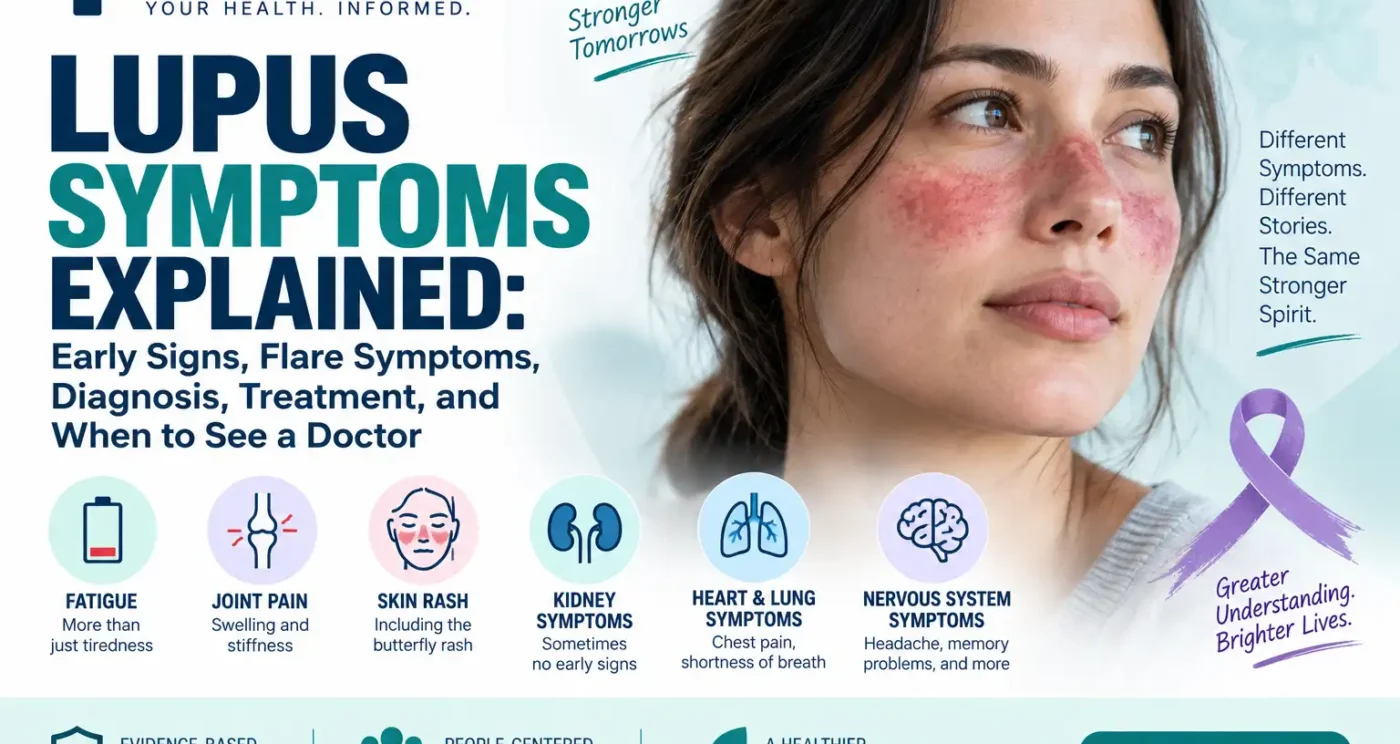
Lupus rarely follows a neat symptom checklist.
For one person, the first clue may be aching, swollen joints that seem worse in the morning. Someone else may notice overwhelming fatigue, unusual sensitivity to sunlight, mouth sores, or a facial rash. Another person may feel relatively well while routine blood or urine testing begins to show that the disease is affecting the kidneys or blood cells.
That unpredictability is part of what makes lupus difficult to recognize.
Systemic lupus erythematosus (SLE) is a chronic autoimmune disease. Instead of limiting its attack to viruses, bacteria, and other threats, the immune system mistakenly targets healthy tissues. The resulting inflammation can involve the skin, joints, kidneys, heart, lungs, blood cells, and nervous system. Symptoms may improve for a while and then return during periods called flares.
There is also no single symptom—or single blood test—that confirms lupus.
A butterfly-shaped facial rash may occur, but many people with lupus never develop one. An ANA test may be positive, but healthy people can have a positive ANA too. Fatigue is extremely common in lupus, yet tiredness alone could have dozens of other explanations.
That means lupus diagnosis usually comes from a pattern: symptoms, examination findings, laboratory results, urine testing, and sometimes tissue biopsy all considered together.
What Is Lupus?
Lupus is an autoimmune disease in which abnormal immune activity causes inflammation and, in some cases, tissue damage.
When people simply say “lupus,” they usually mean systemic lupus erythematosus, or SLE.
SLE can affect several parts of the body at once. Disease activity may be mild, such as intermittent skin or joint symptoms, or serious enough to affect organs such as the kidneys, heart, lungs, or brain.
Other forms of lupus also exist.
Cutaneous Lupus
Cutaneous lupus primarily affects the skin.
It can produce several different types of lesions, often worsened by ultraviolet light.
Drug-Induced Lupus
Certain medications can trigger a lupus-like illness.
Symptoms often improve after the responsible medication is discontinued under medical guidance.
Neonatal Lupus
Neonatal lupus is rare and occurs when certain maternal antibodies cross the placenta during pregnancy.
It is different from ordinary childhood SLE.
This article focuses primarily on systemic lupus erythematosus.
What Are the Early Symptoms of Lupus?
There is no universally recognized “first symptom.”
Lupus may begin slowly, and early complaints can be vague enough that they initially seem unrelated.
Common symptoms include:
- Persistent or unusual fatigue
- Painful or swollen joints
- Morning stiffness
- Unexplained fever
- Skin rashes
- Sensitivity to sunlight
- Hair loss
- Mouth or nose sores
- Swollen glands
- Fingers or toes changing color in the cold
- Chest pain with deep breathing
CDC identifies fatigue as the most common lupus symptom and also lists joint symptoms, skin rashes, fever, hair loss, and frequent mouth sores among common manifestations.
One symptom by itself usually tells you very little.
Fatigue plus joint swelling plus a photosensitive rash is a different clinical picture from fatigue alone. Doctors often learn more from the combination, timing, and recurrence of symptoms than from any individual complaint.
What Does Lupus Fatigue Feel Like?
Fatigue is easy to underestimate because almost everyone feels tired occasionally.
Lupus fatigue can be much more intrusive.
Someone may sleep for a full night and still wake exhausted. Ordinary errands may feel disproportionately demanding. Concentration may become harder, and the amount of energy available can vary significantly from one day to the next.
CDC describes fatigue as the most common lupus symptom and notes that it can substantially affect physical, mental, and social well-being.
But fatigue still needs to be interpreted carefully.
A person with lupus may also be tired because of:
- Anemia
- Poor sleep
- Chronic pain
- Infection
- Depression
- Medication effects
- Kidney disease
- Thyroid disease
- Another medical condition
A sudden increase in fatigue can therefore be part of a lupus flare, but it should not automatically be labeled one.
Can Lupus Cause Joint Pain?
Yes.
Joint pain and inflammation are among the most recognizable lupus symptoms.
People may notice pain, swelling, or stiffness involving the:
- Hands
- Wrists
- Fingers
- Knees
- Ankles
- Other joints
Morning stiffness can occur, and symptoms may affect more than one joint at the same time. MedlinePlus lists arthritis with painful, swollen joints and morning stiffness among common SLE manifestations.
Lupus-related joint symptoms can resemble rheumatoid arthritis or other inflammatory conditions, which is another reason symptoms alone do not establish the diagnosis.
What Does a Lupus Rash Look Like?
There is no single lupus rash.
The most famous is the malar rash, often called the butterfly rash because it can spread across both cheeks and the bridge of the nose.
But lupus-related skin disease can appear in several other forms.
Someone may develop:
- Sun-sensitive patches
- Raised or scaly lesions
- Circular discoid lesions
- Areas of pigment change
- Other inflammatory rashes
The appearance can also be different across skin tones. A rash should not be dismissed simply because it is not bright red.
NIAMS and MedlinePlus both identify skin rashes and photosensitivity as common features of lupus.
Does Everyone With Lupus Get a Butterfly Rash?
No.
A butterfly rash is associated with lupus, but it is neither required nor specific enough to diagnose the disease by itself.
Many people with lupus never develop the classic facial pattern.
And facial redness can occur with other conditions, including rosacea, sun exposure, dermatitis, infections, and medication reactions.
A clinician considers the rash alongside the rest of the history, examination, and laboratory findings.
Can Sunlight Trigger Lupus Symptoms?
Yes, particularly in people who are photosensitive.
Ultraviolet light can worsen cutaneous lupus and may contribute to broader disease activity in susceptible people. The Lupus Foundation notes that UV exposure can worsen skin lesions and may be associated with symptoms such as fatigue, joint pain, and fever.
The 2025 American College of Rheumatology SLE guideline specifically recommends educating people with lupus about sunscreen and other sun-protection measures to reduce the risk of rash and potential disease flares.
That does not mean everyone with lupus reacts to sunlight identically.
Some people notice an obvious pattern. Others do not.
Can Lupus Cause Hair Loss?
Yes.
Hair may become thinner during active disease, and some types of lupus can directly affect the scalp.
Hair loss may appear as:
- General thinning
- Increased shedding
- Breakage
- Loss around inflamed scalp lesions
Other causes can coexist, including thyroid disease, iron deficiency, stress, medications, hormonal changes, and ordinary pattern hair loss.
Scarring forms of cutaneous lupus deserve particular attention because permanent follicle damage can occur.
Can Lupus Cause Mouth or Nose Sores?
Yes.
Recurrent ulcers inside the mouth or nose can occur with SLE.
Some are painful.
Others may cause very little discomfort and be found during an examination rather than because the person noticed them.
The Lupus Foundation includes mouth and nasal ulcers among symptoms that can appear or worsen during disease activity.
Can Lupus Cause Fever?
Yes.
Low-grade or unexplained fever can occur when lupus is active.
There is an important catch: infection can cause fever too.
That distinction becomes especially important for someone taking corticosteroids, biologics, or other medications that suppress immune activity.
A person with known lupus who develops fever should not automatically assume, “It is just my lupus.”
Current ACR guidance emphasizes infection screening and monitoring in people with SLE because both the disease and its treatments can create additional health risks.
What Is a Lupus Flare?
A flare is more than simply having a bad day.
The Lupus Foundation defines a flare as a measurable increase in disease activity, involving new or worsening symptoms, clinical findings, and/or laboratory abnormalities significant enough that treatment may need reconsideration.
Flares can be:
- Mild
- Moderate
- Severe
- Limited to one body system
- Spread across several organ systems
A mild flare may involve increasing joint pain or a new rash.
A severe flare could involve the kidneys, lungs, nervous system, heart, or blood.
What Does a Lupus Flare Feel Like?
People often recognize the return of symptoms they have experienced before.
A flare may bring:
- Increasing fatigue
- Painful or swollen joints
- New or worsening rash
- Mouth or nose sores
- Fever
- Increased hair loss
- Swelling
- Worsening of a previously affected organ problem
Some people develop completely new symptoms during a flare.
The difficulty is that lupus activity cannot always be judged by how sick someone feels.
Kidney inflammation, for example, may develop before dramatic symptoms appear.
What Can Trigger a Lupus Flare?
Not every flare has an obvious trigger.
When there is one, possibilities can include:
- Ultraviolet exposure
- Infection
- Physical illness
- Surgery or injury
- Emotional stress
- Sleep deprivation or exhaustion
- Smoking
- Certain medications
- Hormonal changes in some people
Research into environmental triggers continues, and triggers vary considerably between individuals.
Keeping a brief symptom log can sometimes help identify a personal pattern.
For example, someone may eventually realize that extended sun exposure is repeatedly followed by a rash and increasing joint pain.
How Long Does a Lupus Flare Last?
There is no standard duration.
A flare can last:
- Days
- Weeks
- Longer
Duration depends on the organ involved, severity, treatment, and individual disease pattern.
A short period of fatigue is not automatically a flare, and a flare does not have to follow the same timeline each time.
If symptoms remain worse than usual, new symptoms appear, or established treatment seems to have stopped working, contacting the treating clinician is more useful than waiting for a particular number of days.
Can Lupus Affect the Kidneys?
Yes.
Kidney inflammation caused by lupus is called lupus nephritis.
It is one of the most important complications of SLE because significant kidney inflammation may be present before someone feels obviously ill.
Possible symptoms can include:
- Swelling around the eyes
- Swelling of the feet, ankles, or hands
- Foamy urine
- Blood or brown discoloration in urine
- Urinating less than usual
- Weight gain from fluid retention
- High blood pressure
The National Kidney Foundation emphasizes that early lupus nephritis may cause few or no obvious symptoms, which is why blood-pressure measurements, urine testing, and kidney-function monitoring matter.
Why Is Urine Testing Important in Lupus?
Urinalysis can detect findings that a person cannot see or feel.
Doctors may look for:
- Protein
- Blood
- Cellular abnormalities
Blood testing can also assess kidney function.
NIAMS includes urinalysis, metabolic testing, and kidney biopsy when appropriate among the tools used to evaluate lupus and possible lupus nephritis.
A normal-looking urine stream therefore does not guarantee that the kidneys are unaffected.
Can Lupus Cause High Blood Pressure?
It can.
Kidney disease can make blood-pressure regulation more difficult, and some medications used in lupus care can also influence blood pressure.
High blood pressure may produce no symptoms at all.
For someone with lupus nephritis, blood-pressure control can become part of protecting kidney and cardiovascular health.
Can Lupus Cause Chest Pain?
Yes—but chest pain needs caution.
Lupus can inflame the tissue surrounding the lungs, called pleurisy, or the lining around the heart, called pericarditis.
Pleuritic pain is often sharp and may feel worse when taking a deep breath.
MedlinePlus lists chest pain with deep breathing and inflammation around the heart and lungs among recognized lupus manifestations.
Still, someone with lupus should not automatically explain new chest pain as inflammation from SLE.
Heart attack, pulmonary embolism, pneumonia, collapsed lung, and other emergencies can produce overlapping symptoms.
Severe or unexplained chest pain needs appropriate evaluation.
Can Lupus Affect the Lungs?
Yes.
Possible pulmonary problems include inflammation of the pleura—the lining surrounding the lungs—and less common but potentially serious forms of lung involvement.
Symptoms may include:
- Pain with deep breathing
- Shortness of breath
- Cough
- Reduced exercise tolerance
Sudden severe breathlessness, coughing blood, low oxygen symptoms, or major chest pain should not wait for a routine rheumatology visit.
Can Lupus Affect the Heart?
Yes.
Lupus can be associated with inflammation involving several cardiac structures, including the tissue surrounding the heart and, less commonly, heart muscle or valves. People with SLE also have important long-term cardiovascular risk that clinicians monitor as part of ongoing care.
The 2025 ACR guideline specifically recommends screening and management of cardiovascular disease and other SLE-associated comorbidities.
Can Lupus Affect the Brain and Nervous System?
Yes.
Neurological symptoms may range from relatively nonspecific complaints to serious neurological disease.
Possible symptoms include:
- Headache
- Dizziness
- Memory difficulty
- Confusion
- Cognitive changes
- Seizures in severe cases
- Certain nerve problems
MedlinePlus includes headache, dizziness, confusion, and memory problems among possible lupus symptoms.
It is important not to label every headache or episode of forgetfulness as “lupus brain fog.”
Migraine, medications, sleep problems, anxiety, depression, infection, thyroid disorders, stroke, and many other conditions can cause similar symptoms.
Can Lupus Cause Seizures?
It can, although seizures are not among the most common lupus manifestations.
When seizures are attributed to active SLE, they represent significant neurological involvement.
The 2025 ACR guideline includes specific recommendations for treating seizures linked to active lupus and classifies severe neuropsychiatric disease as potentially requiring aggressive immunosuppressive treatment.
A first seizure is an emergency medical issue regardless of whether someone has lupus.
Can Lupus Affect Blood Counts?
Yes.
Lupus may be associated with abnormalities such as:
- Low white blood cell count
- Low platelet count
- Anemia
That is why a complete blood count (CBC) is commonly included in lupus evaluation and monitoring.
A low blood count does not diagnose lupus.
Infection, nutritional deficiency, medication effects, bone-marrow disorders, bleeding, and many other conditions can produce similar laboratory changes.
Can Lupus Cause Blood Clots?
Some people with lupus have antiphospholipid antibodies, which can be associated with an increased tendency to form blood clots.
Testing for these antibodies may be part of the evaluation in appropriate patients.
A painful swollen leg, sudden chest pain, or unexplained shortness of breath needs urgent evaluation because a clot in the leg or lungs can be dangerous.
Can Lupus Cause Raynaud Phenomenon?
Yes.
Raynaud phenomenon causes fingers or toes to change color when exposed to cold or sometimes emotional stress.
They may become:
- Pale or white
- Blue or purple
- Red during rewarming
Numbness, tingling, or discomfort may accompany the color change.
MedlinePlus lists pale or purple fingers and toes associated with cold or stress among possible lupus findings.
Raynaud phenomenon also occurs in people who do not have lupus.
Can Lupus Cause Swelling?
Yes, but the cause matters.
Joint inflammation may cause localized swelling.
Kidney disease may produce fluid retention around the eyes or in the legs.
Inflammation, medication effects, blood clots, heart problems, and other conditions can also produce swelling.
New one-sided leg swelling is particularly important because it can suggest a blood clot rather than ordinary fluid retention.
Are Lupus Symptoms Different in Women?
Women develop SLE much more often than men.
NIAMS estimates that women are affected about nine times more often than men, with many diagnoses occurring during the reproductive years.
That does not mean there is a separate female lupus symptom checklist.
Women can experience the same broad categories of:
- Joint inflammation
- Rashes
- Fatigue
- Kidney disease
- Blood abnormalities
- Neurological disease
- Heart or lung involvement
The exact combination varies by individual.
Can Men Get Lupus?
Absolutely.
The disease is less common in men, but men can develop SLE and can experience serious organ involvement.
Someone should not dismiss suggestive symptoms simply because lupus is statistically less common in their sex.
What Causes Lupus?
The exact cause remains unknown.
Researchers believe lupus develops through a combination of factors involving:
- Genetics
- Immune-system regulation
- Hormones
- Environmental exposures
Family history can modestly increase risk, but most people with lupus do not have a close relative with the disease.
Lupus is not contagious.
You cannot catch it by being around someone who has it.
How Is Lupus Diagnosed?
There is no one test that answers “yes” or “no.”
Diagnosis often requires pulling together information from several places.
A clinician may review:
- Current symptoms
- Previous symptoms that have disappeared
- Family history
- Physical examination findings
- Blood tests
- Urinalysis
- Kidney function
- Imaging when appropriate
- Skin or kidney biopsy in selected cases
NIAMS emphasizes that lupus can imitate many other diseases and that no single test diagnoses it.
For people whose symptoms have been coming and going for months, writing down a timeline can be surprisingly useful.
MedIntelHub’s specialist-visit guide offers a simple framework for organizing symptoms, medications, previous tests, and questions before a rheumatology appointment. How to Prepare Questions Before a Specialist Appointment
What Is an ANA Test?
ANA stands for antinuclear antibody.
It is one of the most widely used blood tests when lupus is suspected.
Almost all people with SLE have a positive ANA, which makes the test sensitive.
The catch is specificity.
Healthy people and people with other autoimmune conditions can also have a positive ANA. NIAMS explicitly cautions that a positive ANA does not mean someone has lupus.
That makes the following equation wrong:
Positive ANA = lupus
The result has to be interpreted in context.
Can You Have a Positive ANA Without Lupus?
Yes.
A positive ANA may occur in:
- Healthy individuals
- Other autoimmune disorders
- Certain infections
- Some medication-related situations
The significance depends partly on the antibody pattern, titer, symptoms, examination, and additional testing.
Someone who feels completely well should not assume an autoimmune diagnosis solely because an ANA result was flagged.
What Other Blood Tests Are Used?
When lupus is suspected, additional testing may include:
Anti-Double-Stranded DNA Antibodies
Anti-dsDNA antibodies can provide additional support for SLE and may be clinically useful in some patients with kidney involvement or disease monitoring.
Anti-Smith Antibodies
Anti-Smith antibodies are another lupus-associated autoantibody.
Complement Levels
Complement proteins such as C3 and C4 may be measured because levels can change with lupus immune activity.
Complete Blood Count
A CBC can identify anemia, low white blood cells, or low platelet counts.
Metabolic Panel
Kidney and other metabolic measurements can help identify possible organ involvement.
Antiphospholipid Antibodies
These may be tested when clotting risk, pregnancy complications, or other clinical features make them relevant.
NIAMS includes these tests among the laboratory tools used in lupus assessment.
Do You Need a Kidney Biopsy?
Not everyone does.
A kidney biopsy may be recommended when urine or blood testing suggests significant lupus nephritis and clinicians need to determine the type and severity of kidney inflammation.
A small piece of kidney tissue is examined under a microscope.
The information can influence treatment selection.
Do You Need a Skin Biopsy?
Sometimes.
If a skin lesion may represent cutaneous lupus, a dermatologist may take a small tissue sample for microscopic examination.
A biopsy can help distinguish lupus from other inflammatory or dermatologic conditions.
It still needs to be interpreted alongside the clinical picture.
Which Doctor Diagnoses Lupus?
A rheumatologist commonly leads the diagnosis and treatment of systemic lupus.
Depending on which organs are involved, care may also include:
- Nephrologist
- Dermatologist
- Cardiologist
- Pulmonologist
- Neurologist
- Hematologist
- Primary-care clinician
MedlinePlus notes that lupus care frequently requires several healthcare professionals working together.
How Is Lupus Treated?
There is currently no cure for SLE.
Treatment instead aims to:
- Control active inflammation
- Reduce or prevent flares
- Protect organs
- Prevent long-term damage
- Reduce treatment toxicity
- Improve quality of life
The treatment plan changes according to what lupus is affecting and how serious that involvement is.
A person whose main problems are skin and joints may need a very different regimen from someone with lupus nephritis or neurological disease.
What Does the Latest ACR Lupus Guideline Recommend?
The American College of Rheumatology released an updated SLE treatment guideline in 2025.
Several principles stand out.
The guideline strongly recommends routine hydroxychloroquine for people with SLE unless there is a contraindication. It also emphasizes minimizing exposure to glucocorticoids and introducing conventional or biologic immunosuppressive therapy earlier when needed rather than relying indefinitely on steroids. Treatment decisions should be individualized and use shared decision-making.
The guideline also recommends regular disease-activity assessment and at least annual assessment of accumulated disease damage.
What Is Hydroxychloroquine Used for in Lupus?
Hydroxychloroquine began as an antimalarial drug, but it has become a cornerstone of lupus treatment.
It can help with:
- Skin disease
- Joint symptoms
- Some fatigue and inflammatory symptoms
- Reducing future flares
NIAMS notes that antimalarial medicines can help with fatigue, joint pain, rashes, and inflammation and may help prevent recurrent flares.
The updated ACR guideline recommends routine hydroxychloroquine treatment in SLE unless contraindicated.
Hydroxychloroquine has its own monitoring requirements, including attention to retinal safety during long-term therapy.
Why Are Corticosteroids Used?
Corticosteroids can suppress inflammation rapidly.
That makes them useful during significant lupus activity.
The problem is that long-term or high-dose exposure can create substantial complications.
The 2025 ACR guideline therefore emphasizes using glucocorticoids to control acute inflammation with the lowest dose and shortest duration necessary, while adding other therapies early enough to reduce steroid exposure.
Possible long-term steroid complications can include effects on bone, blood pressure, blood sugar, infection risk, and other body systems.
What Are Immunosuppressive Medicines?
These medicines reduce abnormal immune activity.
Depending on the organ involved, drugs used in lupus care can include conventional immunosuppressants and targeted biologic therapies.
Current ACR guidance supports earlier use of these treatments when needed rather than allowing uncontrolled inflammation or relying solely on chronic steroid therapy.
The exact choice is highly individualized.
What Are Biologic Treatments for Lupus?
Biologic medications target particular parts of the immune system.
Examples used in lupus care can include therapies such as belimumab and anifrolumab in appropriate patients.
Current ACR recommendations incorporate biologic therapy into treatment options for several persistent or moderate-to-severe lupus manifestations.
Biologics are not automatically a “stronger but better” option for everyone.
They have specific indications, benefits, risks, and monitoring requirements.
How Is Lupus Nephritis Treated?
Kidney disease requires its own treatment strategy.
Therapy depends on biopsy findings, severity, kidney function, degree of protein loss, and other clinical factors.
The American College of Rheumatology maintains a separate 2024 lupus nephritis guideline, posted in 2025, alongside its 2025 general SLE guideline.
Someone with suspected lupus nephritis may need care coordinated between a rheumatologist and nephrologist.
Can Lupus Go Into Remission?
Yes.
Some people experience periods when symptoms disappear or disease activity becomes very low.
These quieter periods are often called remission.
For others, the disease remains chronically active at a low level or flares relatively frequently.
NIAMS describes lupus as alternating between periods of illness and periods of wellness, but the pattern is unpredictable.
Remission also does not necessarily mean treatment should be stopped.
Medication changes need to be made with the treating clinician.
Is Lupus Curable?
There is no current cure for SLE.
That does not mean treatment is ineffective.
Modern therapy can suppress disease activity, protect organs, reduce flares, and help many people live active lives.
The goal is increasingly to reach remission or low disease activity while minimizing treatment toxicity, an approach emphasized in the latest ACR guideline.
How Can Someone Reduce the Risk of Flares?
Not every flare can be prevented.
Still, some practical measures can help reduce avoidable triggers and support overall health.
These may include:
- Taking lupus medications as prescribed
- Using appropriate sun protection
- Avoiding smoking
- Getting adequate sleep
- Managing known personal triggers
- Keeping scheduled laboratory monitoring
- Discussing infections promptly
- Not stopping medications without medical advice
UV light is among the best-established environmental triggers for many people with lupus.
The goal is not to live in fear of every possible trigger.
It is to learn which factors actually matter for the individual.
Should Someone With Lupus Avoid the Sun Completely?
No.
The objective is reducing harmful UV exposure, not necessarily remaining indoors indefinitely.
Strategies may include:
- Seeking shade
- Wearing protective clothing
- Using broad-spectrum sunscreen
- Wearing a hat
- Limiting exposure during intense sunlight
- Discussing indoor UV sources when photosensitivity is severe
The 2025 ACR guideline specifically includes sun protection in routine lupus education.
How Can You Tell a Lupus Flare From an Infection?
Sometimes you cannot tell on your own.
Both can cause:
- Fever
- Fatigue
- Body aches
- Weakness
- Changes in laboratory results
The distinction matters because the treatments can be very different.
Increasing immunosuppression during an untreated infection could be dangerous, while delaying treatment of serious lupus activity can also cause harm.
Anyone taking immune-suppressing medication who develops significant fever or feels acutely ill should contact an appropriate healthcare professional rather than assuming they know which one it is.
When Should You See a Doctor for Possible Lupus Symptoms?
A single episode of tiredness or one unexplained rash does not automatically call for a lupus workup.
Evaluation becomes more reasonable when several unexplained symptoms occur together or keep returning.
Examples include:
- Persistent fatigue with swollen or painful joints
- Recurrent unexplained rashes
- Skin reactions after sun exposure
- Repeated mouth or nose sores
- Unexplained fever
- Hair loss accompanied by other systemic symptoms
- Recurrent swelling
- Raynaud-like color changes
- Unexplained abnormalities in blood counts
- Protein or blood found in urine
- Chest pain that has been medically evaluated and appears inflammatory
A new cluster of symptoms does not need to wait until the next annual checkup. MedIntelHub’s preventive-care guide explains why a routine physical and evaluation of a new medical problem are not necessarily the same visit. Understanding Your Annua
l Physical: What Actually Gets Checked
When Should Someone With Lupus Contact Their Rheumatologist?
Contact the treating team when there is a meaningful change from the usual pattern.
That may include:
- A new rash
- New swelling
- Worsening joint inflammation
- Persistent fever
- New neurological symptoms
- New urine changes
- Significant increases in fatigue
- New medication side effects
- Symptoms that previously signaled a flare
The 2025 ACR guideline recommends reassessing disease activity whenever clinical status or lupus-directed treatment changes.
When Is Lupus an Emergency?
Some lupus complications—and some illnesses unrelated to lupus—require immediate care.
Seek emergency medical help for symptoms such as:
- Severe chest pain
- Significant or rapidly worsening shortness of breath
- Coughing blood
- A first seizure
- Loss of consciousness
- Sudden one-sided weakness
- Facial drooping
- Difficulty speaking
- Severe confusion
- A painful swollen leg accompanied by breathing difficulty
- Severe allergic reaction
- Major uncontrolled bleeding
- Rapidly worsening neurological function
Do not delay because you assume the symptom is “just a flare.”
Lupus Symptoms by Body System
| Body system | Possible symptoms or findings |
|---|---|
| General | Fatigue, fever, swollen glands |
| Joints | Pain, swelling, morning stiffness |
| Skin | Butterfly rash, sun-sensitive rash, other cutaneous lesions |
| Hair | Thinning or hair loss |
| Mouth/nose | Recurrent ulcers |
| Kidneys | Protein in urine, foamy urine, swelling, high blood pressure |
| Heart/lungs | Chest pain with breathing, shortness of breath |
| Blood | Anemia, low WBC, low platelets, clotting problems |
| Nervous system | Headache, confusion, cognitive changes, seizures in severe disease |
| Blood vessels | Raynaud phenomenon, clotting complications |
Not everyone develops all—or even most—of these findings. Lupus is highly individual.
Frequently Asked Questions
What Are Usually the First Signs of Lupus?
There is no single first sign.
Fatigue, joint pain or swelling, skin rashes, fever, photosensitivity, hair loss, and mouth sores are among common early complaints.
The combination and persistence of symptoms are more useful than any one symptom.
What Does Lupus Fatigue Feel Like?
It can feel like persistent exhaustion that seems out of proportion to normal activity and may not disappear after ordinary rest.
Because anemia, poor sleep, infection, pain, kidney disease, medication effects, and other problems can also cause fatigue, sudden worsening deserves evaluation.
What Does a Lupus Flare Feel Like?
A flare may feel like the return or worsening of familiar lupus symptoms—such as increased fatigue, swollen joints, rash, fever, or mouth sores.
Some flares produce new symptoms or mainly appear through laboratory abnormalities rather than obvious physical changes.
Does Everyone With Lupus Get a Butterfly Rash?
No.
A malar or butterfly rash is well known but is not present in every person with lupus.
Can Lupus Cause Joint Pain Without Swelling?
Yes.
Joint discomfort can occur with varying degrees of visible inflammation.
Persistent pain should still be assessed because many non-lupus conditions can cause similar symptoms.
Can Lupus Cause Hair Loss?
Yes.
Hair loss may occur because of active systemic disease, scalp involvement, or sometimes other factors such as medication effects or unrelated health conditions.
Can Lupus Cause Mouth Sores?
Yes.
Oral and nasal ulcers are recognized lupus manifestations and may become more noticeable during periods of disease activity.
Can Lupus Cause Fever?
Yes, but fever should not automatically be blamed on lupus.
Infection must also be considered, particularly in someone taking medications that suppress the immune system.
Can Lupus Affect the Kidneys Without Symptoms?
Yes.
Early lupus nephritis may produce few or no obvious symptoms. Urine testing, kidney-function tests, and blood-pressure monitoring can therefore detect problems that a person cannot feel.
Can Lupus Cause Foamy Urine?
Lupus nephritis can allow protein to leak into the urine, which may sometimes make urine appear unusually foamy.
Foamy urine can have other explanations too, so laboratory testing is needed.
Can Lupus Cause High Blood Pressure?
Yes, particularly when the kidneys are affected.
High blood pressure is also common for reasons unrelated to lupus.
Can Lupus Cause Chest Pain?
Yes.
Inflammation around the lungs or heart can cause chest pain.
New chest pain should still be medically evaluated because heart attack, pulmonary embolism, infection, and other emergencies can produce similar symptoms.
Can Lupus Cause Shortness of Breath?
It can.
Inflammation involving the lungs or heart can contribute to breathlessness, but sudden or severe breathing problems need urgent medical assessment.
Can Lupus Cause Low White Blood Cells?
Yes.
Low white blood cells can occur in SLE. A CBC is one of the laboratory tests commonly used during evaluation and monitoring.
Can Lupus Cause Anemia?
Yes.
Several different mechanisms can contribute to anemia in people with lupus, so the specific cause should be evaluated rather than assumed.
Can Lupus Cause Brain Fog?
People with lupus sometimes report concentration or memory difficulties.
However, sleep problems, medications, depression, anxiety, fatigue, infection, and many other conditions may produce similar cognitive complaints.
Is a Positive ANA Test Proof of Lupus?
No.
Almost all people with SLE have a positive ANA, but healthy people and people with other conditions can test positive as well.
Can Lupus Be Diagnosed With a Blood Test?
Not with one blood test.
Diagnosis combines clinical symptoms, examination, antibody testing, blood counts, kidney tests, urinalysis, and sometimes biopsy.
Which Doctor Treats Lupus?
A rheumatologist commonly coordinates SLE treatment.
Other specialists may be involved depending on whether lupus affects the kidneys, skin, heart, lungs, blood, or nervous system.
Is Lupus Curable?
No cure currently exists.
Treatment can substantially control disease activity, prevent organ damage, and reduce flares.
Is Hydroxychloroquine Used for Everyone With Lupus?
The 2025 ACR guideline strongly recommends routine hydroxychloroquine treatment for people with SLE unless it is contraindicated. Individual treatment still depends on the patient’s health and clinical circumstances.
Does Lupus Always Get Worse Over Time?
No.
The course varies greatly.
Some people experience long periods of low disease activity or remission. Others have recurrent flares or organ involvement that requires more intensive treatment.
Conclusion
The difficult thing about lupus symptoms is not that they are always dramatic.
Often, they are not.
Fatigue may appear first. Then aching hands. Maybe a rash after spending time outdoors, mouth sores that keep coming back, or fingers that turn pale in the cold.
Any one of those symptoms could have a simpler explanation.
The pattern is what begins to matter.
Lupus can affect the skin, joints, kidneys, blood cells, heart, lungs, and nervous system, and the disease can change over time. Someone may feel relatively well while urine testing shows early kidney involvement. Another person may have obvious joint inflammation but no kidney disease at all.
That is also why diagnosis does not come from a butterfly rash or a positive ANA alone.
Doctors combine the symptom history, examination, blood tests, urine findings, and sometimes biopsy before deciding whether the evidence fits systemic lupus erythematosus.
Treatment has continued to evolve.
The American College of Rheumatology’s updated 2025 guideline emphasizes hydroxychloroquine for most people with SLE unless contraindicated, limiting prolonged glucocorticoid exposure, and introducing other immunosuppressive or biologic therapies when needed to achieve remission or low disease activity.
There is still no cure.
But lupus can be treated, monitored, and controlled.
For someone who has not been diagnosed, the practical signal to seek care is usually not one isolated symptom. It is a recurring or unexplained combination of symptoms—especially when joints, skin, blood tests, urine, or multiple body systems seem to be involved.
For someone already living with lupus, new symptoms deserve respect too.
Not every fever is a flare. Not every chest pain is lupus. And symptoms involving breathing, the nervous system, blood clots, or severe infection should not wait for the next routine appointment.
Resources
National Institute of Arthritis and Musculoskeletal and Skin Diseases — Lupus
A detailed NIH resource covering lupus symptoms, causes, diagnosis, laboratory testing, treatment, and living with the disease.
NIAMS: Systemic Lupus Erythematosus
MedlinePlus — Lupus
Patient-focused information from the National Library of Medicine on SLE symptoms, complications, testing, and treatment.
CDC — Lupus Symptoms
CDC provides a concise overview of common lupus symptoms, flares, and remission.
American College of Rheumatology — 2025 SLE Guideline
The current ACR treatment guideline emphasizes hydroxychloroquine, minimizing glucocorticoid exposure, regular disease assessment, and earlier use of appropriate immunosuppressive therapies.
ACR: Lupus Clinical Practice Guidelines
National Kidney Foundation — Lupus Nephritis
A useful resource on lupus-related kidney inflammation, including foamy urine, swelling, blood pressure, and the possibility of few symptoms early in disease.
National Kidney Foundation: Lupus Nephritis
MedIntelHub — Preparing for a Specialist Appointment
Useful for organizing a symptom timeline, medication list, test results, and questions before a rheumatology consultation.
How to Prepare Questions Before a Specialist Appointment
MedIntelHub — Understanding Your Annual Physical
Explains why persistent new symptoms may need a problem-focused evaluation rather than waiting for a routine preventive visit.
Understanding Your Annual Physical: What Actually Gets Checked
MedIntelHub — Editorial Policy
For more information about MedIntelHub’s standards for sourcing, accuracy, transparency, and healthcare education:
Editorial Disclaimer
This article is intended for general education and information only. It does not diagnose systemic lupus erythematosus, determine whether a positive ANA represents autoimmune disease, or recommend treatment for an individual.
Fatigue, joint pain, rashes, hair loss, fever, mouth sores, chest pain, numbness, swelling, and abnormal blood counts can occur with many conditions other than lupus.
Lupus treatment must be individualized according to disease activity, organs involved, pregnancy and fertility considerations, infection risk, other medical conditions, medications, and laboratory findings.
Do not stop hydroxychloroquine, corticosteroids, immunosuppressants, biologic therapy, or other prescribed medication because symptoms improve or because of information in this article. Medication changes should be discussed with the treating healthcare professional.
Seek urgent medical attention for severe chest pain, significant difficulty breathing, coughing blood, a first seizure, loss of consciousness, stroke-like symptoms, severe confusion, major bleeding, or other rapidly worsening symptoms.

David Bennett
David Bennett is an author at MedIntelHub, where he creates clear, practical, and well-researched content about healthcare, medical billing, insurance, and patient education. His goal is to make complex healthcare topics easier for readers to understand and use in everyday situations. David emphasizes accuracy, transparency, and reliable sourcing, using information from trusted organizations and official healthcare resources whenever possible. Content published by David is intended for educational purposes and should not replace advice from qualified medical, legal, or healthcare professionals.