A hard workout can leave almost anyone sore the next morning.
Rhabdomyolysis is different.
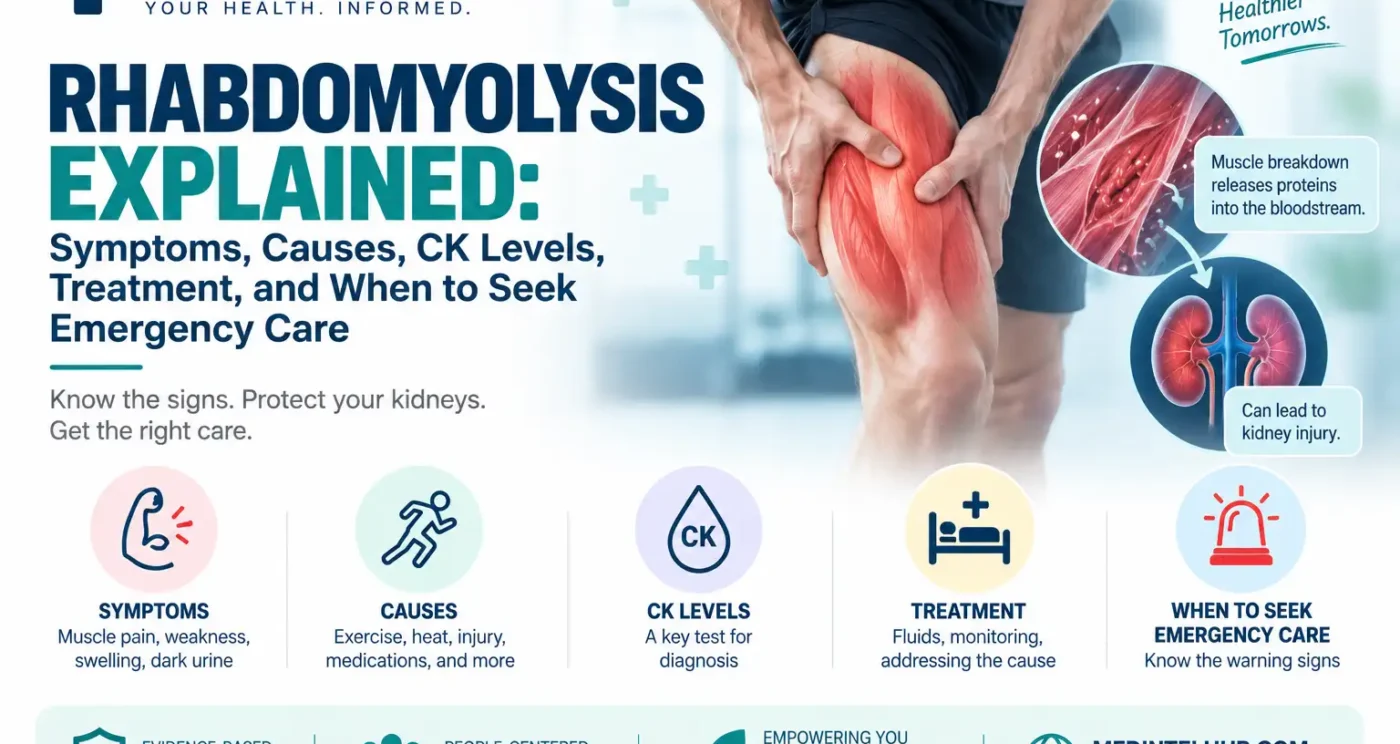
With rhabdomyolysis, often shortened to rhabdo, skeletal muscle cells are damaged badly enough that their contents spill into the bloodstream. Creatine kinase rises. Myoglobin is released. Potassium and other electrolytes can shift. In more serious cases, those changes can injure the kidneys or disturb the heart’s electrical rhythm.
Sometimes the warning signs are obvious: unusually severe muscle pain, marked weakness, swelling, and urine that turns tea- or cola-colored after intense exercise, heat exposure, injury, or another muscle-damaging event.
Other cases are less dramatic.
The often-quoted combination of muscle pain, weakness, and dark urine occurs in fewer than 10% of patients, according to the Merck Manual. Someone can therefore have rhabdomyolysis without ever seeing brown urine.
That is one reason rhabdo should not be diagnosed—or ruled out—by symptoms alone.
A blood test for creatine kinase, or CK, is central to diagnosis. Kidney function, potassium, calcium, phosphate, urine findings, and the reason the muscle injury happened can matter just as much when doctors decide how serious the situation is.
Contents
- 1. What Is Rhabdomyolysis?
- 2. What Are the Symptoms of Rhabdomyolysis?
- 3. What Does Rhabdomyolysis Muscle Pain Feel Like?
- 4. Does Rhabdomyolysis Always Cause Dark Urine?
- 5. What Does Rhabdomyolysis Urine Look Like?
- 6. Can Rhabdomyolysis Cause Reduced Urination?
- 7. What Causes Rhabdomyolysis?
- 8. Can Exercise Cause Rhabdomyolysis?
- 9. Can You Get Rhabdo After Your First Workout?
- 10. Rhabdomyolysis vs. Normal Workout Soreness: What Is the Difference?
- 11. Can Heat Cause Rhabdomyolysis?
- 12. Does Dehydration Cause Rhabdomyolysis?
- 13. Can a Crush Injury Cause Rhabdomyolysis?
- 14. Can Lying in One Position for Too Long Cause Rhabdo?
- 15. Can Seizures Cause Rhabdomyolysis?
- 16. Can Infection Cause Rhabdomyolysis?
- 17. Can Medications Cause Rhabdomyolysis?
- 18. Can Statins Cause Rhabdomyolysis?
- 19. What Is Creatine Kinase?
- 20. What CK Level Means Rhabdomyolysis?
- 21. Is CK of 1,000 Rhabdomyolysis?
- 22. Does a Higher CK Mean More Severe Rhabdomyolysis?
- 23. How Quickly Does CK Come Down?
- 24. Is High CK Always Rhabdomyolysis?
- 25. How Is Rhabdomyolysis Diagnosed?
- 26. What Is Myoglobin?
- 27. Why Can Rhabdomyolysis Damage the Kidneys?
- 28. Can Rhabdomyolysis Cause Kidney Failure?
- 29. Why Can Potassium Become Dangerous?
- 30. Can Rhabdomyolysis Cause Low Calcium?
- 31. What Is Compartment Syndrome?
- 32. How Is Rhabdomyolysis Treated?
- 33. Why Are IV Fluids Used?
- 34. Are Bicarbonate and Mannitol Used for Rhabdomyolysis?
- 35. Can Rhabdomyolysis Be Treated at Home?
- 36. Does Rhabdomyolysis Always Require Hospitalization?
- 37. When Is Dialysis Needed?
- 38. How Long Does Rhabdomyolysis Take to Heal?
- 39. When Can You Exercise Again After Rhabdomyolysis?
- 40. Can Rhabdomyolysis Come Back?
- 41. Can Rhabdomyolysis Be Fatal?
- 42. When Should You Go to the ER for Possible Rhabdomyolysis?
- 43. When Is Rhabdomyolysis an Emergency?
- 44. What Should You Do if Your Urine Turns Brown After Exercise?
- 45. Can You Prevent Exercise-Related Rhabdomyolysis?
- 46. Rhabdomyolysis Symptoms and Warning Signs at a Glance
- 47. Frequently Asked Questions
- 47.1. What Are the First Symptoms of Rhabdomyolysis?
- 47.2. What Does Rhabdo Feel Like?
- 47.3. Does Rhabdomyolysis Always Cause Dark Urine?
- 47.4. Can You Have Rhabdo With Clear Urine?
- 47.5. What Color Is Rhabdomyolysis Urine?
- 47.6. What Is CK?
- 47.7. What CK Level Is Considered Rhabdomyolysis?
- 47.8. Is CK of 5,000 Dangerous?
- 47.9. Can CK Be High Without Rhabdomyolysis?
- 47.10. Can Working Out Cause Rhabdomyolysis?
- 47.11. Can a Beginner Get Rhabdo?
- 47.12. Can Dehydration Cause Rhabdomyolysis?
- 47.13. Can Heat Cause Rhabdomyolysis?
- 47.14. Can Statins Cause Rhabdomyolysis?
- 47.15. Should I Stop My Statin if My Muscles Hurt?
- 47.16. Can Infection Cause Rhabdomyolysis?
- 47.17. Can Seizures Cause Rhabdomyolysis?
- 47.18. Can Rhabdomyolysis Damage the Kidneys?
- 47.19. Does Everyone With Rhabdo Develop Kidney Failure?
- 47.20. Can Rhabdomyolysis Cause Heart Problems?
- 47.21. Is Rhabdomyolysis Treated With IV Fluids?
- 47.22. Can You Treat Rhabdo by Drinking Water?
- 47.23. Does Rhabdomyolysis Always Require the Hospital?
- 47.24. Can Rhabdomyolysis Require Dialysis?
- 47.25. How Long Does Rhabdomyolysis Last?
- 47.26. When Can I Work Out Again After Rhabdo?
- 47.27. Can Rhabdomyolysis Happen Twice?
- 48. When Should You See a Doctor?
- 49. Conclusion
- 50. Resources
- 50.1. CDC/NIOSH — Signs and Symptoms of Rhabdomyolysis
- 50.2. CDC/NIOSH — Rhabdomyolysis and Work
- 50.3. CDC/NIOSH — Treatment of Rhabdomyolysis
- 50.4. Merck Manual — Rhabdomyolysis
- 50.5. American Association for the Surgery of Trauma — Clinical Consensus
- 50.6. FDA — Cholesterol Medicines Guide
- 50.7. MedIntelHub — Understanding Your Annual Physical
- 50.8. MedIntelHub — Editorial Policy
- 51. Editorial Disclaimer
What Is Rhabdomyolysis?
Skeletal muscle cells normally keep large amounts of enzymes, proteins, and electrolytes inside their cell membranes.
When enough muscle cells become injured or die, those contents escape into the circulation.
Among the substances released are:
- Creatine kinase (CK)
- Myoglobin
- Potassium
- Phosphate
- Other intracellular proteins and enzymes
CK is especially useful because it remains elevated in the blood longer than myoglobin and can be followed with repeat testing.
Myoglobin matters for a different reason. It is an oxygen-binding protein found inside muscle. Large amounts entering the circulation can contribute to kidney-tubule injury, particularly when other problems such as dehydration, poor kidney blood flow, or severe illness are present.
Rhabdomyolysis can range from a relatively limited laboratory abnormality to a life-threatening medical problem involving kidney failure, abnormal potassium levels, heart-rhythm disturbances, seizures, shock, or compartment syndrome.
What Are the Symptoms of Rhabdomyolysis?
There is no symptom pattern that appears in every patient.
Common complaints include:
- Muscle pain or cramping
- Muscle tenderness
- Weakness
- Muscle swelling
- Exercise intolerance
- Unusual fatigue
- Tea- or cola-colored urine
- Reduced urine output
- Nausea or feeling generally unwell
NIOSH advises taking muscle pain more seriously when it is more severe than expected for the amount of exertion performed, particularly when weakness or dark urine appears too.
Symptoms also do not necessarily begin immediately.
They may develop hours or even days after the muscle injury, so feeling reasonably well immediately after an intense workout does not completely exclude a problem that becomes noticeable later.
What Does Rhabdomyolysis Muscle Pain Feel Like?
There is no distinctive type of pain that confirms rhabdo.
What raises more concern is pain that seems out of proportion to what happened.
For example, someone may expect sore quadriceps after an unfamiliar workout. It becomes more concerning when the thighs are extremely painful, swollen, weak, difficult to move, and the person can barely perform normal activities several hours later.
Rhabdo may involve one muscle group or several.
People can describe:
- Deep aching
- Severe tenderness
- Cramping
- Tightness
- Swelling
- Heavy or weak muscles
Pain severity still cannot tell doctors how high the CK is or whether the kidneys are affected.
That requires testing.
Does Rhabdomyolysis Always Cause Dark Urine?
No.
Dark urine is one of the best-known warning signs, but many patients never develop it.
The classic triad of muscle pain, weakness, and dark urine occurs in fewer than 10% of cases.
Myoglobin is also cleared from the circulation relatively quickly. NIOSH cautions that urine testing can miss rhabdomyolysis because myoglobin may disappear while CK remains elevated for considerably longer.
That means:
Normal-looking urine does not rule out rhabdomyolysis.
If the muscle symptoms are severe enough to raise concern, the absence of cola-colored urine should not be used as reassurance.
What Does Rhabdomyolysis Urine Look Like?
When myoglobin is present in sufficient amounts, urine may look:
- Dark brown
- Tea-colored
- Cola-colored
- Red-brown
But urine color is not specific.
Dehydration can make urine dark yellow. Blood in the urine can make it red or brown. Certain foods, medications, liver conditions, urinary disease, and other problems can also change urine color.
A photograph of urine therefore cannot diagnose rhabdomyolysis.
Can Rhabdomyolysis Cause Reduced Urination?
It can.
A person may notice that they are producing much less urine than expected despite drinking fluids.
Reduced urine output becomes more concerning when it occurs with:
- Severe muscle symptoms
- Dark urine
- Dehydration
- Significant swelling
- Heat illness
- Known kidney disease
- Major trauma
Rhabdomyolysis-related acute kidney injury can reduce the kidneys’ ability to filter blood and produce urine normally.
Very little or no urine in someone with suspected rhabdo deserves prompt medical assessment.
What Causes Rhabdomyolysis?
Rhabdo is not just a workout complication.
Anything that substantially injures skeletal muscle can potentially trigger it.
Causes include:
- Extreme or prolonged exercise
- Heat illness
- Crush injuries
- Major trauma
- Prolonged immobilization
- Seizures
- Certain medications
- Drug or alcohol exposure
- Severe infections
- Electrical injury
- Reduced blood flow to muscle
- Certain metabolic or inherited muscle disorders
The same biological event follows these very different triggers: damaged muscle releases its contents into the bloodstream.
Can Exercise Cause Rhabdomyolysis?
Yes.
This form is usually called exertional rhabdomyolysis.
It can happen after activity that places unusually heavy demands on muscles, especially when the activity is far beyond what the person normally does.
Examples can include:
- Very high-repetition resistance training
- Intense interval workouts
- Military-style conditioning
- Long endurance events
- Sudden high-volume exercise after inactivity
- Demanding physical work
- Exercise in very hot conditions
NIOSH specifically identifies prolonged physical exertion, high-intensity exercise, and heat exposure as important rhabdomyolysis risks.
Being physically fit does not make someone immune.
Firefighters, military personnel, marathon runners, and trained athletes can develop rhabdo too.
Can You Get Rhabdo After Your First Workout?
It is possible.
The risk is more about the mismatch between what the muscles are accustomed to and what they were suddenly asked to do than whether the workout literally happened to be someone’s first.
Someone who has been inactive for months and suddenly performs hundreds of high-effort repetitions may place much more stress on muscle tissue than someone who gradually built toward the same workload.
That does not mean severe soreness after an unfamiliar workout automatically means rhabdomyolysis.
Most post-exercise soreness is ordinary delayed-onset muscle soreness.
The challenge is recognizing when it stops looking ordinary.
Rhabdomyolysis vs. Normal Workout Soreness: What Is the Difference?
Delayed-onset muscle soreness, often called DOMS, commonly appears after unfamiliar exercise.
A simple comparison can help:
| Feature | Typical Post-Workout Soreness | More Concerning for Rhabdomyolysis |
|---|---|---|
| Muscle soreness | Common | Often unusually severe |
| Stiffness | Common | Can occur |
| Mild weakness from soreness | Possible | More significant weakness may occur |
| Major swelling | Less typical | More concerning |
| Dark tea/cola urine | Not expected | Possible warning sign |
| Reduced urine | Not expected | Concerning |
| Inability to perform ordinary tasks | Less typical | More concerning |
| Kidney/electrolyte abnormalities | No | Possible |
There is still overlap.
Someone cannot reliably diagnose the difference at home from pain intensity alone.
NIOSH specifically warns that rhabdo symptoms can resemble dehydration and other heat-related conditions and recommends medical evaluation when symptoms suggest the possibility.
Can Heat Cause Rhabdomyolysis?
Yes.
Rhabdomyolysis can occur as part of serious heat illness, particularly when high body temperature is combined with strenuous physical activity.
NIOSH lists rhabdo as one of the potentially serious illnesses associated with heat stress and prolonged exertion.
Heat-related muscle breakdown becomes especially concerning when someone develops:
- Confusion
- Collapse
- Altered behavior
- Severe weakness
- Very high body temperature
- Seizures
Those symptoms can indicate heat stroke, which is an emergency.
Cooling and emergency medical treatment should not be delayed while waiting to see whether dark urine develops.
Does Dehydration Cause Rhabdomyolysis?
Dehydration is commonly associated with rhabdo, but the relationship is often oversimplified.
NIOSH notes that dehydration itself does not necessarily cause rhabdomyolysis, but it can make the condition more dangerous because reduced fluid volume can impair the body’s ability to clear substances released from damaged muscle.
For example, extreme exertion might cause the muscle injury while dehydration increases the stress placed on the kidneys.
That is why exertion, heat, and hydration status are often considered together.
Can a Crush Injury Cause Rhabdomyolysis?
Yes.
Crush injury is one of the classic causes.
When muscle remains compressed for a long period, circulation can be impaired and tissue can become badly damaged.
Once pressure is released and circulation returns, large amounts of muscle-cell contents can enter the bloodstream.
That may cause:
- Potassium elevation
- Acidosis
- Kidney injury
- Heart-rhythm problems
- Shock
Major crush injuries require emergency medical treatment even before laboratory confirmation of rhabdomyolysis.
Can Lying in One Position for Too Long Cause Rhabdo?
Yes.
Muscle does not have to be crushed by machinery to suffer pressure injury.
Someone who remains unconscious or unable to move for many hours may place prolonged pressure on a muscle group.
This can happen in situations involving:
- Intoxication
- Drug overdose
- Major neurological illness
- Serious injury
- Prolonged surgery
- Loss of consciousness
The prolonged pressure can compromise muscle blood flow and produce breakdown.
Can Seizures Cause Rhabdomyolysis?
They can.
A generalized seizure causes powerful, repeated muscle contractions.
Prolonged seizures or several seizures close together can therefore produce substantial muscle injury and CK elevation.
MedlinePlus includes seizures among recognized causes of rhabdomyolysis.
A first seizure needs emergency evaluation regardless of whether rhabdo is suspected.
Can Infection Cause Rhabdomyolysis?
Yes.
Both viral and bacterial illnesses can occasionally trigger muscle injury.
The mechanism varies and can involve:
- Direct muscle inflammation
- Immune responses
- High fever
- Sepsis
- Dehydration
- Metabolic stress
Someone with a serious infection may therefore develop rhabdomyolysis without having exercised or suffered trauma.
This is another reason rhabdo should not be thought of only as a fitness-related diagnosis.
Can Medications Cause Rhabdomyolysis?
Some medications can contribute to muscle injury.
The best-known examples are statins, but several other medicines and drug interactions can also increase risk.
Medication-related rhabdomyolysis often becomes more likely when several risk factors occur together, such as:
- Kidney impairment
- Certain interacting medications
- High drug exposure
- Severe illness
- Thyroid disease
- Advanced age
- Major surgery or trauma
A medication should not be stopped solely because its name appears on a list of possible rhabdo triggers.
Unexplained significant muscle symptoms should instead be discussed promptly with the prescribing clinician.
Can Statins Cause Rhabdomyolysis?
Rarely, yes.
Statins are widely used to lower cholesterol and cardiovascular risk. Most people do not develop severe muscle injury.
The FDA nevertheless recognizes serious muscle problems, including rhabdomyolysis and kidney complications, as possible statin adverse effects. It advises seeking medical help for symptoms such as unexplained muscle pain or weakness, brown or dark urine, and changes in urination.
This distinction matters:
Ordinary muscle aches while taking a statin do not automatically mean rhabdomyolysis.
Muscle symptoms can range from mild discomfort to true myopathy with elevated CK and, rarely, severe rhabdo.
Medication interactions can also change risk.
Do not stop a prescribed statin permanently without discussing the situation with the clinician managing your cardiovascular care unless emergency clinicians tell you otherwise.
What Is Creatine Kinase?
Creatine kinase, usually abbreviated CK, is an enzyme found in tissues including skeletal muscle.
When muscle cells become damaged, CK leaks into the bloodstream.
The greater the amount of muscle damage, the higher CK may rise—although the relationship between CK and clinical severity is not perfect.
CK may begin rising within hours after muscle injury and often peaks later, commonly around 24 to 72 hours after the event.
That delay is why doctors sometimes repeat the test instead of relying on a single early measurement.
What CK Level Means Rhabdomyolysis?
There is no universally perfect CK threshold.
A widely used clinical definition is a CK level more than five times the laboratory’s upper limit of normal, often corresponding to roughly 1,000 U/L or above depending on the laboratory. Merck describes this as the commonly used threshold for laboratory confirmation.
But the number should not be interpreted in isolation.
A 2025 international expert workshop proposed higher CK thresholds in some acute rhabdomyolysis settings—such as more than 10,000 IU/L for exertional cases—highlighting that specialists are still refining how CK should be used across different presentations.
For a patient, the practical lesson is simpler:
CK is interpreted together with symptoms, the cause, kidney function, electrolytes, and the trend over time.
Is CK of 1,000 Rhabdomyolysis?
It can satisfy a commonly used laboratory definition when it represents more than five times the upper limit of normal.
But the diagnosis still depends on context.
Someone may have elevated CK after:
- Heavy exercise
- Seizure
- Trauma
- Muscle injection
- Surgery
- Muscle disease
The question is not merely whether CK crossed a particular number.
It is whether there is clinically important acute skeletal-muscle injury.
Does a Higher CK Mean More Severe Rhabdomyolysis?
Generally, very high CK suggests more extensive muscle injury.
But CK does not perfectly predict whether someone will develop kidney failure.
Two people with similar CK values can have very different outcomes because other factors matter, including:
- Hydration
- Kidney function before the illness
- Blood pressure
- Sepsis
- Electrolyte abnormalities
- Acidosis
- Cause of the muscle injury
- Other medical conditions
That is why doctors do not decide whether someone needs hospitalization or dialysis from CK alone.
How Quickly Does CK Come Down?
Once active muscle injury stops, CK generally begins falling.
The exact timeline depends on the amount of muscle injury and whether additional damage is still occurring.
The AAST consensus notes that CK may rise within about 12 hours, peak at approximately 24–72 hours, and then decline as the injury resolves.
NIOSH recommends serial testing until results clearly show that CK is trending downward rather than continuing to rise.
A single declining value can be reassuring, but the rest of the clinical picture still matters.
Is High CK Always Rhabdomyolysis?
No.
CK can rise from many causes.
Examples include:
- Vigorous exercise
- Muscle injury
- Seizures
- Surgery
- Certain injections
- Some medications
- Inflammatory muscle diseases
- Muscular dystrophies
- Hypothyroidism
Merck lists several muscle and metabolic conditions that can produce CK elevation and need to be distinguished from acute rhabdomyolysis.
How Is Rhabdomyolysis Diagnosed?
Diagnosis starts with what happened.
Doctors may ask about recent:
- Exercise
- Heat exposure
- Injury
- Seizures
- Illness
- Drug or alcohol exposure
- Medication changes
- Immobilization
Laboratory testing then helps determine whether significant muscle breakdown has occurred and whether it is causing complications.
Creatine Kinase
CK is the main blood marker.
Repeated values help show whether muscle injury is still progressing or beginning to resolve.
Kidney Function
Blood tests such as serum creatinine help determine whether the kidneys are being affected.
Potassium and Other Electrolytes
Doctors commonly check:
- Potassium
- Calcium
- Phosphate
- Bicarbonate
These values can shift significantly as damaged muscle releases intracellular contents.
Urinalysis
Urine testing may provide evidence of pigment from myoglobin, but a normal result does not reliably exclude rhabdomyolysis because myoglobin clears relatively quickly.
ECG
When potassium is elevated or cardiac symptoms are present, an electrocardiogram may be used to look for dangerous electrical changes in the heart.
What Is Myoglobin?
Myoglobin is a protein inside muscle cells that helps store and transport oxygen.
When skeletal muscle breaks down, myoglobin enters the blood.
Some of it is filtered through the kidneys.
The protein has a much shorter half-life than CK, which means it may disappear relatively quickly even while CK remains elevated.
This helps explain two observations that often confuse patients:
A person can have rhabdomyolysis without dark urine.
And a urine test can become negative even though blood CK remains markedly elevated.
Why Can Rhabdomyolysis Damage the Kidneys?
The kidney complication is called acute kidney injury, or AKI.
The mechanism is not just “myoglobin clogs the kidney.”
It is more complex.
Current clinical consensus describes several interacting factors, including:
- Reduced circulating volume
- Kidney blood-vessel constriction
- Direct oxidant injury
- Myoglobin-related tubular damage
- Pigment cast formation
- Acidic conditions
That is one reason a dehydrated person with extensive muscle damage may be at greater risk than someone with the same CK who otherwise has stable circulation and kidney function.
Can Rhabdomyolysis Cause Kidney Failure?
Yes.
Acute kidney injury is one of the most serious rhabdo complications.
Mild kidney injury may recover as the muscle problem resolves and circulation is restored.
Severe cases can temporarily require dialysis.
The risk is not determined solely by how dark the urine looks or how painful the muscles feel.
Laboratory monitoring is essential.
Why Can Potassium Become Dangerous?
Potassium is concentrated inside cells, including muscle cells.
When a large amount of muscle breaks apart, potassium can escape into the bloodstream.
The resulting hyperkalemia can interfere with the electrical activity that controls the heartbeat.
NIOSH lists abnormal heart rhythms among the serious possible complications of rhabdomyolysis.
Severe hyperkalemia can become life-threatening even before kidney failure is obvious.
That is one reason suspected serious rhabdomyolysis is not adequately managed by simply “drinking extra water.”
Can Rhabdomyolysis Cause Low Calcium?
Yes.
Early in rhabdomyolysis, calcium may move out of the bloodstream and into damaged muscle tissue.
Blood calcium can therefore fall.
Later, as recovery occurs, calcium may shift back into the bloodstream and occasionally become elevated.
These changes can be complicated enough that someone should not self-treat an abnormal calcium result with supplements unless a clinician specifically recommends it.
What Is Compartment Syndrome?
Muscles in the arms and legs are grouped inside relatively firm tissue compartments.
If badly injured muscle swells dramatically inside one of these spaces, the pressure may rise enough to restrict blood flow and damage nerves and muscle.
This is called compartment syndrome.
Possible warning signs include:
- Severe escalating pain
- Very tense swelling
- Pain with movement or stretching
- Numbness
- Weakness
NIOSH describes compartment syndrome as an uncommon but serious complication of muscle injury that can cause permanent disability if treatment is delayed.
It is a surgical emergency.
How Is Rhabdomyolysis Treated?
Treatment depends on how severe the muscle injury is and what caused it.
The main goals are to:
- Stop the muscle-damaging process
- Maintain adequate kidney blood flow
- Correct dangerous electrolytes
- Monitor kidney function
- Treat the underlying cause
- Watch for complications
For more significant cases, intravenous crystalloid fluids are a cornerstone of treatment.
Someone with heat stroke, infection, trauma, seizure, or a medication reaction also needs treatment directed at that underlying problem.
Why Are IV Fluids Used?
IV fluids help maintain circulation and kidney perfusion while the body clears substances released from damaged muscle.
Both normal saline and lactated Ringer’s solution are considered acceptable in current AAST guidance, with treatment adjusted according to the patient’s clinical condition and urine output.
There is an important caution here.
More fluid is not always better.
Giving excessive fluid to someone whose kidneys are not producing urine can cause dangerous fluid overload.
Hospital treatment is therefore adjusted according to urine output, kidney function, blood pressure, and other measurements rather than following a universal volume.
Are Bicarbonate and Mannitol Used for Rhabdomyolysis?
They have historically been discussed as strategies for protecting the kidneys.
Current evidence is much less supportive of routine use.
The American Association for the Surgery of Trauma consensus concludes that sodium bicarbonate and diuretics such as mannitol are not recommended routinely for preventing rhabdomyolysis-related acute kidney injury because convincing clinical evidence of benefit is lacking.
The Eastern Association for the Surgery of Trauma reached a similar conclusion, conditionally recommending against routine bicarbonate or mannitol use while supporting IV fluid resuscitation.
Individual patients may still receive these therapies for another specific medical reason.
That is different from using them routinely in everyone with rhabdo.
Can Rhabdomyolysis Be Treated at Home?
Some low-risk cases may eventually be managed outside the hospital after proper medical assessment.
The important part is after assessment.
Someone cannot know at home whether potassium is dangerously high, creatinine is rising, or CK is still climbing.
NIOSH recommends immediate medical evaluation when rhabdomyolysis symptoms develop.
If the clinician determines the case is mild and kidney function and electrolytes are reassuring, outpatient rest, oral hydration, and repeat laboratory testing may sometimes be appropriate.
That decision should not be made from urine color and muscle soreness alone.
Does Rhabdomyolysis Always Require Hospitalization?
No.
Some patients can be safely treated without admission.
Hospitalization becomes more likely when there is:
- Kidney injury
- Significant electrolyte abnormality
- Very high or rapidly rising CK
- Severe dehydration
- Major weakness or swelling
- Heat stroke
- Serious trauma
- Compartment syndrome concern
- Inability to maintain hydration
- Serious infection
- Other unstable medical problems
NIOSH notes that moderate and severe cases may require IV fluids and hospital monitoring for kidney dysfunction, high potassium, arrhythmias, seizures, and elevated compartment pressures.
When Is Dialysis Needed?
Dialysis is not used merely because CK is high.
It becomes necessary when severe kidney dysfunction causes problems that cannot be safely controlled otherwise.
Possible reasons can include:
- Dangerous potassium elevation
- Severe acid-base abnormalities
- Significant fluid overload
- Advanced acute kidney failure
Current guidelines do not recommend preventive dialysis simply to remove myoglobin in someone whose kidneys are still functioning adequately.
How Long Does Rhabdomyolysis Take to Heal?
Recovery varies considerably.
Someone with mild exertional rhabdomyolysis and normal kidney function may feel substantially better within days.
A patient who experienced heat stroke, major trauma, compartment syndrome, or acute kidney injury may need a much longer recovery.
MedlinePlus notes that milder cases may return to normal activities within several weeks, while fatigue and muscle discomfort can persist longer in some patients.
CK can improve before the person feels completely normal.
The reverse can happen too: someone may feel better while CK remains above baseline.
When Can You Exercise Again After Rhabdomyolysis?
There is no responsible universal answer such as “seven days.”
Return to exercise can depend on:
- Cause of the episode
- Resolution of pain and swelling
- Strength returning to normal
- CK trend
- Kidney function
- Electrolytes
- Whether heat contributed
- Previous rhabdo episodes
- Possible inherited muscle disease
A person recovering from exertional rhabdomyolysis is usually better served by a gradual return than by repeating the original workout as soon as the soreness disappears.
Someone with recurrent rhabdo or an episode caused by relatively modest exercise may need evaluation for an underlying metabolic or neuromuscular condition before returning to intense training.
Can Rhabdomyolysis Come Back?
Yes.
It can recur if the same trigger happens again.
Repeated episodes deserve particular attention when they occur:
- After relatively ordinary exercise
- Without heat or major exertion
- During fasting
- During illness
- Repeatedly in the same family
- Along with unexplained lifelong exercise intolerance
Those patterns may prompt evaluation for an underlying metabolic, genetic, or neuromuscular disorder.
A 2025 international expert workshop specifically emphasized evaluating patients more deeply when the presentation suggests an underlying muscle condition rather than a one-time external trigger.
Can Rhabdomyolysis Be Fatal?
Severe cases can be.
Potentially life-threatening complications include:
- Hyperkalemia and dangerous arrhythmias
- Acute kidney failure
- Severe heat stroke
- Shock
- Compartment syndrome
- Serious metabolic abnormalities
- The underlying trauma, seizure, overdose, or infection
NIOSH describes rhabdomyolysis as a serious medical condition that can cause permanent disability or death when complications are severe or treatment is delayed.
Most appropriately recognized and treated cases do not end this way.
Early evaluation improves the chance of preventing these complications.
When Should You Go to the ER for Possible Rhabdomyolysis?
Seek urgent medical evaluation when severe muscle symptoms occur with signs such as:
- Tea- or cola-colored urine
- Marked muscle swelling
- Significant weakness
- Very little urine
- Severe dehydration
- Inability to keep fluids down
- Serious symptoms after extreme exercise
- Symptoms developing after a seizure
- Major trauma or crush injury
- Significant heat illness
- Palpitations or abnormal heartbeat sensations
NIOSH advises immediate medical attention for suspected rhabdomyolysis rather than waiting for symptoms to disappear.
When Is Rhabdomyolysis an Emergency?
Call emergency services when symptoms occur alongside signs such as:
- Confusion
- Collapse
- Loss of consciousness
- Seizure
- Severe difficulty breathing
- Serious crush injury
- Very high body temperature with altered mental status
- Severe weakness preventing safe movement
- Dangerous heart-rhythm symptoms
- Little or no urine with severe illness
Confusion or collapse after strenuous activity in heat should raise concern for heat stroke, not merely dehydration or ordinary workout exhaustion.
What Should You Do if Your Urine Turns Brown After Exercise?
Stop the workout.
Do not assume the urine is simply concentrated because you forgot to drink enough water.
Seek prompt medical advice, particularly if the urine change occurs with:
- Severe muscle pain
- Swelling
- Weakness
- Reduced urination
- Extreme exertion
- Heat exposure
A CK blood test and kidney/electrolyte testing may be needed to determine what is happening.
Can You Prevent Exercise-Related Rhabdomyolysis?
Not every case can be prevented, but risk can be reduced.
Reasonable strategies include:
- Increase exercise volume gradually
- Avoid suddenly copying an extreme workout performed by trained athletes
- Allow recovery between unusually demanding sessions
- Acclimatize gradually to exercise in heat
- Avoid severe dehydration
- Stop when heat illness symptoms develop
- Be cautious with intense exercise during significant illness
- Discuss medication-related muscle risks when relevant
NIOSH emphasizes heat prevention, reasonable physical demands, and early recognition of symptoms in workers at risk of exertional rhabdomyolysis.
None of these measures make rhabdo impossible.
Rhabdomyolysis Symptoms and Warning Signs at a Glance
| Finding | What It May Mean |
|---|---|
| Severe muscle pain | Muscle injury beyond ordinary soreness |
| Muscle swelling | Significant local tissue injury |
| Weakness | Muscle dysfunction |
| Tea/cola-colored urine | Possible myoglobinuria |
| Normal urine color | Does not exclude rhabdo |
| Reduced urine output | Possible kidney involvement |
| High CK | Evidence of muscle injury |
| High potassium | Potential heart-rhythm danger |
| Rising creatinine | Possible acute kidney injury |
| Severe pain with tense swelling | Possible compartment syndrome |
| Confusion after heat exposure | Possible heat stroke—emergency |
Frequently Asked Questions
What Are the First Symptoms of Rhabdomyolysis?
Symptoms vary, but early clues may include unexpectedly severe muscle pain, tenderness, weakness, swelling, fatigue, or reduced ability to perform activities that were previously manageable.
Dark urine can occur but is not required.
What Does Rhabdo Feel Like?
Some people describe severe soreness, muscle tightness, cramping, swelling, or weakness that feels far beyond what they expect from the activity that preceded it.
Others have relatively mild symptoms despite significant CK elevation.
Does Rhabdomyolysis Always Cause Dark Urine?
No.
The classic combination of muscle pain, weakness, and dark urine occurs in fewer than 10% of cases.
Can You Have Rhabdo With Clear Urine?
Yes.
Normal-looking urine does not rule it out.
CK testing is much more useful for diagnosis.
What Color Is Rhabdomyolysis Urine?
When myoglobin changes the urine color, it may appear tea-colored, cola-colored, or dark reddish-brown.
Other conditions can create similar color changes.
What Is CK?
Creatine kinase is an enzyme released into the blood when muscle cells are damaged.
Measuring CK is central to diagnosing and following rhabdomyolysis.
What CK Level Is Considered Rhabdomyolysis?
A commonly used threshold is more than five times the upper limit of normal, often around 1,000 U/L depending on the laboratory.
There is no single cutoff that determines severity or treatment by itself.
Is CK of 5,000 Dangerous?
It represents substantial muscle injury in many clinical contexts, but risk cannot be determined from the number alone.
Kidney function, potassium, symptoms, hydration, cause, and CK trend all matter.
Can CK Be High Without Rhabdomyolysis?
Yes.
Heavy exercise, seizures, surgery, muscle disease, thyroid problems, and other conditions can increase CK.
Can Working Out Cause Rhabdomyolysis?
Yes.
Extremely strenuous or unfamiliar exercise can cause exertional rhabdomyolysis, particularly when heat or other risk factors are present.
Can a Beginner Get Rhabdo?
Yes, especially after a sudden high-volume or unusually intense workout.
Experienced athletes can develop it too.
Can Dehydration Cause Rhabdomyolysis?
Dehydration can worsen rhabdomyolysis and kidney risk but does not necessarily cause the muscle breakdown on its own.
Can Heat Cause Rhabdomyolysis?
Yes.
Heat stress and strenuous physical exertion are recognized risk factors.
Can Statins Cause Rhabdomyolysis?
Rarely.
The FDA recognizes severe muscle injury and rhabdomyolysis as potential statin complications. Unexplained muscle weakness or pain accompanied by dark urine or urination changes warrants medical attention.
Should I Stop My Statin if My Muscles Hurt?
Do not make a permanent medication change based on muscle pain alone.
Contact the prescribing healthcare professional promptly when muscle pain is unexplained, significant, or accompanied by weakness, dark urine, fever, or urination changes.
Can Infection Cause Rhabdomyolysis?
Yes.
Serious viral or bacterial illness can sometimes cause muscle breakdown through inflammation, fever, sepsis, or other physiological stress.
Can Seizures Cause Rhabdomyolysis?
Yes.
Strong, repeated muscle contraction during prolonged or recurrent seizures can substantially elevate CK and cause rhabdo.
Can Rhabdomyolysis Damage the Kidneys?
Yes.
Acute kidney injury is one of its most important complications.
Does Everyone With Rhabdo Develop Kidney Failure?
No.
Kidney complications vary considerably. Early treatment and management of the underlying cause can reduce the risk of severe kidney injury.
Can Rhabdomyolysis Cause Heart Problems?
It can indirectly.
Potassium released from damaged muscle may rise enough to disturb the heart’s electrical rhythm.
Is Rhabdomyolysis Treated With IV Fluids?
Moderate or severe cases commonly are.
Crystalloid IV fluids are a central part of treatment when significant rhabdomyolysis requires medical resuscitation.
Can You Treat Rhabdo by Drinking Water?
Do not rely on water alone when rhabdomyolysis is suspected.
The condition may involve high potassium, acute kidney injury, or other complications that cannot be detected at home.
Does Rhabdomyolysis Always Require the Hospital?
No.
Some low-risk cases may be managed as outpatients after evaluation, while moderate or severe disease may require IV fluids and hospital monitoring.
Can Rhabdomyolysis Require Dialysis?
Severe acute kidney injury sometimes requires dialysis.
Dialysis is based on kidney-related complications rather than CK level alone.
How Long Does Rhabdomyolysis Last?
Mild cases may improve within days or weeks.
More serious cases can require longer recovery, especially when kidney injury, major trauma, heat stroke, or extensive muscle damage occurred.
When Can I Work Out Again After Rhabdo?
There is no universal timeline.
Return should depend on symptom recovery, CK trend, kidney function, cause of the episode, and medical advice.
Can Rhabdomyolysis Happen Twice?
Yes.
Recurrent or unexplained episodes may need additional investigation for medication effects or underlying metabolic, genetic, or neuromuscular conditions.
When Should You See a Doctor?
Rhabdomyolysis is one of those conditions where the threshold for asking for help should be lower when several clues occur together.
Get medical advice promptly for:
- Muscle pain far worse than expected
- Significant swelling after exertion
- Unusual muscle weakness
- Dark urine
- Reduced urine output
- Severe exercise intolerance
- Muscle symptoms after heat exposure
- Unexplained muscle symptoms while taking a medication associated with muscle injury
A new serious muscle or urine problem should not be saved for the next routine preventive visit. MedIntelHub’s guide to annual physicals explains why an annual exam and evaluation of a new medical problem serve different purposes. Understanding Your Annual Physical: What Actually Gets Checked
Conclusion
Rhabdomyolysis begins in muscle, but its most serious consequences can occur somewhere else.
Damaged muscle releases CK, myoglobin, potassium, and other substances into the circulation. CK helps doctors measure the muscle injury. Myoglobin and circulation changes can place stress on the kidneys. Potassium abnormalities can become dangerous for the heart.
That is why rhabdo should not be reduced to “really bad workout soreness.”
Intense exercise can trigger it, but so can heat stroke, seizures, crush injuries, prolonged immobilization, infections, medications, and other causes.
Dark urine deserves attention, but its absence is not reassuring enough to rule the condition out. The familiar triad of muscle pain, weakness, and dark urine appears in only a minority of patients.
CK testing is therefore central to diagnosis.
A value more than five times the upper limit of normal is commonly used as a laboratory threshold, although no one CK value tells doctors exactly how sick someone is. Kidney function, potassium, hydration, urine output, symptoms, and the cause of the injury all influence the risk.
Treatment is similarly individualized.
Significant cases commonly receive IV crystalloid fluids and close monitoring. Current guideline evidence does not support automatically adding bicarbonate or mannitol simply to prevent kidney injury in every patient.
Most importantly, do not wait for every textbook symptom to appear.
Severe unexplained muscle pain, major weakness, swelling, dark urine, or reduced urination after intense exertion, heat exposure, trauma, or another muscle-damaging event deserves medical evaluation.
And if those symptoms occur with confusion, collapse, severe heat illness, a seizure, major trauma, significant breathing difficulty, or little to no urine, emergency care is appropriate.
Resources
CDC/NIOSH — Signs and Symptoms of Rhabdomyolysis
NIOSH explains severe muscle pain, weakness, dark urine, delayed symptom onset, CK testing, and why urine tests alone can miss rhabdomyolysis.
CDC/NIOSH: Signs and Symptoms of Rhabdomyolysis
CDC/NIOSH — Rhabdomyolysis and Work
A practical overview of rhabdo causes, complications, heat and exertion risks, prevention, and the importance of early treatment.
CDC/NIOSH: Rhabdomyolysis and Work
CDC/NIOSH — Treatment of Rhabdomyolysis
NIOSH discusses outpatient considerations, IV fluids, hospital admission, kidney monitoring, potassium abnormalities, and other complications.
CDC/NIOSH: Treatment of Rhabdomyolysis
Merck Manual — Rhabdomyolysis
The Merck Manual’s February 2026 review covers symptoms, the commonly used CK threshold, electrolyte abnormalities, acute kidney injury, causes, and treatment.
American Association for the Surgery of Trauma — Clinical Consensus
This consensus document covers IV fluid management, acute kidney injury, electrolyte complications, and the limited evidence supporting routine bicarbonate or mannitol therapy.
AAST Clinical Consensus on Rhabdomyolysis
FDA — Cholesterol Medicines Guide
FDA information includes current warnings about statin-related muscle problems, kidney complications, unexplained muscle weakness or tenderness, and dark urine.
FDA: Cholesterol Medicines Guide
MedIntelHub — Understanding Your Annual Physical
A guide explaining why new or concerning symptoms may require a problem-focused appointment rather than waiting for a routine preventive visit.
Understanding Your Annual Physical: What Actually Gets Checked
MedIntelHub — Editorial Policy
For more information about MedIntelHub’s standards for medical sourcing, accuracy, transparency, and healthcare education:
Editorial Disclaimer
This article is intended for general educational purposes only. It does not diagnose rhabdomyolysis, determine whether an elevated CK level represents dangerous muscle injury, or provide an individualized return-to-exercise plan.
Muscle pain, weakness, dark urine, reduced urination, and elevated CK can have many causes. Rhabdomyolysis severity cannot be determined from urine color, CK level, or pain intensity alone.
Do not stop a statin or another prescribed medication permanently based solely on this article. Significant unexplained muscle symptoms should be discussed promptly with the prescribing clinician, while severe symptoms may require emergency assessment.
Do not attempt to treat suspected rhabdomyolysis by drinking extreme amounts of water. Kidney function, potassium, other electrolytes, hydration status, and heart rhythm may require medical monitoring.
Seek emergency care for severe heat illness, confusion, collapse, seizures, major crush injury, significant breathing difficulty, severe or rapidly worsening weakness, dangerous heart-rhythm symptoms, or little to no urine.

David Bennett
David Bennett is an author at MedIntelHub, where he creates clear, practical, and well-researched content about healthcare, medical billing, insurance, and patient education. His goal is to make complex healthcare topics easier for readers to understand and use in everyday situations. David emphasizes accuracy, transparency, and reliable sourcing, using information from trusted organizations and official healthcare resources whenever possible. Content published by David is intended for educational purposes and should not replace advice from qualified medical, legal, or healthcare professionals.