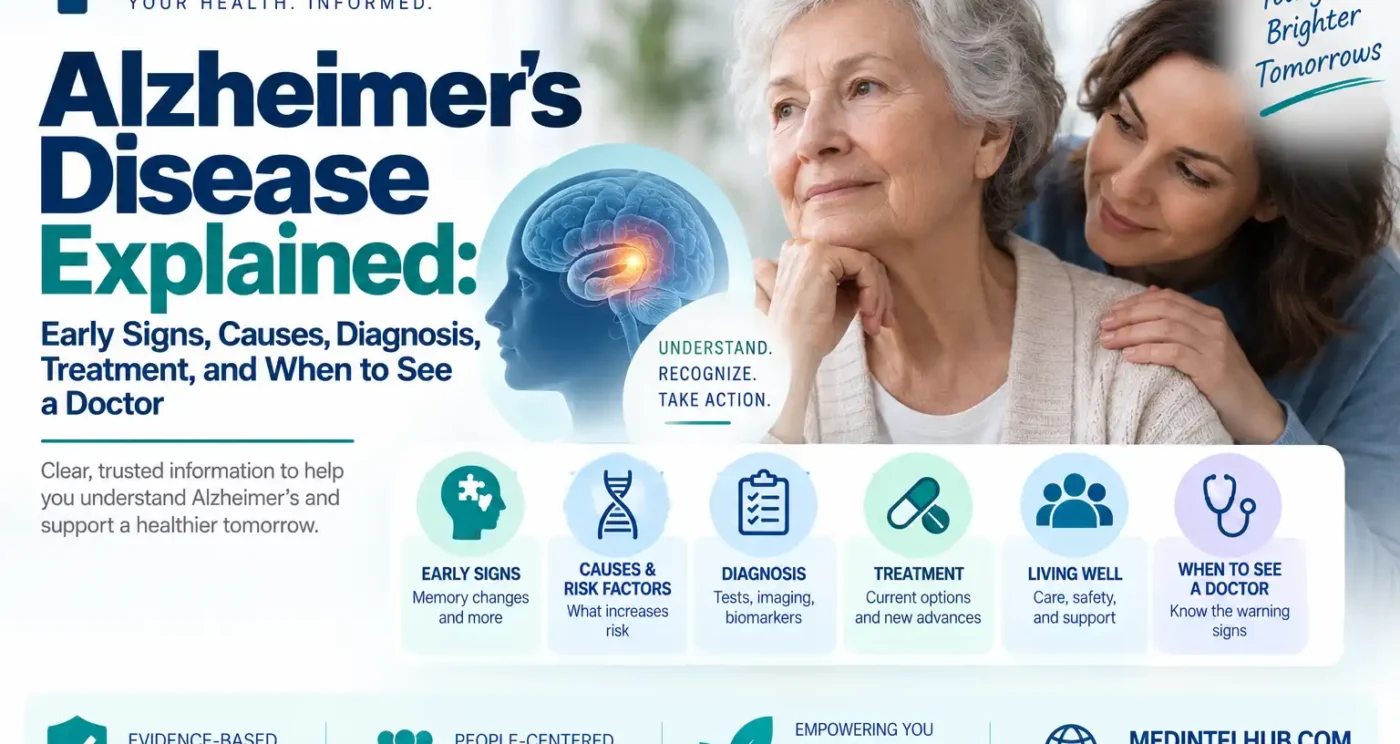
Forgetting why you walked into a room is common. Misplacing your glasses and finding them later is common too. A name that takes an extra moment to come back does not, by itself, mean Alzheimer’s disease.
What becomes more concerning is a pattern.
A person begins asking the same question several times in one afternoon. Bills that were handled easily for decades are suddenly missed. A familiar drive becomes confusing. Recipes that once required no thought become difficult to follow. Family members notice the change before the person experiencing it does.
Alzheimer’s disease is a progressive brain disorder and the most common cause of dementia in older adults. It gradually damages memory, thinking, reasoning, and the ability to carry out everyday activities. Memory problems are often among the earliest symptoms, although some people first develop difficulty with language, visual-spatial skills, judgment, or problem-solving.
The biology begins much earlier than the symptoms. Abnormal changes involving amyloid-beta plaques and tau tangles can develop a decade or more before obvious problems with memory or thinking appear. Not everyone with those brain changes will necessarily develop dementia, however.
Alzheimer’s care has also changed considerably in recent years. Traditional medicines can help with symptoms in some people, while lecanemab (Leqembi) and donanemab (Kisunla) can slow clinical decline in selected patients with early Alzheimer’s disease. Blood-based biomarker testing has moved into clinical practice as well, although these tests are aids to diagnosis—not stand-alone screening tests for healthy people.
The useful question, then, is not simply, “Am I becoming forgetful?”
It is:
“Is there a progressive change in memory or thinking that is beginning to interfere with how I function?”
What Is Alzheimer’s Disease?
Alzheimer’s disease is a neurodegenerative disorder, meaning brain cells and the connections between them progressively become damaged and die.
Early damage often involves brain regions important for forming and retrieving memories, including the hippocampus and entorhinal cortex. As the disease advances, more areas of the brain become affected.
That can gradually change a person’s ability to:
- Remember recent events
- Learn new information
- Find words
- Plan or organize
- Manage money
- Navigate familiar places
- Make decisions
- Recognize people
- Complete everyday tasks independently
The pace is not identical for everyone.
One person may remain relatively independent for years after diagnosis. Another may decline more quickly because of age, other neurological disease, vascular disease, overall health, or the particular biology of their Alzheimer’s.
Is Alzheimer’s the Same as Dementia?
No.
The terms are related, but they do not mean the same thing.
Dementia is an umbrella term describing a decline in cognitive abilities severe enough to interfere with everyday life.
Alzheimer’s disease is one specific disease that can cause dementia.
Other causes include:
- Vascular dementia
- Lewy body dementia
- Frontotemporal dementia
- Parkinson’s disease dementia
- Mixed dementia
NIA notes that people can also have more than one dementia process at the same time—for example, Alzheimer’s disease together with vascular dementia.
That distinction matters because treatment, symptoms, prognosis, and medication choices can differ.
Someone should not be told, “You have Alzheimer’s,” simply because a screening test shows cognitive impairment.
What Are the Early Signs of Alzheimer’s Disease?
Memory loss that disrupts daily life is one of the best-known early signs, but it is not the only one.
NIA describes early Alzheimer’s changes that may include repeated questions, forgetting newly learned information, poor judgment, difficulty handling money, losing track of dates or location, getting lost, misplacing objects in unusual places, and taking longer to complete familiar tasks.
A person might, for example, remember details from a vacation 30 years ago but repeatedly forget a conversation that occurred this morning.
That pattern reflects the fact that newer memories often become difficult to form and retain relatively early in typical Alzheimer’s disease.
Repeating the Same Questions
Everyone forgets whether they already told someone a story occasionally.
More concerning is asking:
“What time are we leaving?”
and then asking the same question again five minutes later—with no memory of having asked it before.
Repeated questioning becomes particularly important when it is new and progressively more frequent.
Difficulty Managing Money
Financial changes can show up surprisingly early.
Someone who has always paid bills reliably may begin:
- Missing payments
- Paying the same bill twice
- Struggling to balance accounts
- Making unusually poor financial decisions
- Becoming vulnerable to scams
NIA research has even found that changes in financial management may precede a formal dementia diagnosis in some people.
Getting Lost in Familiar Places
Taking a wrong exit in an unfamiliar city is ordinary.
Becoming confused on the route to a grocery store visited every week is different.
Problems with spatial orientation and navigation can occur as Alzheimer’s progresses.
Difficulty Finding Words
Most people occasionally say, “It’s on the tip of my tongue.”
Alzheimer’s-related language difficulty tends to become more persistent.
A person may:
- Stop in the middle of sentences
- Substitute vague words such as “that thing”
- Lose track of conversations
- Use unusual words for familiar objects
- Have increasing difficulty following complex discussions
NIA specifically recognizes word-finding problems as a possible early non-memory sign.
Changes in Judgment
Poorer judgment may appear as:
- Giving large amounts of money to strangers
- Wearing clothing that is inappropriate for the weather
- Ignoring obvious safety hazards
- Making decisions that are markedly out of character
One bad decision does not diagnose dementia.
A recurring decline from the person’s previous ability is more concerning.
Normal Aging vs. Alzheimer’s: What Is the Difference?
Aging changes the brain, but dementia is not considered a normal part of aging.
The difference is often less about whether someone ever forgets something and more about whether they can recover the information and continue functioning independently.
| Common Age-Related Change | More Concerning Pattern |
|---|---|
| Forgetting a name but remembering it later | Repeatedly forgetting familiar people’s names or relationships |
| Misplacing keys occasionally | Frequently hiding objects in unusual places and being unable to retrace steps |
| Missing one appointment | Repeatedly missing important appointments despite reminders |
| Needing extra time to learn a new device | Losing the ability to use familiar appliances |
| Occasionally forgetting why you entered a room | Repeatedly forgetting recent conversations or events |
| Making a calculation mistake | Becoming unable to manage routine bills or finances |
| Taking a wrong turn in an unfamiliar area | Getting lost in familiar surroundings |
NIA emphasizes that ordinary forgetfulness can occur with aging, whereas dementia involves cognitive decline substantial enough to interfere with quality of life and daily activities.
Does Alzheimer’s Always Begin With Memory Loss?
No.
Typical Alzheimer’s often starts with difficulty forming recent memories, but there are less typical presentations.
Early problems can involve:
- Language
- Visual-spatial processing
- Reading
- Judgment
- Executive function
- Reasoning
NIA notes that trouble finding words, understanding visual images or spatial relationships, and impaired reasoning can sometimes signal early Alzheimer’s even before memory problems become dominant.
That is one reason relying on a single “memory test” can miss important cognitive changes.
What Is Mild Cognitive Impairment?
Mild cognitive impairment, or MCI, sits between ordinary age-related cognitive change and dementia.
Someone with MCI has noticeable problems with memory or thinking that are greater than expected for age, yet can generally still manage everyday activities independently.
Examples may include:
- Losing things more frequently
- Forgetting appointments
- Having increasing trouble finding words
- Needing more reminders than before
NIA estimates that among adults 65 or older with MCI, about 10%–20% may develop dementia during a one-year period. Importantly, many do not. Symptoms can remain stable or sometimes improve, depending on the cause.
MCI therefore does not automatically mean early Alzheimer’s.
It can have many explanations.
What Is “MCI Due to Alzheimer’s Disease”?
This distinction has become much more important because of newer treatments.
Someone can have MCI clinically, and testing may then show biological evidence that Alzheimer’s disease is the likely cause.
That person may be described as having MCI due to Alzheimer’s disease.
Both FDA-approved anti-amyloid medicines—lecanemab and donanemab—were studied in people at the MCI or mild dementia stage with confirmed Alzheimer’s amyloid pathology.
That does not mean everyone with ordinary MCI should receive these drugs.
Patient selection requires a much more detailed evaluation.
What Happens as Alzheimer’s Progresses?
Alzheimer’s generally moves from relatively mild cognitive difficulty toward increasing dependence.
The labels “mild,” “moderate,” and “severe” are useful, but people do not progress through them on a perfectly predictable schedule.
Mild Alzheimer’s Disease
A person may still live independently but begin struggling with:
- Managing bills
- Planning
- Remembering appointments
- Finding words
- Getting around unfamiliar or occasionally familiar places
- Organizing multistep tasks
Family members may notice changes that the person minimizes or cannot fully recognize.
Moderate Alzheimer’s Disease
More supervision becomes necessary.
NIA describes changes such as increased confusion, difficulty learning new information, shortened attention, greater language difficulty, problems with reading or numbers, sleep changes, and trouble completing multistep tasks such as dressing.
Behavior may also change.
A person may become:
- Restless
- Suspicious
- Irritable
- Anxious
- Agitated
- More likely to wander
Severe Alzheimer’s Disease
Eventually, Alzheimer’s can affect nearly every part of daily functioning.
A person may lose the ability to:
- Communicate clearly
- Recognize family consistently
- Walk independently
- Eat without assistance
- Swallow safely
- Control bladder or bowel function
At this stage, round-the-clock care may be required.
What Causes Alzheimer’s Disease?
There is no single cause that explains most cases.
Alzheimer’s appears to result from a complex interaction among:
- Age
- Genetics
- Brain biology
- Cardiovascular health
- Metabolic health
- Environmental influences
- Lifestyle factors
Inside the brain, two hallmark abnormalities receive particular attention: amyloid-beta plaques that accumulate between nerve cells and tau tangles that develop inside neurons. These changes accompany loss of synapses and neurons.
Scientists increasingly understand Alzheimer’s as more complicated than “too much amyloid,” however.
Inflammation, vascular changes, cellular metabolism, immune responses, and other processes also appear to matter.
What Are Amyloid Plaques?
Amyloid-beta is a protein fragment.
In Alzheimer’s disease, abnormal forms can accumulate outside brain cells and form plaques.
Amyloid accumulation may begin many years before noticeable cognitive symptoms.
Amyloid is also important clinically because the two major disease-modifying Alzheimer’s drugs currently in use specifically target amyloid.
But finding amyloid does not always mean a person has dementia.
Some people have substantial amyloid pathology yet remain cognitively normal for years. NIA therefore emphasizes interpreting biomarker findings alongside the clinical picture.
What Are Tau Tangles?
Tau is a protein that normally helps support structures inside neurons.
In Alzheimer’s disease, tau becomes abnormally altered and forms neurofibrillary tangles inside brain cells.
These tangles interfere with normal cellular function and are closely associated with neuronal damage.
Tau biomarkers have also become increasingly useful in Alzheimer’s blood and cerebrospinal-fluid testing.
Is Alzheimer’s Genetic?
Genetics can strongly influence risk, but most Alzheimer’s disease is not inherited through one simple “Alzheimer’s gene.”
A family history raises risk.
It does not guarantee disease.
NIA notes that people with an affected parent or sibling are at higher risk than those without a close family history, yet many people with Alzheimer’s have no affected close relative.
What Is APOE ε4?
The APOE gene helps make a protein involved in transporting cholesterol and other fats.
One form, APOE ε4, increases Alzheimer’s risk and is associated with earlier onset in some populations.
But APOE ε4 is a risk variant, not a destiny.
Some people carrying one or even two ε4 copies never develop Alzheimer’s.
Are There Genes That Directly Cause Alzheimer’s?
Rarely.
Certain variants involving:
- APP
- PSEN1
- PSEN2
can cause autosomal-dominant, usually younger-onset Alzheimer’s.
These families represent a small proportion of all Alzheimer’s cases.
When a family has several relatives who developed Alzheimer’s unusually young, genetic counseling can be particularly important before testing.
Can Young People Develop Alzheimer’s?
Yes.
Alzheimer’s symptoms usually appear after age 65, but younger-onset Alzheimer’s occurs before that age.
It may be overlooked initially because memory or work difficulties are attributed to:
- Stress
- Depression
- Menopause
- Poor sleep
- Burnout
- Anxiety
A younger person with progressive cognitive decline still deserves neurological evaluation.
Age makes Alzheimer’s less likely—not impossible.
What Conditions Can Look Like Alzheimer’s?
This is one of the most important reasons to investigate cognitive symptoms rather than simply assuming dementia.
Memory and thinking can be affected by:
- Medication side effects
- Depression
- Thyroid disease
- Vitamin deficiencies
- Sleep disorders
- Alcohol or drug use
- Stroke
- Hearing impairment
- Vision impairment
- Infection
- Metabolic abnormalities
- Other neurological diseases
NIA specifically notes that medication effects, endocrine or metabolic problems, depression, delirium, and several different dementias can all cause cognitive impairment. Some causes can improve substantially with treatment.
What Is Delirium?
Delirium is an acute disturbance in attention and thinking that generally develops over hours or days.
That is very different from the gradual progression expected with Alzheimer’s.
Someone with dementia can develop delirium on top of their existing cognitive problems.
Possible triggers include:
- Infection
- Dehydration
- Medication effects
- Surgery
- Metabolic disturbances
- Serious illness
Suddenly becoming much more confused overnight is not something to dismiss as “the dementia getting worse.”
It may represent an acute medical problem.
How Is Alzheimer’s Disease Diagnosed?
There is no single office question that diagnoses Alzheimer’s.
A proper assessment looks at the whole person.
NIA describes diagnosis as combining medical and medication history, information from the patient and someone who knows them well, cognitive testing, assessment of everyday function, laboratory testing, and when appropriate—brain imaging or Alzheimer’s biomarkers.
The process may involve a primary-care clinician, neurologist, geriatrician, neuropsychologist, geriatric psychiatrist, or memory-disorders clinic.
What Happens During a Memory Evaluation?
A clinician may ask:
- When did the changes begin?
- Are they getting worse?
- Which everyday activities are affected?
- Is the person still driving?
- Can medications be managed correctly?
- Are bills being paid?
- Has mood changed?
- Have there been falls?
- Has sleep changed?
- Is alcohol involved?
- What medicines and supplements are being taken?
A spouse, adult child, or close friend can provide valuable information because someone with cognitive decline may not recognize every change themselves.
What Cognitive Tests Are Used?
Cognitive screening may assess:
- Short-term memory
- Attention
- Orientation
- Language
- Problem-solving
- Executive function
- Visual-spatial ability
A short screening score can show that further evaluation is needed.
It cannot tell the clinician, by itself, whether the cause is Alzheimer’s, vascular disease, Lewy body dementia, depression, or another condition.
More detailed neuropsychological testing can map strengths and weaknesses across several cognitive domains.
What Blood Tests Are Done During a Dementia Evaluation?
Routine laboratory testing may look for non-Alzheimer causes of cognitive problems.
The exact tests vary, but clinicians often consider conditions involving:
- Thyroid function
- Vitamin status
- Blood counts
- Electrolytes
- Kidney or liver function
- Glucose
- Other metabolic abnormalities
These ordinary blood tests are different from newer Alzheimer’s biomarker blood tests.
Does an MRI Show Alzheimer’s Disease?
An MRI can be very useful, but it does not simply produce a “positive” or “negative” Alzheimer’s result.
Structural brain imaging can identify:
- Previous strokes
- Bleeding
- Tumors
- Hydrocephalus
- White-matter disease
- Patterns of brain atrophy
NIA notes that MRI can support a dementia evaluation and rule out other explanations, but shrinkage patterns alone do not establish a specific dementia diagnosis.
What Is an Amyloid PET Scan?
An amyloid PET scan uses a radioactive tracer that binds to amyloid deposits in the brain.
A positive scan can provide biological evidence supporting Alzheimer’s pathology.
A negative amyloid PET scan makes Alzheimer’s much less likely as the cause of a person’s cognitive symptoms.
But a positive scan is still interpreted in context because some cognitively healthy people also accumulate amyloid.
Amyloid PET is particularly relevant when doctors are deciding whether someone may qualify for anti-amyloid treatment.
Can a Spinal Tap Help Diagnose Alzheimer’s?
Yes.
Cerebrospinal fluid, or CSF, obtained through lumbar puncture can be tested for biomarkers such as:
- Beta-amyloid
- Total tau
- Phosphorylated tau
These patterns can help identify Alzheimer’s pathology.
A lumbar puncture is no longer the only biomarker option, however.
Blood-based testing has advanced rapidly.
Is There a Blood Test for Alzheimer’s Disease?
Yes, but the answer needs context.
In May 2025, FDA cleared the Lumipulse G pTau217/β-Amyloid 1-42 Plasma Ratio, the first blood test authorized in the U.S. to aid Alzheimer’s diagnosis. It is intended for adults 55 and older who already have signs or symptoms of cognitive decline.
The test measures two blood biomarkers pTau217 and beta-amyloid 1-42 and uses their ratio to estimate whether brain amyloid pathology is likely.
In the FDA-reviewed study, 91.7% of people with positive results had amyloid pathology confirmed by PET or CSF testing, while 97.3% of people with negative results had negative confirmatory findings. Some results were indeterminate.
The key caution is just as important:
FDA does not consider the test a stand-alone diagnosis or a general screening test for healthy people.
Results must be interpreted with clinical information and, in some cases, additional testing.
Have More Alzheimer’s Blood Tests Been Cleared?
Yes.
The field is moving quickly.
FDA’s device database shows that additional blood-based amyloid-pathology assessment assays have since received 510(k) clearance. Most recently, Elecsys Phospho-Tau (217P) Plasma received a substantially equivalent decision on August 19, 2026. FDA classifies this category as blood testing intended to help identify amyloid pathology in people who already have signs and symptoms of cognitive decline, with results interpreted alongside other clinical information.
The important message for patients has not changed:
A commercially available Alzheimer’s blood test is not the same thing as a home cholesterol test and should not be interpreted without an appropriate cognitive evaluation.
Should Healthy People Get Alzheimer’s Blood Tests?
Routine testing of people who have no cognitive symptoms is not currently recommended simply because they are curious about their future risk.
A 2026 NIA-hosted educational resource notes that testing cognitively unimpaired individuals outside research settings is not currently recommended and that accuracy, clinical protocols, and coverage still vary across tests.
A positive biomarker in someone with no symptoms does not tell them exactly whether or when they will develop dementia.
That uncertainty can create substantial psychological, financial, and medical consequences.
Why Does Early Diagnosis Matter?
There used to be a common argument that diagnosing Alzheimer’s early was pointless because “nothing can be done.”
That is increasingly outdated.
Earlier diagnosis may allow a person to:
- Identify a reversible alternative cause
- Begin symptom treatment
- Determine whether disease-modifying treatment might be appropriate
- Participate in research
- Review driving
- Arrange financial and legal plans
- Discuss future care preferences
- Make home-safety changes
- Involve family while decision-making ability remains stronger
NIA emphasizes that early diagnosis can support planning, independence, treatment, and access to appropriate resources.
Is There a Cure for Alzheimer’s Disease?
No.
There is currently no treatment that reliably restores the brain to its previous state or cures established Alzheimer’s disease.
But “no cure” no longer means “no meaningful treatment.”
Treatment now has two broad goals:
- Managing symptoms and helping function
- Slowing underlying disease progression in selected people with early Alzheimer’s
What Medicines Treat Alzheimer’s Symptoms?
Several established medicines can help memory, thinking, or daily functioning temporarily in some patients.
Cholinesterase Inhibitors
These include:
- Donepezil
- Rivastigmine
- Galantamine
- Benzgalantamine in applicable current prescribing contexts
These medicines increase cholinergic signaling in the brain and are generally used for mild-to-moderate Alzheimer’s symptoms, although certain formulations have broader indications. They may stabilize or modestly improve symptoms for a period but do not stop the disease process.
Memantine
Memantine works through the NMDA/glutamate system and is typically used in moderate-to-severe Alzheimer’s.
It can sometimes be combined with a cholinesterase inhibitor.
Again, the goal is symptom management—not removal of amyloid or reversal of neurodegeneration.
What Are Disease-Modifying Alzheimer’s Treatments?
Disease-modifying treatment attempts to affect the biology driving Alzheimer’s rather than simply improve symptoms temporarily.
As of September 2026, two FDA-approved anti-amyloid medicines are central to this category:
- Lecanemab (Leqembi)
- Donanemab (Kisunla)
Both reduce amyloid plaques and have demonstrated slower cognitive and functional decline in clinical trials involving people with early symptomatic Alzheimer’s disease.
They do not cure Alzheimer’s.
They do not restore memories that have already been lost.
And they are not appropriate for everyone with dementia.
What Is Leqembi?
Leqembi, or lecanemab-irmb, is an antibody that targets amyloid beta.
FDA granted traditional approval in 2023 after a confirmatory clinical trial showed that it slowed clinical decline in patients with confirmed amyloid pathology who had MCI or mild Alzheimer’s dementia.
What Changed With Leqembi in 2026?
The treatment options expanded again in July 2026.
FDA approved a subcutaneous starting regimen, allowing eligible patients to begin Leqembi treatment at home using the under-the-skin formulation, administered by the patient or a caregiver. Previously, starting treatment required IV infusions, with subcutaneous treatment available later in the course.
This should not be interpreted as “Alzheimer’s can now be treated at home without specialist monitoring.”
Eligibility still requires confirmation of amyloid pathology and consideration of important safety factors, including ARIA risk and APOE status.
What Is Kisunla?
Kisunla, or donanemab-azbt, is another amyloid-targeting antibody.
FDA approved it in July 2024.
Treatment is started in people with mild cognitive impairment or mild dementia-stage Alzheimer’s, the population studied in the clinical trial, and amyloid pathology needs to be established.
Kisunla is administered by IV infusion every four weeks under current FDA labeling.
Clinical trials showed a statistically significant slowing of cognitive and functional decline compared with placebo.
“Slowing” is the important word.
A person can still continue to decline while receiving effective treatment, the decline simply occurs more slowly on average than it otherwise would.
Who Might Be Considered for Anti-Amyloid Treatment?
The medicines were studied in early symptomatic Alzheimer’s.
A treatment evaluation usually considers:
- MCI or mild dementia stage
- Evidence that Alzheimer’s is actually the cause
- Confirmed amyloid pathology
- MRI findings
- Bleeding risk
- APOE genotype
- Other neurological conditions
- Current medications, especially anticoagulants
- Ability to complete ongoing monitoring
- Patient and family preferences
These treatments involve tradeoffs.
The expected slowing of decline must be weighed against inconvenience, cost, imaging requirements, and potentially serious adverse effects.
What Is ARIA?
ARIA stands for amyloid-related imaging abnormalities.
It is one of the most important risks of anti-amyloid antibody therapy.
ARIA can take two main forms:
- ARIA-E: brain swelling or fluid accumulation
- ARIA-H: small areas of bleeding or deposits related to previous bleeding
ARIA frequently causes no obvious symptoms and is discovered on MRI.
But symptomatic and serious cases occur.
Possible symptoms include:
- Headache
- Confusion
- Dizziness
- Nausea
- Vision changes
- Walking difficulty
- Seizures
- Focal neurological symptoms
Rare cases can be life-threatening or fatal.
Why Does APOE ε4 Matter During Treatment?
APOE ε4 does more than influence Alzheimer’s risk.
It also changes ARIA risk.
People with two APOE ε4 copies, known as homozygotes, have a higher incidence of ARIA including serious ARIA during lecanemab and donanemab treatment than people with one or no ε4 copies.
FDA labeling therefore recommends APOE ε4 testing before treatment to help inform the risk discussion.
That test does not determine whether the drug will work for one individual.
It helps describe one important part of the safety profile.
Why Are MRIs Needed During Leqembi or Kisunla Treatment?
Because ARIA can develop before the person notices symptoms.
Scheduled MRIs allow clinicians to detect brain swelling or bleeding and decide whether treatment should continue, pause, or stop.
FDA strengthened Leqembi monitoring guidance in August 2025 by recommending an additional MRI before the third infusion, after identifying serious ARIA that could appear early in treatment.
MRI monitoring is therefore not optional busywork.
It is part of the safety strategy for these drugs.
What About Blood Thinners?
Anticoagulants and other bleeding risks require particular attention when anti-amyloid therapy is being considered.
FDA’s current Leqembi information notes that anticoagulant use was associated with more intracerebral hemorrhages in treated patients than in placebo recipients and recommends caution in people using anticoagulants or with other hemorrhage risk factors.
Patients should not stop a prescribed anticoagulant themselves in order to qualify for Alzheimer’s therapy.
The competing risks—stroke, bleeding, and Alzheimer’s progression—need to be considered by the relevant clinicians.
Can Alzheimer’s Be Prevented?
No lifestyle strategy can guarantee that someone will avoid Alzheimer’s.
Age and genetics cannot be changed.
However, NIA identifies several potentially modifiable factors associated with brain and cognitive health, including:
- High blood pressure
- Physical inactivity
- Smoking
- Poor sleep
- Alcohol misuse
- Hearing loss
- Social isolation
- Poor diet
- Diabetes and other vascular/metabolic conditions
Researchers cannot yet say that changing these factors will definitely prevent Alzheimer’s in an individual, but managing them supports overall health and may reduce dementia risk.
That distinction matters.
“Reduce risk” is scientifically more defensible than “prevent Alzheimer’s.”
Does Exercise Prevent Alzheimer’s?
Regular physical activity supports cardiovascular and general brain health and is one of the lifestyle factors NIA encourages.
But there is no exercise prescription that makes a person immune to Alzheimer’s.
Someone who develops the disease despite exercising regularly did not “fail” at prevention.
Alzheimer’s biology is more complicated than any single habit.
Can Diet Prevent Alzheimer’s?
No diet has been proven to guarantee prevention.
Patterns emphasizing vegetables, fruits, whole grains, healthy fats, and overall cardiovascular health are reasonable for general health, but statements such as “this food reverses amyloid” should be treated cautiously.
The same applies to supplements advertised as “memory boosters.”
A supplement being sold for brain health does not mean it has been shown to prevent or treat Alzheimer’s.
Does Keeping Your Brain Busy Prevent Dementia?
Mental stimulation and social engagement are associated with cognitive health, and NIA includes lack of mental stimulation and social isolation among potentially relevant modifiable factors.
But crossword puzzles, apps, chess, or learning another language are not vaccines against Alzheimer’s.
They can be enjoyable and cognitively engaging without being oversold as medical treatment.
Can High Blood Pressure Affect Alzheimer’s Risk?
Vascular health and brain health overlap.
NIA notes significant research interest in the relationship between cognitive decline and conditions such as high blood pressure, heart disease, stroke, diabetes, and obesity.
Treating hypertension remains important regardless of whether it ultimately prevents Alzheimer’s in a particular individual.
Can Alzheimer’s Change Personality?
Yes.
Alzheimer’s affects more than memory.
Changes can include:
- Apathy
- Anxiety
- Irritability
- Suspicion
- Agitation
- Withdrawal
- Poor impulse control
- Sleep disturbance
Some people develop delusions or hallucinations.
A gradual behavioral change may be related to dementia progression.
A sudden change, however, raises concern for another problem such as infection, pain, medication effects, dehydration, constipation, or delirium.
Can Alzheimer’s Cause Hallucinations?
They can occur, particularly later in the disease.
But prominent hallucinations—especially early in the illness—can also suggest other disorders, including Lewy body dementia.
Clinicians look at the entire symptom pattern rather than assuming every cognitive or behavioral symptom belongs to Alzheimer’s.
Why Is Wandering a Safety Concern?
Someone with Alzheimer’s can lose orientation even in places they have known for years.
A person may leave home intending to walk around the block and become unable to find the way back.
That creates risks involving:
- Traffic
- Falls
- Cold or extreme heat
- Dehydration
- Missing medications
Planning for wandering risk becomes increasingly important as spatial orientation declines.
When Should a Person With Alzheimer’s Stop Driving?
There is no universal date after diagnosis.
Some people with very early impairment remain capable of driving safely for a period.
Eventually, progressive problems with attention, judgment, reaction time, and navigation make driving unsafe.
NIA identifies warning signs such as crashes or near misses, unexplained long trips, getting lost, new vehicle damage, poor lane decisions, and confusing pedals. Professional driving assessment can sometimes help when the decision is uncertain.
The conversation is easier when it happens before a serious accident.
What Should Families Do After an Alzheimer’s Diagnosis?
The first few weeks can feel overwhelming because medical decisions, legal planning, family roles, safety, and emotions all arrive at once.
Useful priorities often include:
- Understand exactly what stage and diagnosis were given.
- Review every medication.
- Discuss whether disease-modifying treatment is relevant.
- Review driving.
- Check medication and financial safety.
- Complete advance-care and legal planning while the person can participate meaningfully.
- Identify a care partner.
- Discuss home safety.
- Arrange follow-up.
- Find caregiver support before exhaustion becomes severe.
A neurology or memory-clinic visit is easier when the family brings a written timeline of cognitive changes, current medication list, previous imaging and test results, and specific questions.
MedIntelHub’s specialist-visit guide can help organize that preparation: How to Prepare Questions Before a Specialist Appointment
When Should You See a Doctor for Memory Problems?
One forgotten appointment does not usually require a dementia workup.
A repeated decline deserves more attention.
Arrange medical evaluation when you or someone close to you notices:
- Repeated forgetting of recent events
- Repeating the same questions
- Increasing difficulty managing bills
- Medication mistakes
- Getting lost
- New language problems
- Poorer judgment
- Difficulty completing familiar tasks
- Progressive personality changes
- Loss of independence
NIA recommends talking with a doctor when someone has increasing difficulty remembering recent events or thinking clearly.
Do not feel that you must wait until the next routine annual physical. Progressive memory change is a specific medical concern and often deserves a problem-focused evaluation. MedIntelHub explains the distinction here: Understanding Your Annual Physical: What Actually Gets Checked
When Is Confusion an Emergency?
Alzheimer’s progression is usually gradual.
A dramatic change over minutes, hours, or a day is different.
Seek urgent or emergency medical care for sudden confusion accompanied by:
- Facial drooping
- New weakness or numbness
- Trouble speaking
- Severe headache
- Seizure
- Loss of consciousness
- Head injury
- High fever or severe illness
- Major breathing difficulty
- Signs of severe dehydration
Those findings can indicate stroke, seizure, infection, delirium, medication toxicity, metabolic disturbance, or another acute medical problem.
Do not assume someone “just had a bad dementia day.”
Alzheimer’s Disease at a Glance
| Question | Key Point |
|---|---|
| Is Alzheimer’s the same as dementia? | No. Alzheimer’s is one cause of dementia. |
| Is memory loss always the first sign? | Often, but not always. Language, judgment, or spatial problems can appear early. |
| Is dementia normal aging? | No. |
| Does MCI always become Alzheimer’s? | No. |
| Can blood tests help diagnose Alzheimer’s? | Yes, in selected symptomatic patients, but they are not stand-alone screening tests. |
| Can MRI diagnose Alzheimer’s alone? | No. It supports the evaluation and helps rule out other causes. |
| Is there a cure? | No. |
| Can treatment slow progression? | Lecanemab and donanemab can slow decline in selected patients with early Alzheimer’s. |
| Do anti-amyloid medicines restore lost memory? | No. |
| What is the major anti-amyloid safety concern? | ARIA—brain swelling and/or bleeding abnormalities. |
| Is sudden confusion typical Alzheimer’s progression? | No. It may be an emergency. |
Frequently Asked Questions
What Are the Very First Signs of Alzheimer’s?
Early signs may include repeatedly forgetting recent information, asking the same questions, difficulty managing finances, trouble finding words, getting lost, poorer judgment, or taking longer to complete familiar tasks.
One isolated lapse is less important than a progressive pattern.
Is Forgetfulness Always Alzheimer’s?
No.
Sleep deprivation, stress, depression, medications, thyroid disorders, vitamin deficiencies, hearing problems, and other conditions can affect memory.
Some age-related forgetfulness is normal as well.
Is Alzheimer’s a Normal Part of Aging?
No.
Risk increases substantially with age, but dementia is not considered normal aging.
Is Alzheimer’s the Most Common Cause of Dementia?
Yes.
NIA identifies Alzheimer’s disease as the most commonly diagnosed form of dementia among older adults.
Can Alzheimer’s Start Before Age 65?
Yes.
This is called younger-onset or early-onset Alzheimer’s.
Can Alzheimer’s Start Without Forgetfulness?
Yes.
Some people initially develop language, reasoning, judgment, or visual-spatial problems rather than obvious memory loss.
What Is Mild Cognitive Impairment?
MCI describes cognitive problems greater than expected for age that do not yet substantially prevent independent daily functioning.
Does Everyone With MCI Develop Dementia?
No.
Some progress, some remain stable, and some improve.
Can a Blood Test Diagnose Alzheimer’s?
Blood biomarker tests can now aid diagnosis in appropriately selected symptomatic patients.
They should not be interpreted in isolation.
FDA’s first cleared Alzheimer’s blood diagnostic aid, introduced in 2025, is specifically not intended as a stand-alone or population screening test.
Is There a New Alzheimer’s Blood Test in 2026?
Yes.
FDA’s device database shows that Elecsys Phospho-Tau (217P) Plasma received 510(k) clearance on August 19, 2026 as an immunoassay blood test for amyloid pathology assessment.
It is part of a rapidly expanding biomarker landscape, but blood tests still belong within a clinical cognitive evaluation.
Should Healthy People Get Alzheimer’s Blood Tests?
Routine testing of cognitively normal people outside research settings is not currently recommended.
Can an MRI Confirm Alzheimer’s?
Not by itself.
MRI can identify brain atrophy and help rule out strokes, tumors, bleeding, fluid buildup, and other causes of cognitive change.
What Is an Amyloid PET Scan?
It is a brain scan that detects amyloid plaque deposition.
A positive scan can support Alzheimer’s pathology, while a negative scan makes Alzheimer’s less likely as the cause of symptoms.
Is Alzheimer’s Hereditary?
Family history affects risk, but most cases are not caused by one directly inherited mutation.
Does APOE ε4 Mean You Will Get Alzheimer’s?
No.
It increases risk, but many carriers never develop Alzheimer’s.
Is There a Cure for Alzheimer’s?
No.
Current treatment can help symptoms and, in selected patients, slow disease progression.
What Medicines Are Used for Alzheimer’s?
Symptom-focused medicines include drugs such as donepezil, rivastigmine, galantamine, and memantine.
Disease-modifying therapies for early Alzheimer’s include lecanemab and donanemab.
What Is Leqembi?
Leqembi is lecanemab, an anti-amyloid antibody used for appropriately selected people with early Alzheimer’s disease and confirmed amyloid pathology.
What Is Kisunla?
Kisunla is donanemab, another amyloid-targeting treatment used in the MCI or mild dementia stage of Alzheimer’s.
Can Alzheimer’s Treatment Be Given at Home?
For selected patients, yes.
FDA approved a subcutaneous starting regimen for Leqembi in July 2026 that can be administered at home by the patient or caregiver.
That does not eliminate specialist assessment or safety monitoring.
Do Leqembi and Kisunla Cure Alzheimer’s?
No.
They slow cognitive and functional decline on average in selected patients; they do not restore normal cognition or reverse established disease.
What Is ARIA?
ARIA is an imaging abnormality associated with anti-amyloid treatment that may involve brain swelling or bleeding.
Most cases may have no symptoms, but serious and rarely fatal cases can occur.
Why Is APOE Testing Done Before Anti-Amyloid Treatment?
People with two APOE ε4 copies have a higher risk of ARIA during these treatments, so genotype information helps patients and clinicians discuss risk.
Can Alzheimer’s Be Prevented?
No proven strategy guarantees prevention.
Managing blood pressure, physical activity, smoking, sleep, hearing, diabetes, social connection, and overall cardiovascular health may support brain health and may reduce risk.
Can Alzheimer’s Cause Personality Changes?
Yes.
Apathy, anxiety, irritability, suspicion, agitation, withdrawal, sleep changes, and other behavioral symptoms can develop as the disease progresses.
Can Someone With Early Alzheimer’s Still Drive?
Sometimes.
Driving ability should be evaluated individually. Progressive problems with navigation, judgment, reaction time, crashes, or near misses indicate increasing risk.
When Should Memory Loss Be Checked by a Doctor?
When it is progressive, repeatedly noticeable, or beginning to interfere with finances, medications, navigation, communication, judgment, work, or other everyday activities.
When Is Confusion an Emergency?
Sudden confusion—especially with weakness, facial drooping, speech trouble, seizure, severe illness, fever, or loss of consciousness—needs urgent evaluation.
That pattern is not typical gradual Alzheimer’s progression.
Conclusion
Alzheimer’s disease does not begin with one forgotten name.
It reveals itself through change.
The person who always handled the household finances starts missing bills. The driver who knew every street begins taking wrong turns. A conversation from this morning disappears while memories from decades ago remain surprisingly vivid.
Over time, the pattern becomes harder to explain as ordinary aging.
Alzheimer’s is a progressive neurodegenerative disease and the leading cause of dementia in older adults. Memory problems are common early, but changes in language, judgment, planning, and spatial abilities can be just as important.
Diagnosis has also become far more sophisticated than a five-minute memory quiz.
Clinicians can now combine cognitive assessment with MRI, PET imaging, CSF biomarkers, and increasingly blood-based biomarkers. FDA cleared the first blood test to aid Alzheimer’s diagnosis in symptomatic adults in 2025, and additional assays have since entered the regulated testing landscape. These advances can make diagnosis more accessible, but no one blood result should be treated as the entire diagnosis.
Treatment has changed too.
Donepezil, rivastigmine, galantamine, memantine, and related therapies can help manage symptoms for some people.
For selected patients with early biologically confirmed Alzheimer’s disease, lecanemab and donanemab can slow clinical decline by targeting amyloid pathology. They do not cure Alzheimer’s, and treatment requires careful discussion because ARIA can cause brain swelling or bleeding.
The newest development is practical as well as scientific: in July 2026, FDA approved a Leqembi regimen allowing eligible patients to begin subcutaneous therapy at home. That expands how treatment can be delivered, but it does not make Alzheimer’s therapy casual or unsupervised.
For families, perhaps the most useful lesson is simpler.
Do not wait until someone can no longer function before asking about progressive memory problems.
Early assessment creates time—to find reversible causes, clarify the diagnosis, consider treatment, plan for safety, review driving, organize finances, and allow the person experiencing the disease to participate in decisions about the years ahead.
And remember the exception to the “gradual change” rule:
Sudden confusion is not typical Alzheimer’s progression.
If cognition changes dramatically over hours or a day, particularly with weakness, speech changes, seizure, fever, loss of consciousness, or serious illness, seek urgent medical care.
Resources
National Institute on Aging — Alzheimer’s Disease
A broad overview of Alzheimer’s symptoms, brain changes, diagnosis, treatment, and caregiving.
NIA: What Is Alzheimer’s Disease?
National Institute on Aging — Alzheimer’s Signs and Symptoms
Detailed information on early, moderate, and severe Alzheimer’s symptoms and when memory changes deserve evaluation.
NIA: Signs of Alzheimer’s Disease
National Institute on Aging — Alzheimer’s Diagnosis
Covers cognitive evaluation, laboratory testing, brain imaging, and biomarker assessment.
NIA: How Alzheimer’s Disease Is Diagnosed
National Institute on Aging — Dementia Biomarkers
Explains MRI, PET, CSF, blood biomarkers, and how these tests fit into a complete diagnostic assessment.
NIA: How Biomarkers Help Diagnose Dementia
FDA — Alzheimer’s Blood Testing
FDA’s May 2025 announcement explains the first cleared blood-based diagnostic aid and its limitations.
FDA: First Blood Test Used in Diagnosing Alzheimer’s Disease
FDA — Leqembi 2026 At-Home Starting Regimen
Current information on the first approved at-home starting regimen for subcutaneous Leqembi and its ARIA-related safety requirements.
FDA: First At-Home Starting Dose for Alzheimer’s Treatment
FDA — Kisunla
FDA information on donanemab treatment, eligible disease stage, clinical benefit, APOE-related ARIA risk, and adverse effects.
FDA: Kisunla for Alzheimer’s Disease
MedIntelHub — Preparing for a Specialist Appointment
Useful when preparing for a neurology, geriatrics, neuropsychology, or memory-clinic evaluation.
How to Prepare Questions Before a Specialist Appointment
MedIntelHub — Understanding Your Annual Physical
Explains why progressive memory symptoms may need a dedicated diagnostic visit rather than waiting for a routine preventive appointment.
Understanding Your Annual Physical: What Actually Gets Checked
MedIntelHub — Editorial Policy
For more information about MedIntelHub’s standards for medical sourcing, accuracy, updates, and patient education:
Editorial Disclaimer
This article is intended for general educational purposes only. It does not diagnose Alzheimer’s disease, mild cognitive impairment, dementia, delirium, stroke, depression, or another neurological or medical condition.
Memory problems and cognitive changes can have many causes. Alzheimer’s diagnosis may require medical history, cognitive and functional evaluation, laboratory tests, imaging, and biomarker testing.
A positive APOE genetic test, amyloid scan, or Alzheimer’s blood biomarker does not by itself determine a person’s diagnosis or future prognosis.
Lecanemab and donanemab are specialized treatments for selected patients with early Alzheimer’s disease. They require confirmation of appropriate disease pathology and careful assessment of treatment risks, including amyloid-related imaging abnormalities and brain hemorrhage. Do not start, stop, or change anticoagulants or other prescription medicines in an attempt to qualify for treatment without guidance from the clinicians involved.
Sudden confusion is not typical gradual Alzheimer’s progression. Seek urgent medical care for rapidly developing cognitive change, especially when accompanied by new weakness, facial drooping, speech difficulty, seizure, severe headache, fever, loss of consciousness, head injury, or other rapidly worsening symptoms.

David Bennett
David Bennett is an author at MedIntelHub, where he creates clear, practical, and well-researched content about healthcare, medical billing, insurance, and patient education. His goal is to make complex healthcare topics easier for readers to understand and use in everyday situations. David emphasizes accuracy, transparency, and reliable sourcing, using information from trusted organizations and official healthcare resources whenever possible. Content published by David is intended for educational purposes and should not replace advice from qualified medical, legal, or healthcare professionals.