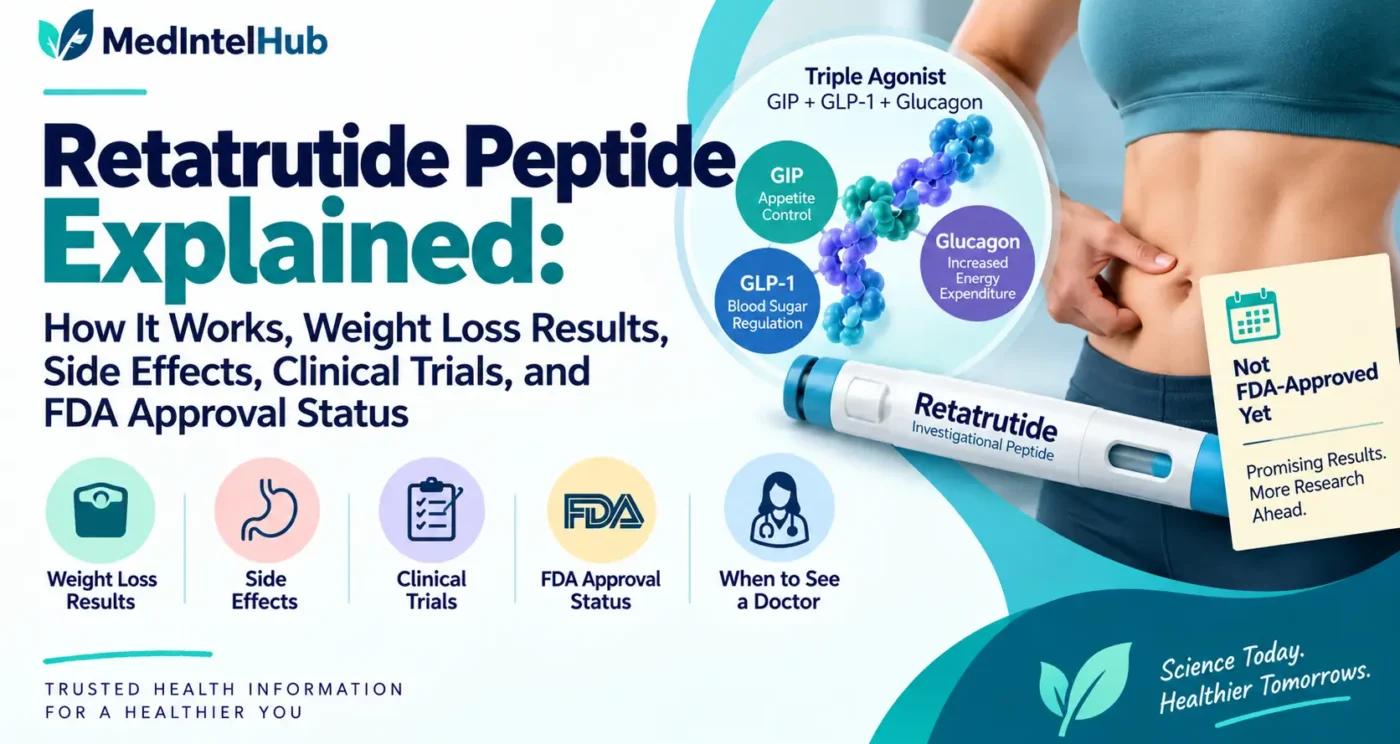
Retatrutide has become one of the most closely watched experimental weight-management drugs in development.
The attention is understandable. In clinical trials, participants receiving retatrutide have experienced unusually large average reductions in body weight, including results approaching 30% in some Phase 3 analyses. The drug has also produced meaningful improvements in blood sugar, sleep apnea severity, and knee osteoarthritis pain in specific study populations.
But there is an equally important fact that tends to disappear from social media posts and online peptide advertisements:
Retatrutide is still an investigational drug. As of September 2026, it is not FDA-approved and has not been approved by any regulatory agency.
Eli Lilly, the company developing retatrutide, says people should not use products claiming to contain retatrutide outside of its clinical trials. The U.S. Food and Drug Administration (FDA) has gone further, stating that retatrutide has not been found safe and effective for any condition and cannot be used in compounding under federal law.
That distinction matters because products labeled “retatrutide peptide,” “research retatrutide,” or even “GLP-3” are already being marketed online despite the absence of an approved commercial retatrutide product.
The clinical-trial drug and a vial purchased from an unapproved internet peptide seller should not be assumed to be the same thing.
This guide explains what retatrutide is, why it is called a triple hormone receptor agonist, how its weight-loss results compare conceptually with semaglutide and tirzepatide, what side effects have appeared in trials, what Phase 3 research has shown so far, and what its FDA status actually means in 2026.
Retatrutide at a Glance
| Question | Key point |
|---|---|
| What is retatrutide? | An investigational peptide-based drug developed by Eli Lilly |
| Other name | LY3437943 |
| How does it work? | Activates GIP, GLP-1, and glucagon receptors |
| How has it been given in trials? | Once-weekly subcutaneous injection |
| Is it a GLP-1 drug? | Partly. It activates GLP-1 receptors plus GIP and glucagon receptors |
| Is “GLP-3” its scientific name? | No. “GLP-3” is an informal online nickname, not its accepted pharmacologic classification |
| How much weight loss occurred in Phase 2? | Up to 24.2% mean weight reduction at 48 weeks in the highest-dose group |
| What did Phase 3 TRIUMPH-1 report? | Up to 28.3% mean weight reduction at 80 weeks in the 12-mg study arm under the efficacy estimand |
| Is retatrutide FDA-approved? | No |
| Can doctors prescribe approved retatrutide? | No FDA-approved retatrutide product currently exists |
| Can pharmacies legally compound retatrutide in the U.S.? | FDA says retatrutide cannot be used in compounding under federal law |
| Common trial side effects | Nausea, diarrhea, constipation, vomiting, decreased appetite, and other gastrointestinal effects |
| Are the long-term risks fully known? | No. Phase 3 and long-term cardiovascular/renal studies are still underway |
| When may FDA review occur? | Lilly says it plans a U.S. Biologics License Application in the first quarter of 2027 |
What Is Retatrutide?
Retatrutide, also known by the development code LY3437943, is an investigational synthetic molecule designed to activate three hormone receptors involved in appetite, metabolism, blood glucose regulation, and energy balance.
Those receptors are:
- glucose-dependent insulinotropic polypeptide, or GIP
- glucagon-like peptide-1, or GLP-1
- glucagon
The Phase 2 obesity trial published in the New England Journal of Medicine described retatrutide as a GIP, GLP-1, and glucagon receptor agonist administered once weekly by subcutaneous injection.
Unlike taking three separate medicines, retatrutide is a single molecule engineered to activate all three receptor systems.
That triple mechanism is what distinguishes it most clearly from currently approved drugs such as semaglutide and tirzepatide.
Why Is Retatrutide Called a Triple Agonist?
An agonist is a substance that activates a receptor.
Retatrutide is therefore described as a triple agonist because one molecule stimulates three different receptor types.
Each receptor contributes somewhat differently to metabolism.
GLP-1 Receptor Activation
GLP-1 is an incretin hormone released after eating.
Activation of GLP-1 receptors can:
- increase insulin secretion when glucose is elevated
- suppress inappropriate glucagon secretion in certain settings
- slow gastric emptying
- reduce appetite
- increase feelings of fullness
These effects are part of why GLP-1 receptor agonists such as semaglutide can produce significant improvements in glucose control and body weight.
GIP Receptor Activation
GIP is another incretin hormone.
It participates in glucose-dependent insulin secretion and has effects on adipose tissue and broader metabolic signaling.
Tirzepatide combines GIP and GLP-1 receptor agonism, which is why it is often described as a dual agonist.
Retatrutide includes both of those targets and adds another: glucagon.
Glucagon Receptor Activation
Glucagon is traditionally associated with raising blood glucose, so it may sound surprising to include glucagon receptor activation in a drug being studied for obesity and diabetes.
The biology is more complex than simply “glucagon raises sugar.”
Glucagon signaling also influences:
- liver metabolism
- fat oxidation
- nutrient utilization
- energy expenditure
Researchers have proposed that carefully balanced glucagon receptor activity alongside GIP and GLP-1 receptor activation may enhance weight reduction through effects on both energy intake and expenditure.
The 2026 peer-reviewed TRANSCEND-T2D-1 report notes that adding glucagon receptor activity may increase weight loss through suppression of appetite, altered liver substrate use, and increased energy expenditure.
The important word is balanced. Glucagon is not simply being added independently; retatrutide is engineered as a combined receptor agonist.
Is Retatrutide a GLP-1 Drug?
Yes, but that description is incomplete.
Retatrutide activates the GLP-1 receptor, so it belongs broadly to the expanding family of drugs using incretin-related biology.
But it also activates:
- GIP receptors
- glucagon receptors
Calling retatrutide only a “GLP-1” would therefore leave out two-thirds of its main receptor profile.
A more accurate description is:
GIP/GLP-1/glucagon triple hormone receptor agonist.
Is Retatrutide Really a “GLP-3”?
No.
“GLP-3” has become an informal online nickname for retatrutide, presumably because the drug targets three receptor systems.
But GLP-3 is not the accepted scientific name for retatrutide, nor does retatrutide activate three different GLP receptors.
The actual targets are:
- GIP
- GLP-1
- glucagon
Calling it “GLP-3” may be convenient marketing shorthand, but it can create the mistaken impression that GLP-1, GLP-2, and GLP-3 receptors are the drug’s three targets.
They are not.
The terminology becomes especially important when online vendors use “GLP-3 peptide” to market unapproved injectable products.
Retatrutide vs Semaglutide vs Tirzepatide
The easiest way to understand the difference is by receptor targets.
| Drug | Main receptor targets | Current general status |
|---|---|---|
| Semaglutide | GLP-1 | FDA-approved products exist for specific diabetes and weight-management indications |
| Tirzepatide | GIP + GLP-1 | FDA-approved products exist for specific indications |
| Retatrutide | GIP + GLP-1 + glucagon | Investigational; not FDA-approved |
This does not establish that retatrutide is clinically superior.
Results from separate clinical trials cannot be compared as though the participants, study duration, dosing, endpoints, and statistical methods were identical.
A drug producing 28% average weight loss in one trial cannot automatically be declared “better” than another drug producing a smaller number in a different study.
Is Retatrutide Better Than Tirzepatide?
We do not yet have the definitive answer.
A direct Phase 3 trial called TRIUMPH-5 is comparing retatrutide with tirzepatide in adults with obesity.
ClinicalTrials.gov lists the trial as active but no longer recruiting, with estimated primary completion in November 2026 and study completion in December 2026. As of September 2026, results have not been posted.
Until those head-to-head results are available and fully analyzed, claims that retatrutide has “beaten” tirzepatide should be treated cautiously.
How Much Weight Loss Has Retatrutide Produced?
The weight-loss results have been the main reason retatrutide has attracted so much attention.
But there are now several different datasets, and they should not be mixed together.
Some results come from peer-reviewed journals.
Others are Phase 3 topline results announced by Lilly and presented at scientific meetings but not yet fully published in peer-reviewed form.
Phase 2 Obesity Trial: Up to 24.2% Mean Weight Loss at 48 Weeks
The first major obesity study was a randomized Phase 2 trial published in the New England Journal of Medicine in 2023.
It included 338 adults with obesity, or overweight plus at least one weight-related condition.
At 48 weeks, mean body-weight changes were:
| Study group | Mean weight change at 48 weeks |
|---|---|
| Retatrutide 1 mg | −8.7% |
| Retatrutide 4 mg combined | −17.1% |
| Retatrutide 8 mg combined | −22.8% |
| Retatrutide 12 mg | −24.2% |
| Placebo | −2.1% |
Among participants assigned to the 12-mg group, 83% had lost at least 15% of their initial body weight by week 48, and 26% lost at least 30%.
Researchers also noted that average weight had not clearly plateaued by the end of the 48-week study.
That result helped justify the much larger Phase 3 TRIUMPH program.
2026 TRIUMPH-1 Phase 3 Results
In May 2026, Lilly announced topline results from TRIUMPH-1, a large Phase 3 trial in adults with obesity or overweight plus at least one weight-related condition and without diabetes.
The study randomized 2,339 participants.
Under the study’s efficacy estimand, average weight reduction at 80 weeks was reported as:
- 19.0% with the 4-mg arm
- 25.9% with the 9-mg arm
- 28.3% with the 12-mg arm
Participants in the 12-mg group lost an average of approximately 70.3 pounds.
The efficacy estimand estimates what would have occurred had randomized participants remained on assigned treatment without starting prohibited weight-management therapy.
Why the Treatment-Regimen Result Is Also Worth Knowing
Real-world treatment includes discontinuations and deviations.
Under the treatment-regimen estimand, which incorporates outcomes regardless of treatment adherence or use of prohibited weight-management therapies, mean weight reductions at week 80 were:
- 17.6% with 4 mg
- 23.7% with 9 mg
- 25.0% with 12 mg
- 3.9% with placebo
That difference illustrates why a headline saying “28.3% weight loss” should always be accompanied by context.
What Happened at 104 Weeks?
TRIUMPH-1 included a prespecified extension for selected participants who began with a BMI of at least 35 and completed the initial treatment period under the study’s eligibility conditions.
Lilly reported average weight reduction reaching approximately 30.3% in participants continuing the 12-mg treatment pathway under the efficacy analysis at 104 weeks.
That is an impressive result, but it came from an extension subgroup rather than the entire original randomized population and should not be interpreted as a guarantee that an individual patient would lose 30% of body weight.
TRIUMPH-4: Obesity and Knee Osteoarthritis
Another Phase 3 study, TRIUMPH-4, examined adults with obesity or overweight who also had knee osteoarthritis.
In December 2025, Lilly reported that participants receiving the 12-mg study dose lost an average of 28.7% of body weight at 68 weeks.
Knee osteoarthritis pain also improved substantially in the study.
At the time of the announcement, detailed results had not yet undergone full peer-reviewed publication.
This matters because sponsor press releases are useful for learning that a study met its endpoints, but a full paper allows independent readers to examine methodology, subgroup analyses, missing data, adverse events, and statistical details more carefully.
Retatrutide and Type 2 Diabetes
Retatrutide is also being developed as a potential diabetes treatment.
One of the strongest pieces of evidence available in 2026 is TRANSCEND-T2D-1, because its Phase 3 results have now been published in The Lancet.
The trial included 537 adults with type 2 diabetes that was not adequately controlled with diet and exercise alone.
At 40 weeks, mean body-weight change was:
| Group | Mean body-weight change |
|---|---|
| Retatrutide 4 mg | −11.5% |
| Retatrutide 9 mg | −13.9% |
| Retatrutide 12 mg | −15.3% |
| Placebo | −2.6% |
Retatrutide also produced significant reductions in HbA1c.
The difference between the peer-reviewed analysis and earlier sponsor headlines is worth noticing. Lilly had also highlighted a weight reduction of up to 16.8% using a different prespecified estimand. Both numbers can be valid within their statistical framework, but they are not interchangeable.
The broader lesson for patients is that clinical-trial headlines often contain one particular analysis rather than the only possible way of describing a trial result.
TRIUMPH-2: Obesity With Type 2 Diabetes
In July 2026, Lilly announced topline Phase 3 results from TRIUMPH-2, which studied adults with obesity or overweight and type 2 diabetes.
At 80 weeks, the efficacy analysis showed average weight reductions of:
- 12.7% with 4 mg
- 19.1% with 9 mg
- 20.8% with 12 mg
- 4.0% with placebo
HbA1c fell by an average of up to 1.6 percentage points across retatrutide study groups.
These findings had not yet been fully published in a peer-reviewed journal as of September 2026.
TRIUMPH-3: Severe Obesity and Cardiovascular Disease
TRIUMPH-3 studied adults with severe obesity and established cardiovascular disease, with or without type 2 diabetes.
Lilly reported up to 22.6% mean weight reduction at 80 weeks.
The study also recorded major cardiovascular events, but it was not large enough to provide a definitive cardiovascular-outcomes conclusion.
For example, confidence intervals around reported MACE estimates crossed the possibility of both benefit and harm.
That is why retatrutide has a separate, much larger outcomes trial underway.
Does Retatrutide Reduce Heart Attack or Stroke Risk?
That has not yet been established.
A dedicated study called TRIUMPH-Outcomes is evaluating whether retatrutide reduces cardiovascular events and progression of kidney disease in adults with overweight or obesity and established cardiovascular disease and/or chronic kidney disease.
ClinicalTrials.gov lists approximately 10,000 participants, with study completion estimated for 2029.
Until that trial or other adequately powered cardiovascular studies report results, it would be premature to assume that retatrutide has the same cardiovascular-outcomes profile as an approved drug with completed outcome trials.
Weight loss and improvement in risk markers are encouraging, but they are not identical to demonstrating fewer heart attacks, strokes, or cardiovascular deaths.
Retatrutide and Obstructive Sleep Apnea
Obstructive sleep apnea, or OSA, is strongly associated with obesity in many patients because excess tissue and changes in upper-airway mechanics can increase airway collapse during sleep.
TRIUMPH-1 included a nested OSA study.
Lilly reported reductions in the apnea-hypopnea index of up to approximately 60.6%, corresponding to 36.1 fewer breathing events per hour in one study group.
That result suggests that substantial weight reduction can translate into improvement in obesity-related sleep apnea for selected patients.
It does not mean anyone taking retatrutide would necessarily be able to discontinue CPAP or other sleep-apnea treatment.
Retatrutide is not currently approved for OSA, and treatment changes should not be based on experimental-drug results alone.
Retatrutide and Knee Osteoarthritis
Excess body weight places additional mechanical load on the knees and can also contribute to metabolic inflammation.
In the TRIUMPH program, participants with knee osteoarthritis experienced both substantial weight reduction and meaningful improvement in pain.
In one TRIUMPH-1 osteoarthritis analysis, WOMAC pain scores fell by more than 70% in the higher-dose study groups.
TRIUMPH-4 also reported major improvements in pain and physical function alongside weight reduction.
However, weight-loss therapy does not rebuild lost cartilage or reverse every structural change caused by osteoarthritis.
Improvement in symptoms and improvement in joint anatomy are different outcomes.
What Other Conditions Is Retatrutide Being Studied For?
Retatrutide’s development program has expanded beyond uncomplicated obesity.
Lilly reports ongoing or completed studies in areas including:
- obesity and overweight
- type 2 diabetes
- knee osteoarthritis pain
- moderate-to-severe obstructive sleep apnea
- chronic low back pain
- cardiovascular outcomes
- kidney outcomes
- metabolic dysfunction-associated steatotic liver disease, or MASLD
This does not mean retatrutide is proven to treat all of those conditions.
Clinical development often explores several possible indications before regulators decide whether the evidence supports approval for any of them.
What Are the Side Effects of Retatrutide?
The most common side effects seen so far are gastrointestinal.
Across the clinical program, frequently reported events include:
- nausea
- diarrhea
- constipation
- vomiting
- decreased appetite
The Phase 2 obesity trial found that gastrointestinal adverse events were generally mild to moderate, occurred more often at higher doses, and were partly reduced by using a lower starting dose.
TRIUMPH-1 Side Effects
In Lilly’s 2026 TRIUMPH-1 report, nausea occurred in:
- 28.6% of participants in the 4-mg arm
- 38.4% in the 9-mg arm
- 42.4% in the 12-mg arm
- 14.8% with placebo
Diarrhea occurred in approximately 25%–34% of retatrutide-treated participants, while vomiting occurred in 10.6%–25.3% depending on the study arm.
Discontinuation because of adverse events increased with the higher study doses, reaching 11.3% in the 12-mg group versus 4.9% with placebo.
These data reinforce an important point:
Greater average weight loss does not necessarily mean a higher dose is preferable for every person.
If retatrutide is ultimately approved, regulators and clinicians will have to weigh efficacy against tolerability.
What Is Dysesthesia?
One less familiar side effect appeared in Phase 3 reporting: dysesthesia.
Dysesthesia refers to an abnormal skin sensation and can include sensations such as:
- tingling
- burning
- unusual sensitivity
- prickling
- altered skin sensation
In TRIUMPH-1, Lilly reported dysesthesia in 5.1%, 12.3%, and 12.5% of participants in the 4-, 9-, and 12-mg groups, respectively, compared with 0.9% with placebo.
Most reported events were mild to moderate and resolved during treatment.
The significance of this finding will become clearer as complete Phase 3 safety data are published and larger populations are exposed during further development.
Does Retatrutide Increase Heart Rate?
An increase in heart rate was observed in the Phase 2 obesity trial.
Researchers described dose-dependent increases in heart rate that peaked around week 24 and then declined.
That does not establish that retatrutide causes dangerous cardiac rhythm problems, but it is a safety signal that needs to be interpreted alongside longer-term cardiovascular data.
The ongoing TRIUMPH-Outcomes trial should provide much more information about overall cardiovascular effects.
Can Retatrutide Cause Low Blood Sugar?
Retatrutide affects insulin and glucose regulation, but severe hypoglycemia was not reported in the peer-reviewed TRANSCEND-T2D-1 monotherapy trial.
That study involved people whose diabetes was being managed with diet and exercise rather than insulin or sulfonylureas.
Future risk could differ when retatrutide is combined with medications capable of directly causing hypoglycemia.
Because retatrutide is not approved, there is currently no FDA prescribing label defining drug interactions or dose adjustments for combinations with insulin, sulfonylureas, or other glucose-lowering therapies.
Patients should therefore not extrapolate instructions from semaglutide or tirzepatide labels to unapproved retatrutide.
What Serious Retatrutide Risks Are Known?
The most accurate answer in 2026 is:
The safety profile is still being established.
Clinical trials provide encouraging information, but they cannot identify every uncommon or long-term adverse effect before a drug reaches much larger populations.
A drug’s final prescribing information is created only after regulators review the complete safety and efficacy package.
Because retatrutide is not FDA-approved, it currently has:
- no FDA-approved prescribing information
- no finalized FDA contraindication list
- no finalized FDA boxed warning
- no approved pregnancy recommendations
- no approved interaction guidance
- no approved monitoring schedule
It would therefore be misleading to simply copy the entire warning label from semaglutide or tirzepatide and claim that those are established retatrutide warnings.
Some risks may eventually overlap because the drugs share GLP-1-related activity, but that needs regulatory and clinical confirmation.
What About Pancreatitis, Gallbladder Disease, or Thyroid Tumors?
These concerns are familiar because they appear in discussions of approved GLP-1-related medications.
Researchers will naturally monitor similar outcomes during retatrutide development.
But the appropriate 2026 wording is not:
“Retatrutide carries the same warning.”
It is:
Retatrutide does not yet have an FDA-approved safety label, so its final warnings and contraindications have not been established.
The distinction matters for medical accuracy.
Anyone experiencing severe persistent abdominal pain, repeated vomiting, jaundice, or another serious symptom while participating in a clinical trial should follow the trial team’s urgent-care instructions.
Someone using an unapproved internet product should seek medical care for serious symptoms and tell clinicians exactly what was taken.
Does Retatrutide Cause Muscle Loss?
Major weight reduction inevitably raises questions about body composition.
When people lose a substantial amount of body weight—whether through lifestyle treatment, medication, illness, or bariatric surgery—some loss of lean mass can occur along with fat loss.
Retatrutide studies have generated interest in how much of the lost weight comes from fat versus lean tissue, but it is too early to claim that retatrutide uniquely prevents or causes clinically important muscle loss.
Until complete body-composition data are available, sensible principles for medically supervised weight loss include attention to:
- adequate protein intake
- resistance exercise when medically appropriate
- preservation of physical function
- avoidance of unnecessary rapid nutritional restriction
Those principles should not be turned into a do-it-yourself retatrutide regimen.
What Happens When Retatrutide Is Stopped?
We do not yet have enough long-term evidence to provide a definitive answer.
With other effective obesity medications, stopping treatment often leads to some degree of weight regain because obesity is a chronic biological disease rather than a temporary lack of willpower.
Retatrutide may ultimately follow a similar pattern, but its specific long-term maintenance strategy is still under investigation.
Lilly has ongoing studies examining long-term treatment and weight maintenance, and additional follow-up data will be needed.
Patients should be skeptical of claims that one temporary course of experimental retatrutide permanently “resets metabolism.”
That has not been established.
Is Retatrutide FDA Approved?
No.
As of September 2026, retatrutide is not approved by the FDA for obesity, diabetes, sleep apnea, osteoarthritis, or any other indication.
Lilly also states that the drug has not been approved by any regulatory agency.
The FDA specifically says retatrutide:
- is not a component of an FDA-approved drug
- has not been found safe and effective for any condition
- cannot be used in compounding under federal law
This is different from semaglutide and tirzepatide, which have FDA-approved commercial products with regulated manufacturing, prescribing information, and known labeled indications.
When Will Retatrutide Be FDA Approved?
There is no guaranteed approval date.
Lilly announced in July 2026 that it plans to submit a Biologics License Application to the FDA in the first quarter of 2027 for retatrutide.
Submission is only the beginning of regulatory review.
The FDA can:
- approve the application
- request additional information
- require further analyses
- require additional studies
- delay a decision
- decline approval
Even if retatrutide is approved eventually, regulators will determine:
- which conditions it may be used for
- which patients are eligible
- approved doses
- titration schedule
- contraindications
- warnings
- monitoring
- pregnancy recommendations
- formulation and device details
Those cannot be assumed from today’s clinical-trial protocols.
Can Doctors Prescribe Retatrutide Right Now?
There is currently no FDA-approved retatrutide product for a doctor to prescribe as an approved medication.
Patients may receive authentic investigational retatrutide through qualifying Lilly-sponsored clinical trials.
That is very different from buying a vial from a website and asking a clinician to supervise its use.
Lilly states that retatrutide is legally available only to participants in its clinical trials and warns against products claiming to contain the drug outside those studies.
Can Retatrutide Be Compounded?
In the United States, FDA says no.
FDA’s current guidance states explicitly:
Retatrutide and cagrilintide cannot be used in compounding under federal law.
The agency also emphasizes that retatrutide has not been found safe and effective for any condition.
This is an important distinction from certain circumstances in which federal law permits compounding involving ingredients from approved medicines.
An online service calling its product “compounded retatrutide” does not make the product an FDA-approved or legally appropriate substitute.
What Is “Research-Grade” Retatrutide?
Online peptide sellers sometimes offer vials labeled:
- retatrutide peptide
- retatrutide research chemical
- research use only
- not for human consumption
- GLP-3 peptide
The wording can give an impression of scientific legitimacy.
It does not mean the product is the same retatrutide used in Lilly’s clinical trials.
FDA and Lilly have warned that unapproved products marketed as retatrutide may have problems such as:
- unknown ingredients
- impurities
- contamination
- too much active ingredient
- too little active ingredient
- the wrong ingredient entirely
Injectable products create additional risk because contamination or sterility failures can introduce organisms directly beneath the skin or into deeper tissues.
A certificate posted on a vendor’s website does not create the manufacturing oversight, batch consistency, pharmacovigilance, regulatory inspection, and validated supply chain required for an approved medicine.
Why “Not for Human Consumption” Does Not Make Self-Use Safe
A product sold for laboratory research is not necessarily manufactured to standards appropriate for human injection.
Labeling a vial “research use only” may actually emphasize that it is not intended as a human medicine.
The phrase does not guarantee:
- identity
- purity
- sterility
- potency
- stability
- absence of endotoxin
- correct concentration
Using such a product based on dosing instructions from social media adds another layer of uncertainty.
The person may not know what substance is actually in the vial, let alone how the human body will respond.
Is There an Approved Retatrutide Dose for Weight Loss?
No.
There is no FDA-approved retatrutide dose because the drug itself has not been approved.
Clinical trials have investigated several dose levels and gradual dose-escalation schedules.
Those regimens exist to answer research questions under controlled protocols. They are not instructions for self-treatment.
A Phase 3 trial dose printed in a journal article does not tell an individual:
- whether retatrutide is medically appropriate
- what formulation is being used
- how an unapproved vial was manufactured
- whether a stated concentration is accurate
- how medical conditions affect risk
- how other medications interact
- how adverse effects should be monitored
For the same reason, this article does not provide instructions for reconstituting, measuring, or injecting retatrutide obtained outside a clinical trial.
Who Might Eventually Qualify for Retatrutide?
We do not know yet.
If the FDA approves retatrutide, eligibility will depend on the exact indication and labeling authorized by regulators.
Clinical trials have included different populations, including adults with:
- obesity
- overweight plus weight-related conditions
- obesity and type 2 diabetes
- severe obesity with cardiovascular disease
- obesity with sleep apnea
- obesity with knee osteoarthritis
Those enrollment criteria are research criteria, not future prescribing rules.
FDA labeling could ultimately be narrower, broader, or different.
Can Retatrutide Be Used for “Small” Amounts of Cosmetic Weight Loss?
There is no approved indication at all right now, including cosmetic weight loss.
The major clinical trials have focused on people with obesity or overweight accompanied by medical risk factors or complications.
Using an experimental injectable drug to lose a small amount of weight without a medical indication is not supported by the current retatrutide evidence base.
Potential benefit has to be considered against uncertain long-term risk.
Is Retatrutide Safe During Pregnancy?
There is currently no FDA-approved pregnancy labeling for retatrutide.
Because the drug is investigational, its final pregnancy recommendations have not been established.
Pregnancy, plans for conception, contraception, breastfeeding, and fertility considerations are handled within clinical-trial protocols rather than through an approved prescribing label.
People who become pregnant while participating in a retatrutide study should contact their trial team promptly.
Someone who has used a nonapproved product claiming to contain retatrutide should inform their obstetric or healthcare professional exactly what was used rather than relying on advice from the seller.
Is Retatrutide Safe Long Term?
We do not know enough yet.
Some participants have now been followed for well over a year, and the Phase 3 safety database is growing.
But several questions require longer observation:
- uncommon adverse effects
- long-term gastrointestinal tolerability
- cardiovascular outcomes
- kidney outcomes
- long-term body-composition changes
- weight maintenance
- effects after discontinuation
- risks in broader real-world populations
- pregnancy exposure
- interactions with other medications
The ongoing TRIUMPH-Outcomes study is expected to continue into 2029, reflecting how long it can take to answer cardiovascular and kidney-outcome questions properly.
Retatrutide Clinical Trials: Where the Evidence Stands in 2026
A helpful way to understand the evidence is to separate published results from ongoing or sponsor-announced studies.
| Trial | Population | Status/major finding |
|---|---|---|
| Phase 2 obesity trial | Obesity or overweight with comorbidity | Peer-reviewed; up to 24.2% mean loss at 48 weeks |
| Phase 2 diabetes trial | Type 2 diabetes | Peer-reviewed; improved HbA1c and weight |
| TRANSCEND-T2D-1 | Type 2 diabetes managed with diet/exercise | Phase 3 peer-reviewed in The Lancet in 2026 |
| TRIUMPH-1 | Obesity/overweight without diabetes | Phase 3; up to 28.3% efficacy-estimand loss at 80 weeks |
| TRIUMPH-2 | Obesity/overweight with type 2 diabetes | Phase 3 topline; up to 20.8% at 80 weeks |
| TRIUMPH-3 | Severe obesity with cardiovascular disease | Phase 3 topline; up to 22.6% at 80 weeks |
| TRIUMPH-4 | Obesity plus knee osteoarthritis | Phase 3 topline; up to 28.7% at 68 weeks |
| TRIUMPH-5 | Retatrutide vs tirzepatide | Direct head-to-head Phase 3 trial; results not yet posted as of September 2026 |
| TRIUMPH-Outcomes | Cardiovascular/kidney outcomes | Ongoing; completion expected around 2029 |
How Should Patients Interpret the 28% Weight-Loss Headlines?
The numbers are genuinely impressive.
But three qualifications matter.
1. They Are Averages
A 28.3% mean reduction does not mean every participant lost 28.3%.
Some lost more.
Some lost less.
Some discontinued treatment.
Some could not tolerate higher study doses.
2. Trial Conditions Are Controlled
Participants receive structured follow-up, protocol-defined dose escalation, medical assessment, safety monitoring, and standardized study medication.
That is nothing like injecting a peptide bought online.
3. Different Statistical Analyses Produce Different Numbers
In TRIUMPH-1, the 12-mg group’s 80-week average was:
- 28.3% under the efficacy estimand
- 25.0% under the treatment-regimen estimand
Both are valid trial analyses, but they answer slightly different questions.
Headlines tend to use the larger, more dramatic number.
Patients deserve to know the context behind it.
When Should Someone Seek Medical Care After Using an Unapproved “Retatrutide” Product?
Because there is no approved retatrutide product outside clinical research, a person who develops symptoms after using something sold as retatrutide should tell the healthcare professional exactly what product was taken.
Seek prompt medical attention for problems such as:
- persistent vomiting or inability to keep fluids down
- signs of significant dehydration
- severe or persistent abdominal pain
- fainting
- confusion
- severe weakness
- signs of infection around an injection site
- rapidly worsening symptoms
- unusual neurological sensations that are severe or persistent
Call emergency medical services for:
- difficulty breathing
- swelling of the face, tongue, lips, or throat
- fainting with signs of severe allergic reaction
- severe chest pain
- severe neurological symptoms
- another rapidly life-threatening reaction
Do not assume that a complication must be a “normal retatrutide side effect.”
With an unverified online peptide, the actual ingredient, concentration, sterility, and contaminants may be unknown.
Frequently Asked Questions About Retatrutide Peptide
What Is Retatrutide Peptide?
Retatrutide is an investigational synthetic peptide-based drug developed by Eli Lilly.
It is designed as a single molecule that activates the GIP, GLP-1, and glucagon receptors and has been studied as a once-weekly subcutaneous injection.
Is Retatrutide a GLP-1?
Partly.
Retatrutide activates GLP-1 receptors, but it also activates GIP and glucagon receptors.
It is therefore more accurately described as a triple GIP/GLP-1/glucagon receptor agonist.
Is Retatrutide the Same as GLP-3?
No.
“GLP-3” is an informal online nickname rather than the accepted scientific name for retatrutide.
There is no third GLP receptor being targeted. Its three receptor targets are GIP, GLP-1, and glucagon.
How Does Retatrutide Work for Weight Loss?
Its effects appear to involve several pathways.
GLP-1 and GIP signaling affect appetite, satiety, insulin secretion, and metabolism, while glucagon receptor activation may add effects on nutrient utilization and energy expenditure.
The exact contribution of each receptor to retatrutide’s human weight-loss effect remains an active area of research.
How Much Weight Did People Lose on Retatrutide?
Results depend on the study population, dose, duration, and statistical analysis.
In the peer-reviewed Phase 2 obesity trial, the highest-dose group lost an average of 24.2% at 48 weeks.
In the Phase 3 TRIUMPH-1 efficacy analysis, the 12-mg study arm lost an average 28.3% at 80 weeks.
Individual results varied substantially.
Did Anyone Lose 30% of Their Weight?
Yes, some participants did.
In the Phase 2 study, 26% of people assigned to the 12-mg arm lost at least 30% of their starting body weight by week 48.
The TRIUMPH-1 extension also reported mean losses near 30% in selected participants continuing higher-dose treatment over 104 weeks.
That should not be interpreted as an expected result for every future patient.
Is Retatrutide Better Than Tirzepatide?
We do not know yet.
Separate trials suggest retatrutide can produce very large weight reductions, but cross-trial comparisons are unreliable.
A direct head-to-head study, TRIUMPH-5, is comparing the two drugs and had not reported results as of September 2026.
Is Retatrutide Better Than Semaglutide?
No direct conclusion can yet be made from the available data.
Retatrutide activates more receptor systems than semaglutide and has produced larger average reductions in some separate trials, but more receptors do not automatically mean “better” for every measure of safety and clinical benefit.
Head-to-head evidence is more reliable than comparing unrelated trials.
What Are the Most Common Retatrutide Side Effects?
The most common trial adverse effects have been gastrointestinal.
They include:
- nausea
- diarrhea
- constipation
- vomiting
- decreased appetite
Higher study doses have generally produced more gastrointestinal symptoms.
Does Retatrutide Cause Nausea?
Yes, nausea has been common in trials.
In TRIUMPH-1, it was reported in approximately 29%–42% of retatrutide-treated participants depending on the study dose.
Does Retatrutide Increase Heart Rate?
A dose-dependent heart-rate increase was observed in the Phase 2 obesity trial.
The increase peaked around week 24 and declined afterward.
The long-term clinical significance continues to be studied.
What Is Retatrutide Dysesthesia?
Dysesthesia is an abnormal skin sensation such as tingling, burning, sensitivity, or prickling.
It occurred more frequently in higher-dose retatrutide groups in TRIUMPH-1 than with placebo. Most cases reported by Lilly were mild to moderate and resolved during treatment.
Is Retatrutide FDA Approved?
No.
As of September 2026, there is no FDA-approved retatrutide product.
FDA states that retatrutide has not been found safe and effective for any condition.
Is Retatrutide Approved Anywhere?
Lilly states that retatrutide has not been approved by any regulatory agency.
Can a Doctor Prescribe Retatrutide?
There is no approved commercial retatrutide product to prescribe.
Authentic investigational retatrutide may be administered to eligible participants through Lilly-sponsored clinical trials.
Can Retatrutide Be Compounded?
FDA says retatrutide cannot be used in compounding under federal law.
A website calling something “compounded retatrutide” does not make that product FDA-approved or legally equivalent to the investigational drug.
Is Research-Grade Retatrutide Safe?
There is no basis for assuming that an online “research-grade” peptide is safe for human injection.
It may not have been manufactured under conditions required for an approved injectable drug.
Lilly warns that illicit products may contain incorrect amounts, contaminants, impurities, or even the wrong ingredient.
Can You Buy Retatrutide Online?
Websites may advertise products using the name, but that does not mean an authentic approved medicine exists.
As of September 2026, there is no FDA-approved retatrutide product for commercial human use.
Buying something with that label online is fundamentally different from receiving investigational retatrutide in a regulated clinical trial.
What Is the Retatrutide Dose for Weight Loss?
There is no FDA-approved dose.
Clinical trials have investigated different dose levels and escalation schedules, but those are study protocols, not self-treatment instructions.
When Will Retatrutide Be Available?
No definite date can be promised.
Lilly plans to submit retatrutide to the FDA in Q1 2027. Regulatory review would occur after submission, and approval is not guaranteed.
Is Retatrutide Being Studied for Diabetes?
Yes.
The Phase 3 TRANSCEND-T2D-1 trial was published in The Lancet in June 2026 and found significant improvements in both HbA1c and body weight compared with placebo.
Additional diabetes trials are part of the development program.
Is Retatrutide Being Studied for Sleep Apnea?
Yes.
The TRIUMPH program has evaluated people with obesity and moderate-to-severe obstructive sleep apnea, with substantial improvements in apnea-hypopnea index reported in 2026.
It is not currently approved for that indication.
Is Retatrutide Being Studied for Knee Pain?
Yes.
Phase 3 studies have evaluated people with obesity and knee osteoarthritis, with meaningful improvements in pain scores alongside weight loss.
Does Retatrutide Prevent Heart Attacks?
That has not yet been proven.
A large cardiovascular and kidney outcomes trial involving approximately 10,000 participants is underway, with completion expected around 2029.
Does Retatrutide Cause Muscle Loss?
Some lean-mass loss can accompany substantial weight reduction, but there is not yet enough evidence to define retatrutide’s long-term effect on clinically meaningful muscle loss across populations.
Claims that it either “melts only fat” or uniquely destroys muscle should be treated cautiously.
Will Weight Return After Stopping Retatrutide?
The specific long-term pattern after retatrutide discontinuation is not yet established.
Experience with other obesity medications suggests that weight regain can occur when effective chronic therapy is withdrawn, but dedicated retatrutide maintenance data are still developing.
Is Retatrutide Safe Long Term?
The answer is not yet known with the same confidence available for established medications with years of post-approval use.
Phase 3 evidence is expanding, but cardiovascular outcomes, kidney outcomes, uncommon adverse events, pregnancy effects, long-term weight maintenance, and real-world safety still require further study.
Conclusion
Retatrutide may eventually become an important addition to obesity and metabolic-disease treatment.
Its clinical-trial results justify the excitement. A peer-reviewed Phase 2 obesity trial produced average weight reduction of up to 24.2% at 48 weeks, while the 2026 TRIUMPH-1 Phase 3 efficacy analysis reported an average reduction of 28.3% at 80 weeks in the highest-dose study arm. Phase 3 studies have also reported encouraging results in type 2 diabetes, sleep apnea, and knee osteoarthritis.
But promising is not the same as approved.
As of September 2026, the FDA has not approved retatrutide for any condition. There is no approved retatrutide dose, commercial prescription product, finalized safety label, or legal compounded substitute. FDA explicitly states that retatrutide cannot be used in compounding under federal law.
That makes the distinction between clinical research and internet peptide sales especially important.
The study drug used in a regulated Phase 3 trial comes with manufacturing controls, known formulation, defined protocols, medical monitoring, and adverse-event surveillance. A vial purchased online with “retatrutide” printed on the label offers no equivalent assurance.
The most useful takeaway in 2026 is therefore two-sided:
Retatrutide is producing some of the most striking weight-loss results yet seen in medication trials—but until regulators complete their review, it remains an experimental therapy, not a do-it-yourself weight-loss drug.
Resources
U.S. Food and Drug Administration — Concerns With Unapproved GLP-1 Drugs
Current FDA guidance explaining the risks of unapproved products and explicitly stating that retatrutide cannot be used in compounding under federal law.
FDA: Concerns With Unapproved GLP-1 Drugs
Eli Lilly — What to Know About Retatrutide
The developer’s current explanation of retatrutide’s investigational status, clinical program, and warnings about products sold outside Lilly-sponsored trials.
Lilly: What to Know About Retatrutide
New England Journal of Medicine — Phase 2 Obesity Trial
Peer-reviewed Phase 2 evidence covering retatrutide’s weight-loss efficacy, gastrointestinal adverse events, and heart-rate findings.
NEJM: Triple–Hormone-Receptor Agonist Retatrutide for Obesity
The Lancet / PubMed — TRANSCEND-T2D-1
Peer-reviewed 2026 Phase 3 evidence evaluating retatrutide for type 2 diabetes, including HbA1c, body weight, and safety outcomes.
PubMed: TRANSCEND-T2D-1 Phase 3 Trial
ClinicalTrials.gov — TRIUMPH-5
Current trial registry for the direct Phase 3 comparison of retatrutide versus tirzepatide in adults with obesity.
ClinicalTrials.gov: TRIUMPH-5
ClinicalTrials.gov — TRIUMPH-Outcomes
Long-term Phase 3 study examining cardiovascular and kidney outcomes with retatrutide.
ClinicalTrials.gov: TRIUMPH-Outcomes
MedIntelHub Editorial Policy
Learn how MedIntelHub approaches medical research, sourcing, evidence assessment, and health-content review.
MedIntelHub Editorial Policy
Editorial Disclaimer
This article is intended for general educational and informational purposes. It does not recommend retatrutide, diagnose obesity or diabetes, prescribe weight-loss treatment, or replace individualized care from a qualified healthcare professional.
Retatrutide remains an investigational drug as of September 2026 and is not FDA-approved for obesity, diabetes, sleep apnea, osteoarthritis, or any other condition. FDA states that retatrutide cannot be used in compounding under federal law.
Clinical-trial doses and dose-escalation schedules described in published research are study protocols, not instructions for personal use. Do not purchase, reconstitute, measure, inject, or otherwise use a product marketed as “research retatrutide,” “GLP-3,” or compounded retatrutide based solely on information in this article.
Unapproved injectable products may contain incorrect concentrations, contaminants, impurities, or ingredients different from those listed on the label. Serious or persistent symptoms after using an unapproved product require medical assessment, and clinicians should be told exactly what product was used.
Current knowledge about long-term retatrutide safety, cardiovascular outcomes, kidney outcomes, pregnancy exposure, medication interactions, maintenance treatment, and uncommon adverse events remains incomplete. Final indications, warnings, contraindications, and dosing will depend on future regulatory review.

David Bennett
David Bennett is an author at MedIntelHub, where he creates clear, practical, and well-researched content about healthcare, medical billing, insurance, and patient education. His goal is to make complex healthcare topics easier for readers to understand and use in everyday situations. David emphasizes accuracy, transparency, and reliable sourcing, using information from trusted organizations and official healthcare resources whenever possible. Content published by David is intended for educational purposes and should not replace advice from qualified medical, legal, or healthcare professionals.