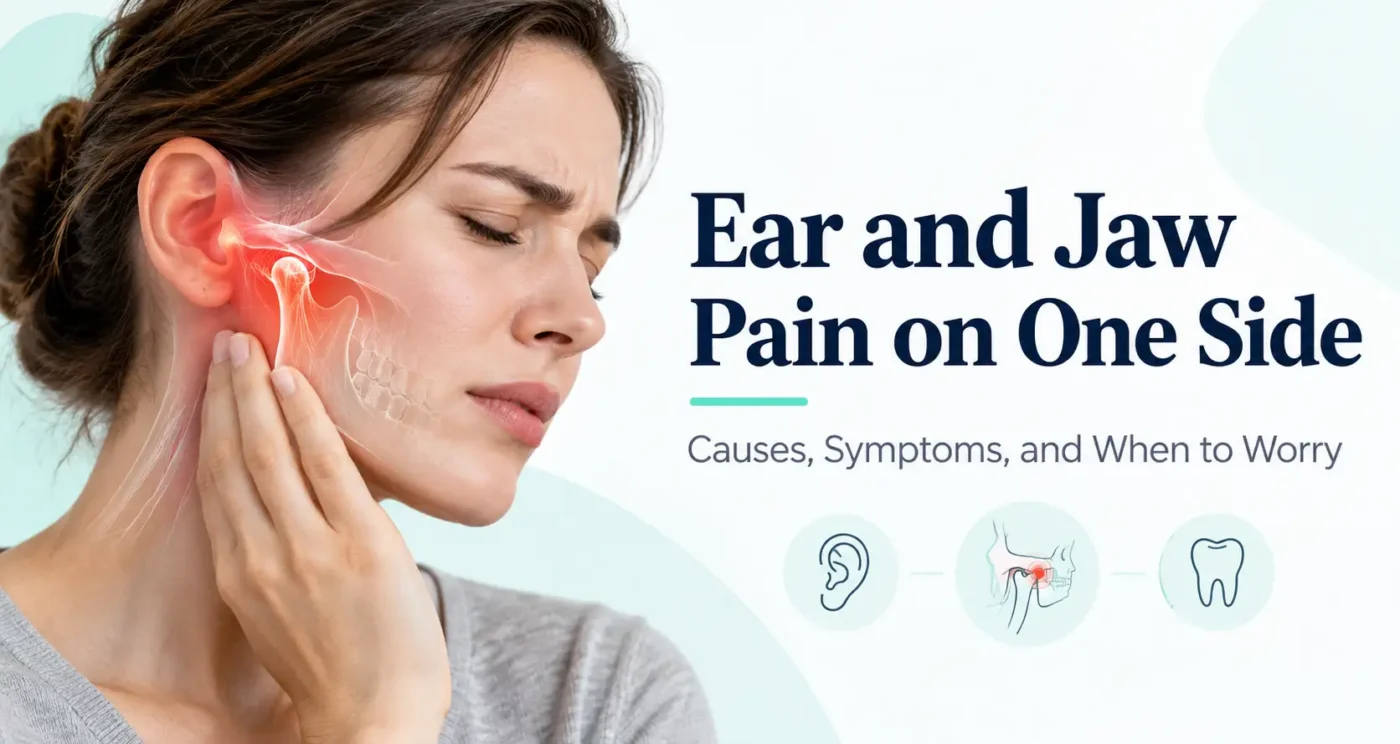
A sore spot just in front of the ear can make a simple meal uncomfortable. The jaw aches when chewing, perhaps the ear feels full, and the pain seems confined to one side. It is tempting to assume an ear infection is responsible, but the source may be a tooth, the jaw joint, a salivary gland, or even a muscle in the neck.
Ear and jaw pain on one side is a symptom, not a diagnosis. The details matter: whether it hurts to bite, whether the ear drains, whether swelling appears during meals, and whether the pain lasts minutes or days. Some causes settle with conservative care; others need prompt dental or medical attention. The sections below explain the patterns clinicians look for, what may help temporarily, and which warning signs should not be ignored.
Why Do the Ear and Jaw Hurt Together?
The ear sits close to the temporomandibular joint (TMJ), which connects the lower jaw to the skull. Teeth, jaw muscles, the throat, salivary glands, and portions of the neck also share nerve pathways with structures around the ear. Pain signals from one area may therefore be felt in another. Clinicians call this referred otalgia, or referred ear pain.
In a 2026 review in American Family Physician, doctors distinguish primary ear pain, which begins inside the ear, from secondary pain originating elsewhere. Dental problems, temporomandibular disorders, and cervical spine conditions are important causes of referred pain in adults. A normal-looking ear during examination does not mean the discomfort is imaginary; it may point the clinician toward the mouth, jaw, throat, and neck.
Common Causes of Ear and Jaw Pain on One Side
Temporomandibular Disorders (TMD)
The joint in front of each ear opens and closes every time you chew, speak, or yawn. Temporomandibular disorders (TMDs) affect that joint, the chewing muscles, or associated tissues. Symptoms may include an aching jaw, tenderness near the ear, pain with wide opening, headaches, and limited jaw movement. Some people experience painful clicking or a jaw that locks.
A useful distinction: TMJ describes the joint itself; TMD describes disorders involving it. The National Institute of Dental and Craniofacial Research (NIDCR) advises that clicking without pain or loss of function is often normal and generally does not require treatment. Pain aggravated by jaw movement is more informative than a noise alone.
Dental Decay, Cracked Teeth, and Tooth Abscesses
A lower molar problem can feel remarkably like an earache. Dental pain may become worse when biting, with hot or cold drinks, or late at night. Gum tenderness, a bad taste, swollen cheek, or obvious tooth sensitivity strengthen the case for a dental source. A cracked tooth may cause sharp pain on release of a bite, while an abscess may produce persistent throbbing and swelling.
A suspected dental abscess warrants urgent dental care. Pain medicine may relieve symptoms temporarily, but it does not treat the underlying infection. The NHS dental abscess guidance notes that an abscess will not resolve reliably without professional treatment.
Ear Infections and Other Ear Conditions
Middle-ear inflammation, outer-ear infection, and pressure problems affecting the Eustachian tube can cause pain that spreads toward the jaw. Hearing changes, fullness, drainage, fever, or pain when the outer ear is moved may provide clues. Swimming, recent respiratory illness, and air travel can also help explain the timing.
Ear infections are not diagnosed by pain alone. A clinician may examine the ear canal and eardrum with an otoscope. Some infections require specific treatment; others improve without antibiotics. Putting unprescribed drops into an ear with possible eardrum injury or drainage may be unsafe.
Teeth Grinding and Jaw Clenching
A tight, tired jaw upon waking may reflect nighttime tooth grinding or clenching, known as bruxism. People may notice morning headaches, tenderness at the temples, worn teeth, or pain that builds during stressful periods. Not everyone who clenches has an obvious grinding sound, and not every episode means a jaw disorder is present.
A dentist can look for tooth wear and discuss whether a properly fitted appliance or behavioral measures are appropriate. Avoid buying devices that permanently alter the bite as a first response to pain.
Salivary Gland Stones or Infections
The parotid salivary gland lies near the ear; the submandibular gland sits under the jaw. A blocked salivary duct can lead to one-sided swelling and pain, often becoming more noticeable while eating because saliva production increases. Infection can add fever, redness, and tenderness. The NIDCR salivary gland overview describes obstruction, inflammation, and masses among conditions that require distinct evaluation.
A swelling that comes and goes with meals suggests a different investigation from pain mainly triggered by opening the mouth. Persistent or enlarging lumps, particularly with facial weakness, require medical assessment.
Throat and Tonsil Problems
Inflamed tonsils, a severe sore throat, or irritation around the back of the tongue may produce ear discomfort even when the ear is healthy. Swallowing pain, fever, voice change, swollen neck nodes, or visible throat changes may accompany it. A deep infection around a tonsil can cause pronounced one-sided throat pain, difficulty opening the mouth, and a muffled voice; these findings require prompt evaluation.
Neck Muscles and Cervical Spine Conditions
Pain can begin in tense neck muscles or the joints of the upper cervical spine and be felt near the jaw angle or ear. Long periods looking downward, recent strain, or pain linked more closely to turning the head than chewing may point to a neck component. However, neck pain and ear pain are not proof of a muscular cause, especially when there is a new lump or systemic illness.
Brief, stabbing, electric-shock-like pain may sometimes arise from irritation of facial or throat nerves. The location and triggers vary: touching part of the face, swallowing, or speaking may set off episodes. Such symptoms are less typical of a routine ear infection and deserve a clinician’s assessment rather than repeated self-treatment.
Less Common but Important Causes
Persistent unexplained one-sided ear pain sometimes requires examination of the throat and nearby structures, particularly in adults with difficulty swallowing, persistent hoarseness, a neck mass, unexplained weight loss, or significant tobacco and alcohol exposure. Most people with one-sided ear pain do not have cancer. Nonetheless, the 2026 AAFP review emphasizes reassessment when severe or persistent unilateral symptoms cannot be explained by routine examination.
What Different Symptom Patterns May Suggest
| Pain pattern or accompanying symptom | Possibilities to discuss with a clinician |
| Worse while chewing or opening wide | TMD, dental pain, or chewing-muscle strain |
| Tooth sensitivity or pain when biting | Decay, cracked tooth, gum disease, or abscess |
| Ear drainage, hearing change, or fever | Ear infection or other ear disorder |
| Swelling that increases during meals | Salivary duct blockage or gland inflammation |
| Worse when turning the neck | Muscle or cervical spine involvement |
| Short electric-shock-like attacks | Possible nerve-related pain |
| Persistent pain with a neck lump or swallowing changes | Requires medical evaluation for underlying throat or neck conditions |
These associations help decide what to examine; they cannot establish a diagnosis. Several conditions can coexist, and an apparent jaw problem does not rule out an ear problem.
Pain in the Right Side of the Neck Under the Ear and Jaw
Pain in the right side of the neck under the ear and jaw may involve the submandibular salivary gland, a lymph node, jaw muscles, a tooth, or tissues in the throat. The exact position matters: a tender spot directly beneath the jaw is not the same as pain deep in the ear canal or in front of the ear joint.
Consider what accompanies it. Swelling that flares during meals suggests a possible salivary obstruction. A painful tooth or gum may lead to a dental examination. Tender lymph nodes can accompany infections, but a new persistent or enlarging lump needs medical review. If swallowing becomes difficult or swelling spreads quickly, seek urgent assessment.
Pain in the Right Ear and Jaw Versus the Left Side
Pain in the right ear and jaw can result from the same broad categories as left-sided pain. Location alone rarely distinguishes TMJ inflammation from dental disease, infection, or referred pain. More useful questions are whether a specific tooth hurts, whether the jaw locks, whether hearing has changed, and whether fever or visible swelling is present.
There is one important exception to avoid overlooking: jaw discomfort, whether left-sided or right-sided, can sometimes accompany cardiac symptoms. When jaw pain occurs with chest pressure, breathlessness, cold sweating, nausea, or unexplained sudden weakness, call emergency services rather than assuming it is a dental or ear problem.
How Doctors and Dentists Find the Cause
A good assessment usually starts with the history. A clinician may ask when the pain began, whether it is constant or episodic, what makes it worse, and whether hearing, swallowing, chewing, or head movement has changed. Recent dental work, respiratory illness, ear injury, and medicines may also matter.
- Ear examination: inspect the canal and eardrum; assess tenderness, hearing complaints, and discharge.
- Dental and oral examination: inspect teeth, gums, bite-related pain, oral tissues, and wisdom-tooth areas.
- Jaw examination: observe opening, tenderness of the chewing muscles, joint movement, and any painful locking.
- Head and neck examination: check lymph nodes, salivary glands, throat, and range of neck motion.
- Further tests: dental X-rays, imaging, hearing tests, or specialist examination only when findings support them.
Not everyone needs a CT scan or MRI. When symptoms persist despite a normal ear examination, the clinician may look more closely at referred sources or recommend an ear, nose, and throat (ENT) specialist. A dentist is often the most direct starting point when tooth pain, gum swelling, or pain on biting dominates.
How Is Ear and Jaw Pain Treated?
Treatment for TMD and Muscle Pain
Conservative measures are usually the first step for uncomplicated TMD: softer meals temporarily, avoiding gum chewing or very wide yawns, gentle heat or cold, and guided jaw exercises when appropriate. Clinicians may recommend a short course of suitable pain relief, physical therapy, or a carefully selected oral appliance. The NIDCR treatment summary cautions against rushing into treatments that permanently change the bite or joint.
Treatment for Dental Causes
Dental treatment depends on the source: a filling or crown for some damaged teeth, root-canal treatment or extraction for selected infections, or professional treatment of gum disease. Antibiotics alone are not a substitute for draining or treating an abscess when definitive dental care is required. The dentist determines whether an antibiotic is indicated.
Treatment for Ear Conditions
Some outer-ear infections need prescribed ear drops; middle-ear conditions are managed according to age, examination findings, symptom severity, and clinical guidance. Do not use leftover antibiotics or ear drops, and avoid inserting cotton swabs into the canal. New hearing loss, significant drainage, or severe pain should be evaluated.
Treatment for Salivary Gland Problems
For a small salivary stone, hydration and clinician-recommended measures to encourage saliva flow may help. Persistent obstruction may require removal, while infection may require specific medical treatment. Never try to dig a stone out with a sharp object. The NHS guidance on salivary gland stones explains why meal-related swelling is a useful clue.
What Can You Do at Home for Mild Ear and Jaw Pain?
If pain is mild, there is no fever or swelling, and you can eat and drink normally, short-term supportive care may be reasonable while arranging an appointment if needed.
- Rest the jaw: choose softer foods for a few days; avoid gum and very chewy meals.
- Apply a comfortable warm or cool compress to the jaw area for short periods, with a cloth between the skin and the compress.
- Stay hydrated and avoid repeatedly pressing, poking, or massaging a very painful area.
- Use an over-the-counter pain reliever only if suitable for your medical history, other medications, and package instructions; ask a pharmacist or clinician when uncertain.
- If a particular tooth hurts, arrange dental care instead of masking worsening pain with repeated medication.
Do not place objects or unprescribed remedies in the ear. Avoid forceful jaw stretching or attempting to pop a locked joint back into place. Home care should not delay assessment of persistent symptoms or suspected infection.
When Should You See a Doctor or Dentist?
Arrange evaluation if pain lasts more than a few days, keeps returning, interrupts sleep, makes eating difficult, or has no clear explanation. A dentist is appropriate for tooth sensitivity, painful biting, or gum swelling. A primary-care clinician or ENT clinician can investigate ear discharge, hearing changes, unexplained ear pain, or accompanying throat and neck symptoms.
Seek prompt same-day assessment for a suspected dental abscess, fever with increasing facial or neck swelling, a painful new lump, significant ear drainage, or a worsening inability to open the mouth. People with diabetes or weakened immune systems should have a lower threshold for medical advice when an ear infection is possible.
When Is Ear and Jaw Pain an Emergency?
Call emergency services or seek emergency care for difficulty breathing or swallowing; rapidly expanding swelling of the mouth, face, or neck; severe illness with neck swelling; or an inability to manage saliva. These symptoms can signal a spreading infection or a threatened airway. Do not attempt to treat them at home.
Jaw pain accompanied by chest tightness, shortness of breath, cold sweats, faintness, or nausea also calls for emergency assessment because heart-related symptoms do not always present as classic chest pain. Sudden facial weakness, new severe neurological symptoms, or abrupt severe hearing-related symptoms require urgent medical advice as well.
Can One-Sided Ear and Jaw Pain Go Away on Its Own?
Sometimes. A brief jaw-muscle flare after prolonged chewing may improve with rest, and some minor ear-pressure symptoms ease as an illness resolves. Other causes, including an infected tooth, persistent salivary obstruction, or a significant ear disorder, generally require assessment and cause-specific care. The fact that pain fades for a day does not confirm the underlying problem has resolved.
Keep track of the pattern rather than trying to name the condition yourself: which side hurts, what triggers it, whether a lump appears, and whether you have fever, tooth pain, discharge, or hearing changes. These details make an appointment more productive. For perspective on routine versus problem-focused healthcare visits, MedIntelHub also explains what actually gets checked during an annual physical.
Frequently Asked Questions
Why do my ear and jaw hurt on only one side?
A single-sided problem involving a tooth, jaw joint, ear, salivary gland, throat, or neck may produce pain in both areas. An examination is needed to identify the source.
Can TMJ disorders cause ear pain without an ear infection?
Yes. TMD can cause aching near or around the ear because the joint and chewing muscles sit close to it. Pain linked to chewing or jaw movement is a useful clue.
What causes pain in the right ear and jaw?
The possibilities include TMD, a dental problem, ear inflammation, and referred pain from nearby tissues. The right side itself does not identify a particular diagnosis.
What causes pain in the right side of the neck under the ear and jaw?
Salivary gland problems, reactive lymph nodes, dental infection, muscular strain, and other neck or throat conditions may produce that pattern. Swelling, fever, and meal-related changes help guide evaluation.
Can a wisdom tooth cause jaw and ear pain on one side?
Yes. A partially erupted or impacted wisdom tooth, especially if the surrounding gum is inflamed, may cause discomfort radiating toward the ear. A dentist can assess the area.
How can I tell whether pain is from my ear or a tooth?
Tooth sensitivity, pain on biting, and gum swelling suggest dental disease; drainage or hearing changes may suggest an ear problem. Both can overlap, so symptoms alone are not definitive.
Can teeth grinding cause ear pain and jaw pain?
Clenching and grinding can overload chewing muscles, leading to jaw soreness and pain near the ear, sometimes worse on waking.
Does ear and jaw pain mean an infection?
Not necessarily. Muscle strain and TMD are noninfectious causes. Fever, discharge, or swelling raises concern for infection but needs examination.
Why does my jaw hurt near my ear when chewing?
TMD and dental conditions are common possibilities. If swelling appears when meals begin, a salivary duct obstruction is another consideration.
Why do I have a lump under my jaw with ear pain?
A swollen lymph node, salivary gland issue, or other neck condition may be responsible. Any persistent, enlarging, or unexplained lump warrants medical evaluation.
Is sharp shooting pain from my ear to jaw serious?
Brief stabbing episodes can have several causes, including nerve-related pain. New, severe, recurrent, or unexplained attacks deserve assessment.
Can stress cause pain in jaw and ear?
Stress may contribute to jaw clenching and muscle tension, but should not automatically be blamed for persistent or worsening symptoms.
Which doctor should I see for one-sided jaw and ear pain?
Start with a dentist for tooth or gum signs, and a primary-care or ENT clinician for ear symptoms or unexplained pain. Emergency warning signs require immediate care.
Should I use antibiotics for jaw and ear pain?
Only when a clinician identifies an appropriate bacterial condition and prescribes them. Antibiotics do not treat TMD, muscle tension, or most nerve-related pain.
When should I worry about one-sided ear and jaw pain?
Seek prompt care for fever, progressive swelling, ear drainage, hearing changes, severe pain, or a persistent neck lump. Breathing or swallowing difficulty is an emergency.
A Practical Final Perspective
Pain near the ear is not always an ear problem. Chewing-related soreness may begin in the jaw joint; a sensitive molar may refer pain toward the ear; swelling beneath the jaw during meals suggests a different pathway altogether. Look for the accompanying symptoms, not just the side that hurts. Mild pain can sometimes be managed conservatively for a short time, but progressive swelling, infection signs, functional difficulty, or unexplained persistent one-sided pain deserves examination.
Resources
American Family Physician — Ear Pain: Diagnosing Common and Uncommon Causes (2026)
A recent clinical review distinguishing primary ear disease from referred pain and outlining examination and warning signs.
Ear Pain: Diagnosing Common and Uncommon Causes (2026)
NIDCR — Temporomandibular Disorders (TMD)
Evidence-based description of TMD symptoms, diagnosis, limitations of testing, and treatment approaches.
Temporomandibular Disorders (TMD)
NIDCR — Summary of TMD Treatments
A stepped approach emphasizing reversible, conservative therapies before invasive procedures.
Mayo Clinic — TMJ Disorders: Symptoms and Causes
Clinical explanation of jaw-joint anatomy, pain patterns, and symptoms affecting the ear.
TMJ Disorders: Symptoms and Causes
NIDCR — Saliva and Salivary Gland Disorders
Overview of gland anatomy, obstruction, swelling, examination, and treatment.
Saliva and Salivary Gland Disorders
NHS — Dental Abscess
Symptoms, urgency, and emergency warning signs of dental infections.
NHS — Salivary Gland Stones
Details on meal-related pain, obstruction, and safe care.
Editorial Guidelines & Medical Disclaimer
This MedIntelHub article provides general educational information about possible causes of ear and jaw pain. It cannot determine an individual diagnosis and does not replace assessment or treatment by a qualified physician, dentist, or other healthcare professional. Medication choices, including over-the-counter pain relief and antibiotics, should be discussed with an appropriate clinician or pharmacist when safety is uncertain; do not stop or change prescribed medicines based on this article. Seek immediate care for serious or rapidly worsening symptoms, particularly difficulty breathing or swallowing, spreading swelling, or possible cardiac symptoms. The article draws on authoritative medical and dental guidance, including a 2026 clinical review and NIH resources. Healthcare guidance, coding requirements, and insurer policies may change and differ by location and plan when billing issues arise. See MedIntelHub’s Editorial Policy for our sourcing and review standards.

David Bennett
David Bennett is an author at MedIntelHub, where he creates clear, practical, and well-researched content about healthcare, medical billing, insurance, and patient education. His goal is to make complex healthcare topics easier for readers to understand and use in everyday situations. David emphasizes accuracy, transparency, and reliable sourcing, using information from trusted organizations and official healthcare resources whenever possible. Content published by David is intended for educational purposes and should not replace advice from qualified medical, legal, or healthcare professionals.