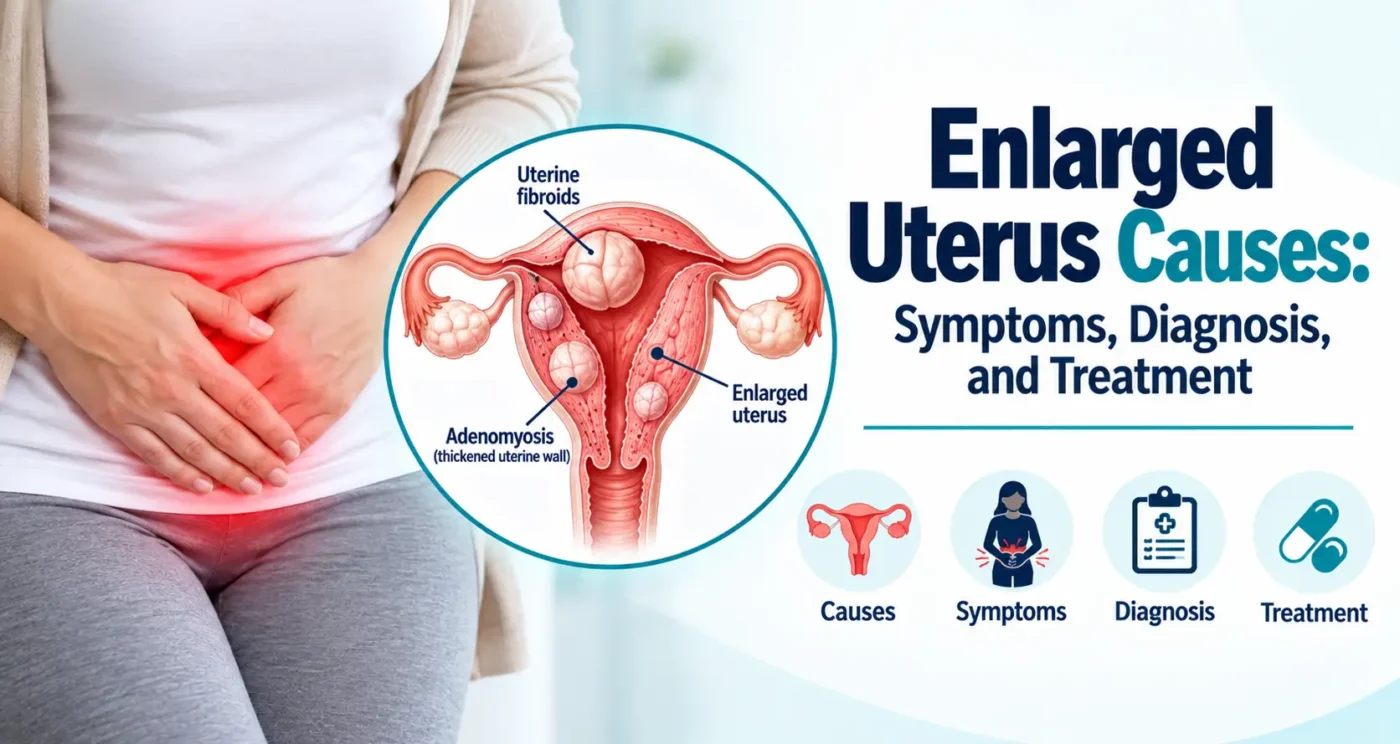
An ultrasound report that says “bulky uterus” or “enlarged uterus” can raise an immediate question: what is making it larger? The finding is common enough in gynecology, but it does not identify one particular disease. Sometimes the explanation is pregnancy or a temporary change after childbirth. At other times, fibroids or adenomyosis alter the uterus itself. The next step depends on symptoms, age, pregnancy possibility, and the details of the scan.
Many causes are benign, and an enlarged uterus does not automatically require surgery. Still, heavy bleeding, persistent pelvic pain, or bleeding after menopause should not be attributed to a harmless enlargement without assessment. The sections below explain the main causes, what an examination can show, and how treatment is chosen.
What Is an Enlarged Uterus?
The uterus is a muscular pelvic organ that expands dramatically during pregnancy and ordinarily becomes much smaller afterward. In someone who is not pregnant, “enlarged” describes a uterus that appears bigger than expected for their circumstances, either on examination or imaging. “Bulky” is a descriptive term sometimes used on ultrasound; it is not a diagnosis.
Normal uterine dimensions vary with age, previous pregnancies, hormonal status, and measurement technique. A single measurement should not be interpreted without the report’s comments about the uterine muscle, cavity, endometrial lining, and any visible masses. An ultrasound may describe enlargement that is diffuse, meaning much of the organ is affected, or focal, meaning a growth distorts one region.
What Causes an Enlarged Uterus?
The main nonpregnancy causes are uterine fibroids and adenomyosis. They can occur separately or together. Clinicians also consider pregnancy, the postpartum period, and less common growths or conditions when the history or scan points in those directions.
Uterine Fibroids
Fibroids, also called leiomyomas or myomas, are noncancerous growths of uterine smooth muscle. A person may have one fibroid or several, and their size can range from very small to large enough to change the shape of the abdomen. Intramural fibroids sit within the muscle wall, submucosal fibroids project toward the uterine cavity, and subserosal fibroids develop toward the outer surface.
Their location matters as much as their size. A smaller fibroid near the cavity may be associated with heavy menstrual bleeding, while a larger outward-growing fibroid may mainly cause pressure on the bladder or bowel. Some cause no symptoms and are found incidentally. Estrogen and progesterone influence fibroid growth, but there is no single proven cause for every fibroid.
For further explanation of symptoms, fibroid types, and established treatment options, see ACOG’s uterine fibroids guidance.
Adenomyosis
Adenomyosis occurs when tissue resembling the endometrium, the lining of the uterus, is present within the uterine muscle. The muscle wall may become thickened and the uterus enlarged, sometimes with a rounded or globular appearance. Heavy periods, severe menstrual cramps, tenderness, and persistent pelvic pain can occur, but some individuals have few or no symptoms.
Fibroids and adenomyosis can look similar clinically and may coexist. Imaging can help differentiate them, although a definitive tissue diagnosis of adenomyosis historically relies on examination of the uterus after hysterectomy. That does not mean hysterectomy is required merely to manage suspected adenomyosis.
Mayo Clinic provides a current explanation of adenomyosis symptoms and possible causes.
Pregnancy and Changes After Delivery
The uterus enlarges normally during pregnancy. When pregnancy is possible, clinicians may recommend a pregnancy test before interpreting an enlargement as a gynecological disorder. After childbirth, the uterus gradually contracts toward its prepregnancy size over several weeks; the pace can vary. Postpartum symptoms such as heavy bleeding, fever, or severe pain require evaluation rather than being dismissed as ordinary recovery.
Less Common Growths and Other Findings
Some apparent pelvic enlargement may originate outside the uterus, including an ovarian mass, a distended bladder, or another pelvic structure. Certain unusual uterine growths can also change uterine size. Ultrasound generally helps establish which organ is enlarged. Cancer is not the usual explanation for a bulky uterus, but abnormal bleeding or concerning imaging features may warrant evaluation for endometrial or other malignancy.
A rapidly changing mass should be assessed, but growth rate by itself cannot reliably tell a clinician whether a uterine lesion is benign or malignant. A patient’s age, menstrual history, scan features, and sometimes tissue sampling all contribute to the decision.
Enlarged Uterus Symptoms: What Might You Notice?
An enlarged uterus may not cause symptoms. When it does, the symptoms often come from the underlying condition or pressure on neighboring organs rather than size alone.
- Heavier, longer, or more painful menstrual periods
- Pelvic fullness, pressure, or a feeling of heaviness
- Abdominal enlargement or a lower-belly bulge
- Frequent urination or difficulty emptying the bladder
- Constipation or pressure during bowel movements
- Pain during intercourse or persistent pelvic discomfort
- Lower back discomfort that occurs alongside pelvic symptoms
- Fatigue, weakness, or breathlessness when heavy bleeding causes anemia
Symptoms are not specific. Bloating, bladder symptoms, and low back pain can also have gastrointestinal, urinary, musculoskeletal, or other causes. A clinician should not assume a person has fibroids based only on abdominal fullness.
What Can a Symptom Pattern Suggest?
| Finding | Possible explanation | Important limitation |
| Heavy periods and a localized uterine mass | Fibroids | Adenomyosis or another bleeding disorder can coexist |
| Painful, heavy periods and diffusely bulky uterus | Adenomyosis | Ultrasound and history are needed |
| Enlargement with a positive pregnancy test | Pregnancy | Pain or bleeding may require pregnancy-specific evaluation |
| Pressure, frequent urination, constipation | Large fibroids or other pelvic mass | These symptoms are not specific to the uterus |
| Bleeding after menopause | Multiple potential causes, including endometrial disease | Requires timely assessment regardless of uterine size |
Can an Enlarged Uterus Cause Bloating or Weight Gain?
Large fibroids or a substantially enlarged uterus can make the lower abdomen look or feel fuller. That is not the same as causing generalized weight gain. If the abdomen has become larger, clinicians consider pregnancy, bowel changes, fluid, ovarian abnormalities, and other conditions alongside a uterine cause.
A small increase in measured uterine dimensions is often not enough to produce a visible change in body shape. The imaging report should be compared with symptoms rather than treated as proof that the uterus explains every episode of bloating.
Can an Enlarged Uterus Cause Back Pain?
It can contribute to a dull ache or pressure in the lower back, especially if fibroids are large or pelvic discomfort is prominent. But ordinary back pain is very common and often comes from the spine or surrounding muscles. New leg weakness, significant numbness, or problems controlling the bladder or bowel call for assessment of causes beyond uncomplicated uterine enlargement.
What Does a “Bulky Uterus” Mean on Ultrasound?
On an imaging report, “bulky” means the uterus appears enlarged or fuller than expected. The phrase does not diagnose fibroids, adenomyosis, or cancer. The more informative parts of the report describe dimensions, shape, myometrial texture, discrete masses, and the endometrial lining.
Descriptions such as “heterogeneous myometrium,” “globular uterus,” or “asymmetric wall thickening” may raise consideration of adenomyosis, while a well-defined mass can suggest a fibroid. These are imaging interpretations, not findings that should be self-diagnosed without clinical context.
Someone who has had several pregnancies may have different baseline uterine dimensions than someone who has never been pregnant. The significance of a measurement also changes after menopause. A clinician may compare earlier scans to assess whether a finding is longstanding.
How Is an Enlarged Uterus Diagnosed?
Medical History and Examination
The visit commonly begins with questions about menstrual timing, bleeding quantity, pelvic pain, pregnancy possibility, fertility goals, medications, and prior pelvic surgery. A pelvic examination may detect enlargement, tenderness, or an irregular uterine contour, but examination alone cannot reliably identify the cause.
For general context on how a problem-focused evaluation differs from routine preventive care, see MedIntelHub’s annual physical guide.
Related reading: Understanding Your Annual Physical: What Actually Gets Checked
Pelvic and Transvaginal Ultrasound
Ultrasound is often the first imaging test. An abdominal probe gives a wider view of pelvic structures, and a transvaginal probe may show finer detail of the uterus and lining when appropriate and acceptable to the patient. The study can detect many fibroids, suggest adenomyosis, and examine the ovaries. It cannot establish every diagnosis with certainty.
When Are MRI or Additional Tests Needed?
MRI may be useful if ultrasound does not adequately characterize the uterus, if adenomyosis or complex fibroid anatomy needs clarification, or when planning a procedure. Not everyone needs MRI. Blood tests such as a complete blood count may help detect anemia after prolonged heavy bleeding. Pregnancy testing may be relevant. Depending on symptoms, clinicians may consider hysteroscopy, saline infusion sonography, or endometrial sampling.
Endometrial biopsy samples the lining of the uterus to assess abnormal bleeding or suspicious findings. It does not confirm adenomyosis within the muscle wall. In April 2026, ACOG published updated recommendations supporting both transvaginal ultrasound and tissue sampling during the initial evaluation of most patients with postmenopausal bleeding; exceptions depend on the clinical circumstances.
See ACOG’s 2026 updated guidance on postmenopausal bleeding for the distinction between general assessment and selected low-risk exceptions.
Does an Enlarged Uterus Always Need Treatment?
No. When there are no symptoms, no concerning imaging findings, and no other reason for intervention, monitoring may be reasonable. The goal is not necessarily to return a uterus to a particular size; it is to address the condition, protect health, and manage symptoms that matter to the patient.
Follow-up decisions consider age, bleeding, anemia, growth of a known mass, fertility preferences, and how symptoms affect daily life. A person with heavy bleeding and iron-deficiency anemia may need more active treatment than someone with a similar-sized but asymptomatic fibroid.
Treatment Options for an Enlarged Uterus
Monitoring and Symptom Management
A clinician may recommend periodic review and repeat imaging if clinically indicated. Keeping a menstrual diary can help describe bleeding patterns. For discomfort, warmth or an appropriate pain reliever may offer temporary relief, but choices should account for kidney disease, stomach ulcers, pregnancy possibility, anticoagulant use, and other medications. Do not start or stop prescribed treatment without professional advice.
Medications for Heavy Bleeding and Pain
Depending on the diagnosis, options may include hormonal contraception, a levonorgestrel-releasing intrauterine device when anatomy permits, tranexamic acid for heavy periods, or selected gonadotropin-releasing hormone therapies. These medicines have different benefits, limitations, adverse effects, and contraindications. Some reduce bleeding without substantially shrinking fibroids; others can temporarily reduce fibroid size.
For adenomyosis, hormonal suppression may reduce bleeding and cramps. Treatment selection depends on symptoms, reproductive plans, medical history, and how close the person is to menopause. If heavy bleeding has caused anemia, iron replacement or other anemia treatment may also be needed.
Uterus-Preserving Procedures
Myomectomy removes selected fibroids while retaining the uterus and may be considered when symptoms are significant and future pregnancy is desired. It does not prevent new fibroids from developing. Uterine artery embolization reduces blood supply to fibroids, and radiofrequency ablation uses heat to treat selected fibroids. Their suitability depends on fibroid anatomy, symptoms, and pregnancy goals, and reproductive outcomes differ by procedure.
A clinician should explain procedural benefits, recovery, recurrence, and how each option could affect future pregnancy. Procedures that address fibroids do not necessarily resolve coexisting adenomyosis.
Hysterectomy
Hysterectomy removes the uterus and is a definitive treatment for fibroids or adenomyosis involving the uterus, but it ends the ability to carry a pregnancy. It is not automatically needed simply because the uterus is enlarged. Decisions involve the severity of symptoms, available alternatives, personal preferences, and surgical risks. Removal of the ovaries is a separate decision and is not automatically required for benign adenomyosis.
| Approach | Typical role | Important consideration |
| Observation | Mild or no symptoms | Requires individualized follow-up |
| Medication | Heavy bleeding or pain | May not remove the underlying growth |
| Myomectomy | Selected symptomatic fibroids | Preserves uterus; new fibroids may occur |
| Embolization or ablation | Selected fibroid cases | Discuss impact on future pregnancy |
| Hysterectomy | Severe refractory symptoms or selected indications | Permanent loss of ability to carry a pregnancy |
Can an Enlarged Uterus Affect Fertility or Pregnancy?
The answer depends on why the uterus is enlarged. Some people with fibroids or adenomyosis conceive and have uncomplicated pregnancies; others experience difficulty conceiving or an increased risk of certain complications. Submucosal fibroids that distort the uterine cavity may be more relevant to fertility than small growths elsewhere. Adenomyosis has also been associated with adverse reproductive outcomes, but these associations do not predict an individual result.
A fertility-focused evaluation considers more than uterine size: age, ovulation, tubal function, semen factors, and prior pregnancy history matter. If pregnancy is planned, discuss treatment choices beforehand, especially procedures that might affect the uterine wall or future pregnancy management.
What Happens After Menopause?
Fibroids often become smaller after menopause as estrogen levels decline, and adenomyosis symptoms frequently ease. Still, symptoms should not automatically be dismissed in this stage of life. New postmenopausal bleeding warrants medical investigation even when fibroids are known to be present. A newly enlarging pelvic mass also deserves attention.
A person who uses menopausal hormone therapy may have a different hormonal environment, but no single pattern should be assumed. The combination of history, examination, imaging, and any appropriate endometrial evaluation provides a safer interpretation.
When Should You See a Gynecologist?
- Periods are unusually heavy, prolonged, or interfering with everyday activities.
- Pelvic pressure, lower-abdominal swelling, or pain persists.
- You notice bleeding between periods or any bleeding after menopause.
- Urinary difficulty, persistent constipation, or painful sex develops.
- You are concerned about fertility or pregnancy planning.
- An ultrasound report mentions an enlarged or bulky uterus and the explanation is unclear.
Seek urgent care for sudden severe pelvic pain, heavy bleeding with dizziness or fainting, or severe pain or bleeding when pregnancy is possible. Inability to pass urine, marked weakness, or signs of significant blood loss also need prompt assessment. These symptoms can have causes other than uterine enlargement and should not be self-diagnosed.
Frequently Asked Questions
What is an enlarged uterus?
It is a descriptive finding that the uterus is larger than expected on examination or imaging. It does not identify the cause by itself.
What are the most common enlarged uterus causes?
Fibroids and adenomyosis are important nonpregnancy causes. Pregnancy itself is a normal cause of uterine growth.
What are common enlarged uterus symptoms?
Heavy or painful periods, pelvic pressure, urinary frequency, abdominal fullness, and sometimes lower back discomfort. Some people have none.
Can an enlarged uterus be harmless?
Yes. An asymptomatic enlarged uterus may reflect a benign condition or normal variation, but the context and imaging still need interpretation.
Does an enlarged uterus mean I have fibroids?
Not necessarily. Fibroids are one possible explanation; adenomyosis and pregnancy are others.
What is a bulky uterus on ultrasound?
It is a radiologist’s description of size or shape, not a stand-alone diagnosis. Other report details help identify likely causes.
Can adenomyosis enlarge the uterus?
Yes. Adenomyosis can thicken the uterine muscle and produce a diffusely enlarged, sometimes tender uterus.
Can an enlarged uterus cause frequent urination?
A large fibroid or other pelvic enlargement can press on the bladder. Urinary symptoms have many other possible causes.
Can an enlarged uterus cause constipation?
Substantial pelvic pressure may contribute, but constipation should not automatically be blamed on the uterus.
Will an enlarged uterus go away on its own?
The uterus normally shrinks after childbirth. Fibroids may shrink after menopause; other causes can persist.
Can an enlarged uterus cause infertility?
Some underlying conditions may affect fertility, depending on the location and extent of disease. Uterine size alone does not determine fertility.
Is an enlarged uterus a sign of cancer?
Most uterine enlargement is not cancer, but new concerning symptoms such as postmenopausal bleeding warrant evaluation.
Do I need an MRI for a bulky uterus?
Usually not as the first test. Ultrasound is commonly used first; MRI may help clarify selected findings or plan treatment.
Can medication shrink an enlarged uterus?
Certain medicines may reduce fibroid size temporarily, while others treat bleeding or pain without substantially changing uterine size.
Is hysterectomy the only treatment?
No. Observation, medication, and selected uterus-preserving procedures may be appropriate depending on the cause and goals.
A Practical Next Step
An enlarged uterus is a starting point for explanation, not a diagnosis to fear or a reason to rush into surgery. Ask what the imaging actually shows: a discrete fibroid, signs suggestive of adenomyosis, or an otherwise unexplained increase in size. Then discuss the symptoms that matter most—bleeding, pain, pressure, anemia, and future pregnancy plans. If there is bleeding after menopause or a sudden major change, seek timely evaluation rather than waiting for another routine scan.
Resources
American College of Obstetricians and Gynecologists — Uterine Fibroids
Clinical overview of fibroid types, symptoms, diagnosis, medication, and procedures.
Mayo Clinic — Uterine Fibroids: Symptoms and Causes
Updated September 2026 overview of fibroid growth and symptoms.
Mayo Clinic — Adenomyosis: Symptoms and Causes
Explains uterine enlargement, pain, menstrual bleeding, and risk factors.
Mayo Clinic — Adenomyosis: Diagnosis and Treatment
Covers ultrasound, MRI, hormonal therapies, and surgery.
Mayo Clinic Diagnosis and Treatment
ACOG — Updated Guidance on Postmenopausal Bleeding (2026)
Describes updated evaluation recommendations in most people with postmenopausal bleeding.
NIH — Uterine Fibroids
Federal health information on fibroid symptoms and reproductive effects.
MedlinePlus — Adenomyosis
Patient-friendly information on symptoms, examination findings, and care.
Editorial Guidelines & Medical Disclaimer
This article provides educational information and is not a diagnosis or a substitute for individualized medical advice. Uterine enlargement can have several causes, and only a qualified clinician can interpret symptoms, examination findings, imaging, and laboratory results together. Medication and procedure decisions should be discussed with an appropriate healthcare professional. Sudden severe pelvic pain, major bleeding, fainting, or symptoms during a possible pregnancy may require urgent care. Medical recommendations and insurance or billing requirements can change. This article draws on authoritative gynecology and medical sources.
Read more about the publication’s approach in the MedIntelHub Editorial Policy.

David Bennett
David Bennett is an author at MedIntelHub, where he creates clear, practical, and well-researched content about healthcare, medical billing, insurance, and patient education. His goal is to make complex healthcare topics easier for readers to understand and use in everyday situations. David emphasizes accuracy, transparency, and reliable sourcing, using information from trusted organizations and official healthcare resources whenever possible. Content published by David is intended for educational purposes and should not replace advice from qualified medical, legal, or healthcare professionals.