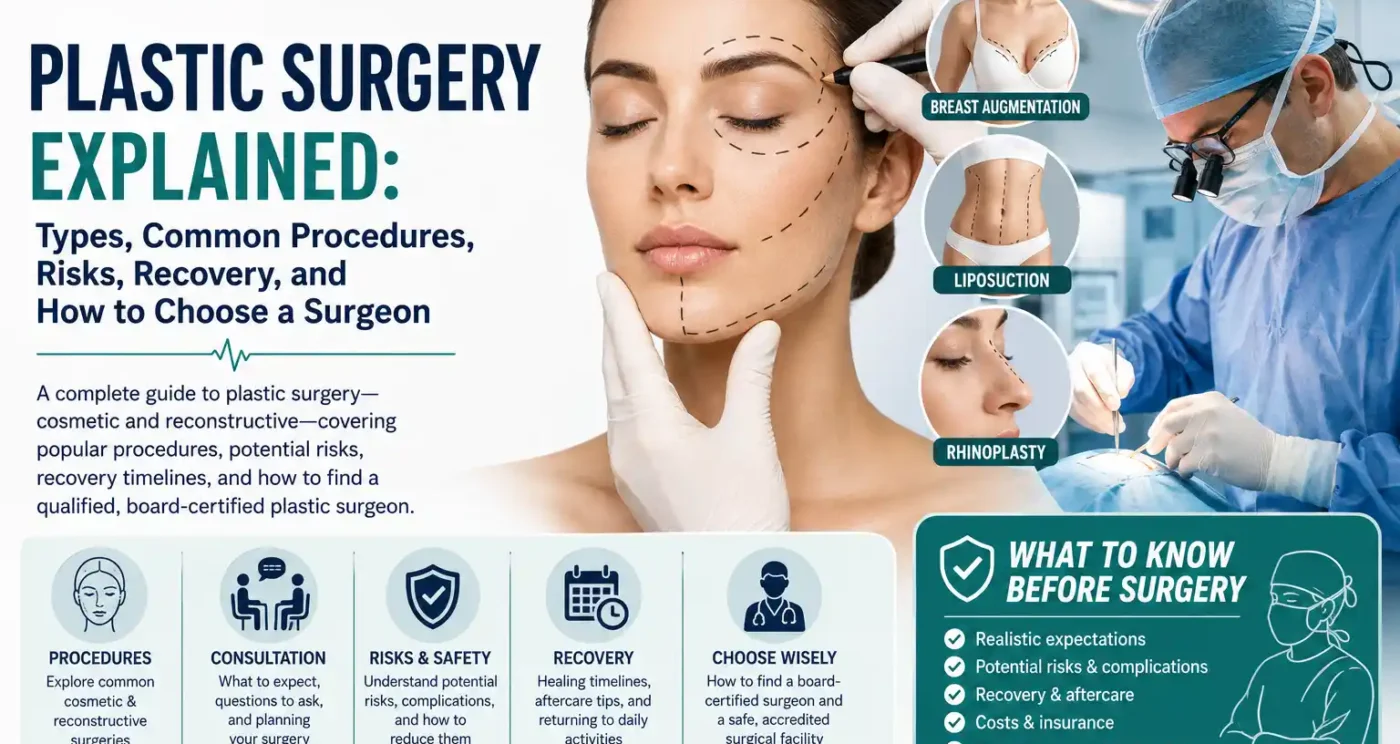
Plastic surgery is often talked about as if it means one thing: changing the way someone looks.
The specialty is much broader than that.
A plastic surgeon may reconstruct a breast after cancer surgery, repair a cleft lip, treat a serious burn, restore function after a hand injury, reshape a nose that causes breathing problems, or perform an elective procedure such as liposuction or a facelift.
Some operations are primarily reconstructive. Others are cosmetic. Many sit somewhere between the two.
That is why deciding whether to have plastic surgery involves more than choosing a procedure from before-and-after photos. The surgeon’s training, the facility, anesthesia, your medical history, nicotine use, medications, recovery support, expectations, and plans for handling complications all matter.
The American Society of Plastic Surgeons (ASPS) describes plastic surgery as encompassing both cosmetic and reconstructive surgery. Reconstructive procedures are generally intended to restore function or address abnormalities caused by conditions such as trauma, congenital differences, cancer, or disease, while cosmetic procedures alter otherwise normal anatomy primarily to change appearance.
Plastic surgery can produce meaningful changes, but it is still surgery.
There can be anesthesia complications, bleeding, infection, scars, blood clots, poor wound healing, changes in sensation, asymmetry, or a result that does not match what the patient expected. Some people also need revision surgery later.
Understanding those realities before scheduling an operation is just as important as understanding the hoped-for result.
What Is Plastic Surgery?
Plastic surgery is a surgical specialty concerned with reshaping, repairing, reconstructing, or altering parts of the body.
The word “plastic” does not refer to artificial material. The field takes its name from a term meaning to mold or shape.
Plastic surgery is generally divided into two broad areas:
- Reconstructive plastic surgery
- Cosmetic, or aesthetic, surgery
The surgical techniques can overlap considerably.
For example, principles used to reconstruct a breast after mastectomy may also be used in cosmetic breast surgery. Techniques developed to repair facial injuries can influence cosmetic facial surgery.
The major difference is usually the reason the procedure is being performed.
What Is Reconstructive Plastic Surgery?
Reconstructive surgery focuses on restoring form, function, or both after illness, injury, developmental conditions, or congenital differences.
ASPS lists reconstructive work involving conditions caused by congenital defects, developmental abnormalities, trauma, disease, and other medical problems.
Examples include:
- Breast reconstruction following cancer surgery
- Cleft lip and palate repair
- Burn reconstruction
- Hand reconstruction
- Repair of traumatic facial injuries
- Reconstruction after tumor removal
- Scar reconstruction
- Certain breast reductions
- Craniofacial surgery
- Correction of congenital abnormalities
The word “reconstructive” does not mean appearance is unimportant.
Restoring a natural or acceptable appearance can be part of reconstructive care along with restoring function.
What Is Cosmetic Surgery?
Cosmetic surgery is performed primarily to change or enhance a person’s appearance.
Common examples include:
- Facelift
- Rhinoplasty
- Breast augmentation
- Breast lift
- Liposuction
- Abdominoplasty
- Eyelid surgery
- Neck lift
- Cosmetic ear surgery
- Body contouring
MedlinePlus notes that cosmetic surgery can reshape areas including the breasts, ears, eyes, face, and other parts of the body.
A procedure being cosmetic does not mean it is medically insignificant.
A tummy tuck or breast augmentation may be elective, but it still involves an incision, healing tissues, anesthesia, and the possibility of complications.
Plastic Surgery vs. Cosmetic Surgery: What Is the Difference?
The terms are commonly used as if they mean the same thing, but they are not exact synonyms.
Plastic surgery is the broader specialty.
It includes both reconstructive and cosmetic procedures.
Cosmetic surgery refers specifically to procedures primarily intended to improve appearance.
There is also an important distinction when choosing a doctor.
The phrase “cosmetic surgeon” does not, by itself, tell you what residency training or specialty board certification that physician completed.
A doctor advertising cosmetic procedures may have training in plastic surgery or another medical specialty.
Before surgery, ask:
- What specialty did you train in?
- Which board certified you?
- Is that board certification related to the operation I am considering?
- How many of these procedures do you perform?
- Where will the procedure take place?
For people seeking a plastic surgeon in the United States, certification through the American Board of Plastic Surgery (ABPS) can be independently verified. ABPS is a member board of the American Board of Medical Specialties and requires formal plastic-surgery training plus written and oral examinations.
What Are Common Plastic Surgery Procedures?
The right procedure depends on anatomy, health, goals, and whether the purpose is reconstructive or cosmetic.
| Procedure | What It Generally Does |
|---|---|
| Rhinoplasty | Reshapes the nose and may address certain structural breathing problems |
| Liposuction | Removes localized deposits of fat to change contour |
| Abdominoplasty | Removes excess abdominal skin and may repair or tighten abdominal tissues |
| Breast augmentation | Increases or restores breast volume using implants or, in selected cases, fat transfer |
| Breast reduction | Removes breast tissue, fat, and skin to reduce breast size |
| Breast lift | Repositions and reshapes sagging breast tissue |
| Breast reconstruction | Rebuilds breast shape after mastectomy or other breast surgery |
| Facelift | Repositions facial tissues and removes selected excess skin |
| Blepharoplasty | Alters upper or lower eyelid tissue |
| Gynecomastia surgery | Reduces enlarged male breast tissue |
| Body contouring | Removes or reshapes excess tissue, often after major weight loss |
| Gluteal fat grafting / BBL | Transfers a person’s own fat to the buttocks |
| Scar revision | Attempts to improve a scar’s appearance or function |
The procedure name alone does not describe the full operation. Techniques can differ significantly between patients.
What Is Rhinoplasty?
Rhinoplasty changes the structure or shape of the nose.
People may seek it because of appearance, breathing difficulty, previous injury, congenital anatomy, or a combination of these reasons.
ASPS notes that rhinoplasty can change features such as nasal width, bridge shape, tip position, nostril size, and overall proportion. It may also be used to address structural causes of impaired airflow.
The operation should not be thought of as simply making the nose “smaller.”
The surgeon has to consider how bone, cartilage, skin, nasal support, breathing, and facial proportions interact.
How Long Does Rhinoplasty Take to Heal?
Initial swelling usually improves during the first several weeks.
That does not mean the nose has reached its final appearance.
ASPS notes that refinement can continue for up to a year, with swelling gradually changing over that period.
This is one example of why “When will I look normal again?” and “When is the surgery fully healed?” can have very different answers.
What Is Liposuction?
Liposuction removes localized fat through a small tube called a cannula.
Areas commonly treated include the:
- Abdomen
- Waist
- Hips
- Thighs
- Upper arms
- Back
- Chin and neck
- Chest
- Calves and ankles
ASPS specifically states that liposuction is not a treatment for obesity or a substitute for diet and exercise. It is primarily a body-contouring procedure.
It also does not necessarily tighten loose skin.
Someone with significant skin laxity may need a different procedure if skin removal is part of the goal.
What Are the Risks of Liposuction?
Possible risks include:
- Bruising
- Fluid accumulation
- Infection
- Uneven contours
- Changes in sensation
- Injury to deeper structures
- Blood clots
- Anesthesia complications
Risk depends partly on how much fat is removed, which body areas are treated, the patient’s health, and whether liposuction is combined with another operation.
What Is a Tummy Tuck?
A tummy tuck, medically called abdominoplasty, removes excess skin and fat from the abdomen and may restore or tighten weakened abdominal wall tissues.
It is commonly considered after:
- Pregnancy
- Major weight loss
- Aging-related skin laxity
- Previous changes in abdominal shape
A tummy tuck is not the same operation as liposuction.
Liposuction primarily removes fat.
Abdominoplasty can remove skin and alter deeper abdominal tissues as well.
Because the surgery is more extensive than a small-area liposuction procedure, recovery can also be more demanding.
Dressings, compression garments, and temporary drains may be used, depending on the operation.
What Is Breast Augmentation?
Breast augmentation increases or restores breast volume.
One common approach uses breast implants.
Implants may contain saline or silicone gel. FDA approval, age restrictions, implant characteristics, and follow-up recommendations vary by device and indication.
Another approach in selected patients is fat transfer, in which fat is removed from another area and injected into the breast.
Neither approach is right for everyone.
Are Breast Implants Permanent?
Breast implants should not be considered lifetime devices.
The FDA says that the longer someone has breast implants, the greater the chance of complications or future surgery to remove or replace them.
Possible implant-related issues include:
- Capsular contracture
- Implant rupture or deflation
- Breast pain
- Infection
- Changes in sensation
- Asymmetry
- Need for additional surgery
FDA information also addresses uncommon but important conditions associated with breast implants, including breast implant-associated anaplastic large cell lymphoma, or BIA-ALCL.
Anyone considering implants should review the specific manufacturer’s patient information rather than treating all breast implants as identical.
What Is Breast Reduction Surgery?
Breast reduction removes excess breast tissue, fat, and skin.
Some people choose it partly for appearance, but breast reduction may also be performed to address symptoms such as:
- Neck or back discomfort
- Shoulder pressure
- Skin irritation
- Problems with physical activity
Because of that, breast reduction can fall into the reconstructive or medically indicated side of plastic surgery in some circumstances.
Insurance coverage depends on the plan and the medical-necessity requirements involved.
What Is a Breast Lift?
A breast lift, or mastopexy, changes the position and shape of breast tissue.
It can address sagging after:
- Pregnancy
- Breastfeeding
- Weight change
- Aging
A breast lift does not automatically increase breast size.
Some patients combine a lift with an implant or reduction, but these are separate decisions with different risks.
What Is a Facelift?
A facelift addresses age-related changes involving facial skin and deeper soft tissues.
Depending on technique, a surgeon may reposition deeper tissues and remove selected excess skin.
A facelift cannot stop aging.
Even after a good surgical result, skin, fat, bone, and soft tissue continue to change with time.
That is one reason plastic-surgery results should be thought of as long-lasting changes rather than permanent immunity from aging.
What Is Eyelid Surgery?
Blepharoplasty alters tissue of the upper or lower eyelids.
It may involve excess:
- Skin
- Fat
- Muscle
Some eyelid operations are performed primarily for appearance.
Others may address drooping upper-eyelid tissue that interferes with peripheral vision.
That difference may also affect whether insurance considers the operation cosmetic or medically necessary.
What Is Body Contouring After Major Weight Loss?
After substantial weight loss, fat volume may decrease much faster than stretched skin can contract.
Some people are left with loose tissue involving the:
- Abdomen
- Arms
- Thighs
- Breasts
- Chest
- Back
Body-contouring surgery can remove or reshape that excess tissue.
These operations can be extensive.
A person may need several procedures rather than one very long operation, depending on medical risk, anatomy, and recovery needs.
What Is a “Mommy Makeover”?
“Mommy makeover” is a marketing term, not one standardized operation.
It often describes a combination of procedures intended to address changes associated with pregnancy, breastfeeding, or weight changes.
A plan might include:
- Tummy tuck
- Liposuction
- Breast lift
- Breast augmentation
- Breast reduction
Because different procedures can be combined in different ways, two people scheduled for a “mommy makeover” may actually be undergoing very different operations.
ASPS lists potential risks across combined procedures including bleeding, infection, seroma, poor wound healing, blood clots, scarring, altered sensation, persistent pain, and the possibility of revision.
Instead of asking only, “How many procedures can I do at once?” ask how the total operation affects anesthesia time, recovery, mobility, and complication planning in your particular case.
What Is a Brazilian Butt Lift?
A Brazilian butt lift, or BBL, is gluteal augmentation using a person’s own fat.
Despite its name, it does not usually involve a traditional surgical “lift.”
Fat is removed from another part of the body with liposuction, processed, and transferred into selected areas around the buttocks.
The operation deserves its own safety discussion.
Professional plastic-surgery organizations have repeatedly warned that gluteal fat grafting has carried significant risk compared with many other elective aesthetic operations, particularly because fat entering large veins can cause a potentially fatal fat embolism.
Current specialty safety recommendations emphasize keeping injected fat above the gluteal muscle and support real-time ultrasound to confirm cannula position during injection.
Anyone considering a BBL should ask specifically:
- Who will perform the fat injection?
- Is the surgeon trained and experienced in gluteal fat grafting?
- Is real-time ultrasound used?
- In what tissue plane is the fat placed?
- Where will surgery occur?
- Who manages complications after discharge?
A low advertised price should not take priority over those questions.
Is Plastic Surgery Safe?
Plastic surgery can be performed safely, but no operation is completely risk-free.
Risk is affected by:
- The procedure
- How extensive the surgery is
- The patient’s medical conditions
- Nicotine use
- Medications
- Body weight and mobility
- Previous surgery
- Anesthesia
- Length of the operation
- Surgeon training
- Facility standards
- Postoperative care
ASPS advises patients to weigh whether the expected benefits justify the known risks and potential complications before consenting to surgery.
A procedure advertised as “minimally invasive” or performed outside a hospital can still carry real medical risks.
What Are the General Risks of Plastic Surgery?
The precise complication profile changes from procedure to procedure.
Across plastic surgery, possible problems can include:
- Bleeding or hematoma
- Infection
- Poor wound healing
- Fluid collection or seroma
- Unfavorable scars
- Numbness or altered sensation
- Persistent pain
- Asymmetry
- Tissue injury
- Blood clots
- Pulmonary complications
- Anesthesia complications
- Unsatisfactory appearance
- Need for additional surgery
A good consultation should discuss the risks specific to the planned operation, not simply hand the patient a generic consent form.
Can Plastic Surgery Cause Blood Clots?
Yes.
Surgery and reduced mobility can increase the risk of deep vein thrombosis (DVT), in which a clot develops in a deep vein, often in the leg.
If part of a clot travels to the lungs, it can cause a pulmonary embolism, which can be life-threatening.
ASPS lists deep vein thrombosis and cardiopulmonary complications among possible risks for procedures such as abdominoplasty and liposuction.
Personal risk can be influenced by factors such as previous blood clots, health conditions, mobility, procedure length, and other individual factors.
Patients should follow the surgeon’s instructions about walking, compression, and any prescribed preventive treatment rather than improvising their own blood-clot strategy.
How Does Smoking Affect Plastic Surgery?
Smoking is particularly relevant in plastic surgery because many procedures rely on healthy blood supply to skin and healing tissue.
The American College of Surgeons notes that smoking is associated with increased surgical complications and impaired wound healing. Nicotine contributes to constriction of blood vessels and reduced blood flow to healing tissue.
This issue is not limited to cigarettes.
If your surgeon asks about nicotine, disclose:
- Cigarettes
- Vapes containing nicotine
- Nicotine pouches
- Nicotine gum or patches
- Other nicotine products
Do not hide nicotine use because you are worried the operation might be postponed.
Your surgeon needs accurate information to assess healing risk.
Can Alcohol Affect Plastic Surgery Recovery?
Alcohol can create several problems around surgery depending on the amount consumed, medications being used, liver health, hydration, and anesthesia plan.
Your surgical team may give specific instructions about avoiding alcohol before and after surgery.
Those instructions matter especially when prescription pain medicines, sedatives, or other medications are involved.
Do not assume that because a procedure is cosmetic, normal drinking habits can continue unchanged during recovery.
Can Medications or Supplements Affect Plastic Surgery?
Yes.
Some prescription medicines, over-the-counter products, herbal products, and dietary supplements can affect:
- Bleeding
- Blood clotting
- Blood pressure
- Anesthesia
- Sedation
- Drug interactions
- Wound healing
Before surgery, provide a complete list rather than only naming prescription drugs.
Do not stop blood thinners, antidepressants, diabetes medication, blood-pressure medicine, or another prescribed drug simply because you read that it may affect surgery.
Medication changes should come from the clinician managing the operation or the clinician who prescribed the drug.
What Happens at a Plastic Surgery Consultation?
A useful consultation should involve more than deciding which implant size or facial change looks best.
The surgeon should learn enough about you to determine whether surgery makes sense.
Topics may include:
- What you want to change
- Why you want the procedure
- Medical history
- Previous operations
- Medication and supplement use
- Allergies
- Nicotine use
- Pregnancy history when relevant
- Blood-clot history
- Previous anesthesia problems
- Expectations
- Recovery support
- Risks
- Alternatives
You should also have time to ask questions.
ASPS specifically recommends discussing the surgeon’s experience, where surgery will take place, expected recovery, risks, complication management, and options if you are dissatisfied with the outcome.
MedIntelHub’s guide to preparing for specialist appointments offers a useful framework for organizing procedure questions before the visit.
How to Prepare Questions Before a Specialist Appointment
Do You Need Medical Clearance Before Plastic Surgery?
Sometimes.
The need for additional evaluation depends on the planned operation and the patient’s health.
A surgeon may request information involving:
- Blood pressure
- Heart or lung conditions
- Diabetes
- Blood tests
- Pregnancy
- Anemia
- Bleeding or clotting history
- Previous anesthesia problems
- Current medications
An annual physical can provide useful background health information, but an elective surgical assessment is not automatically the same as a routine preventive visit.
MedIntelHub’s annual physical guide explains why preventive care is individualized rather than one universal checklist.
Understanding Your Annual Physical: What Actually Gets Checked
How Do You Choose a Plastic Surgeon?
Choosing the surgeon is one of the most important parts of planning an operation.
Marketing should not be the deciding factor.
Verify the Exact Board Certification
In the United States, patients can verify whether a surgeon is certified by the American Board of Plastic Surgery.
ABPS certification confirms that the surgeon completed recognized plastic-surgery training and passed written and oral examinations covering plastic surgery.
American Board of Plastic Surgery — Verify Certification
Do not stop at the phrase:
“I’m board-certified.”
Ask:
“Board-certified by which board, and in which specialty?”
A doctor can be board-certified in one field while advertising procedures outside that field.
Check the Medical License
Board certification and medical licensure are separate.
ABPS advises patients who want information about a physician’s license or disciplinary history to check the applicable state medical licensing board.
Ask About Procedure-Specific Experience
Being qualified in plastic surgery does not mean every surgeon performs every operation equally often.
Ask:
- How often do you perform this specific procedure?
- How many have you performed recently?
- What complications do you see most often?
- How do you handle those complications?
- How often do your patients need revision?
ABPS specifically encourages patients to ask about training, procedure volume, and complications.
Ask About Hospital Privileges
Ask whether the surgeon has hospital privileges to perform the same procedure.
ASPS includes hospital privileges among the questions patients should ask prospective surgeons.
Check the Surgical Facility
Surgery may occur in:
- A hospital
- An ambulatory surgery center
- An accredited office-based operating facility
ASPS notes that accredited facilities are required to meet standards involving equipment, operating-room safety, personnel, and surgeon credentials.
Facility accreditation does not guarantee that nothing will go wrong.
It is one part of a broader safety assessment.
Make Sure You Actually Meet the Surgeon
You should know who is going to operate on you before the day of surgery.
Be cautious when the consultation is primarily with a salesperson or coordinator and the operating surgeon remains unclear.
ASPS advises patients not to feel pressured into proceeding and emphasizes assessing the surgeon’s communication, professionalism, and plan for handling complications.
What Questions Should You Ask a Plastic Surgeon?
You do not need to ask fifty questions.
You do need answers to the important ones.
Consider asking:
- What board are you certified by?
- How can I independently verify your certification?
- How often do you perform this operation?
- Am I a reasonable candidate?
- What result is realistic for my anatomy?
- What are the most important complications?
- Where will surgery take place?
- Is the facility accredited or appropriately licensed?
- Who administers anesthesia?
- How long is the operation expected to last?
- Will I need someone with me after surgery?
- What will the first week of recovery look like?
- When can I drive, work, exercise, and lift?
- What symptoms mean I should call you immediately?
- Who takes calls at night or on weekends?
- What happens if I develop a complication?
- What happens if I am unhappy with the result?
- What costs would a revision involve?
ASPS maintains a similar patient-safety question list.
What Are Red Flags When Choosing a Cosmetic Surgery Clinic?
Be cautious when you encounter:
- Pressure to book immediately
- Large “today only” discounts
- Unclear surgeon identity
- Refusal to explain board certification
- No discussion of complications
- No meaningful medical history
- Surgery promised before proper evaluation
- Unclear anesthesia credentials
- No follow-up plan
- No way to contact the surgical team after hours
- Guarantees of a perfect result
- A surgeon who dismisses questions about risk
A legitimate surgical consultation should leave room for uncertainty.
“No surgery has risk” is not a reassuring answer.
It is a red flag.
What Type of Anesthesia Is Used in Plastic Surgery?
The type of anesthesia depends on the operation.
Possibilities include:
Local Anesthesia
Medication numbs a specific area while the patient remains awake.
Sedation
Medication makes the patient relaxed or sleepy while local anesthesia may also be used.
General Anesthesia
The patient is unconscious while the anesthesia team manages breathing and other physiological functions.
The appropriate choice depends on the procedure, anticipated duration, patient health, and surgical setting.
Before surgery, ask who will administer the anesthesia and what credentials that person has.
How Long Does Plastic Surgery Recovery Take?
There is no useful universal answer.
Recovery after a small eyelid procedure is not comparable with recovery after an extensive tummy tuck and breast operation.
The word “recovery” can also mean several things:
- When pain becomes manageable
- When bruising improves
- When you can return to work
- When you can drive
- When you can exercise
- When swelling resolves
- When scars mature
- When the final cosmetic result is visible
Those milestones often occur at different times.
Rhinoplasty Recovery
Initial swelling improves during the first weeks, but nasal refinement can continue for a year.
Liposuction Recovery
ASPS describes considerable activity restriction during the first week, gradual improvement during weeks two and three, and gradual increases in activity over subsequent weeks. Swelling can continue improving beyond the first month.
Tummy Tuck Recovery
Abdominoplasty often involves more substantial recovery.
Dressings, compression garments, and temporary drainage tubes may be used, and the surgeon provides individualized instructions about activity and exercise.
These examples should not be used as personal return-to-work instructions.
Your own surgeon’s restrictions take priority.
What Is Normal After Plastic Surgery?
Depending on the operation, some degree of the following may be expected:
- Swelling
- Bruising
- Soreness
- Tightness
- Temporary numbness
- Fatigue
- Mild drainage
- Changes in sensation
- Asymmetry caused by early swelling
The challenge is that a symptom can be normal at one stage of recovery and concerning at another.
For example, some redness around an incision may occur early.
Redness that rapidly spreads, becomes hotter, and is accompanied by fever or increasing pain is different.
Your discharge instructions should tell you what the surgical team expects and how to contact them if the recovery changes.
What Warning Signs After Plastic Surgery Need Medical Attention?
Contact the surgical team promptly for symptoms such as:
- Increasing rather than improving pain
- Fever
- Spreading redness
- Pus or foul-smelling drainage
- Wound separation
- Sudden or marked swelling
- Significant bleeding
- A new painful swollen leg
- Increasing shortness of breath
- Persistent vomiting
- A sudden change in skin color around operated tissue
The exact warning signs depend on the procedure.
Do not wait until a routine follow-up appointment when something appears to be worsening.
When Should You Call 911 After Plastic Surgery?
Emergency symptoms can include:
- Severe or sudden difficulty breathing
- New chest pain
- Loss of consciousness
- Severe uncontrolled bleeding
- Signs of stroke
- Severe allergic reaction
- Rapidly worsening weakness or confusion
ASPS specifically advises immediate medical attention for postoperative shortness of breath, chest pain, or abnormal heartbeats in its surgical safety guidance.
If serious symptoms develop, do not spend hours sending photographs through a patient portal while waiting for a reply.
Seek emergency care.
Can Plastic Surgery Leave Scars?
Yes.
If an operation involves an incision through the skin, some form of scar is expected.
Plastic surgeons often try to place scars:
- Within natural creases
- Along anatomical borders
- In areas covered by clothing
- Where tension can be minimized
A scar’s final appearance depends on many factors, including:
- Genetics
- Skin type
- Location
- Infection
- Wound tension
- Nicotine use
- Sun exposure
- Individual healing biology
Even the best surgical technique cannot promise an invisible scar.
Can Plastic Surgery Results Last Forever?
Some anatomical changes can last many years, but the body continues changing.
Results may be affected by:
- Aging
- Pregnancy
- Weight gain or loss
- Hormonal changes
- Sun exposure
- Skin elasticity
- Implant aging
- Further illness or surgery
ASPS notes that although many plastic-surgery results are long-lasting, aging and other circumstances can continue to change the body.
What Is Revision Plastic Surgery?
Revision surgery is a later procedure performed to address a previous operation.
Reasons can include:
- Scarring
- Asymmetry
- Implant problems
- Healing differences
- Persistent symptoms
- Unsatisfactory appearance
- Changes over time
- Complications
- New aesthetic goals
A revision may be more complicated than the original procedure because the surgeon may be working around scar tissue or altered anatomy.
Before the first surgery, ask how the practice handles revision policies and what expenses may or may not be included.
Is Plastic Surgery Covered by Health Insurance?
It depends on why the procedure is being performed and the health plan’s rules.
Cosmetic Surgery
Procedures performed solely to change appearance are generally not covered as medically necessary benefits.
Reconstructive Surgery
Certain reconstructive procedures may qualify for coverage when medical-necessity requirements are met.
Examples can include some:
- Breast reconstruction
- Breast reductions
- Trauma reconstruction
- Congenital repairs
- Functional eyelid procedures
ASPS notes that reconstructive and cosmetic procedures are treated differently for insurance purposes, although coverage details can vary considerably.
Prior authorization does not guarantee payment, and a surgeon’s recommendation does not automatically mean an insurer considers the procedure medically necessary.
Check your own plan before surgery.
How Much Does Plastic Surgery Cost?
There is no meaningful universal price.
The total cost can involve several separate charges:
- Surgeon fee
- Operating-room or facility fee
- Anesthesia fee
- Implants or devices
- Laboratory testing
- Postoperative garments
- Prescriptions
- Follow-up care
- Pathology
- Revision surgery
A quote that lists only the surgeon’s fee can therefore be misleading.
Ask whether the price is all-inclusive and what is excluded.
Also ask what happens financially if surgery must be canceled, postponed, or revised.
Is It Safe to Travel Abroad for Plastic Surgery?
High-quality plastic surgeons practice in many countries.
The issue is not simply whether surgery occurs outside the United States.
The challenge is verifying:
- Surgeon qualifications
- Facility standards
- Infection control
- Device quality
- Follow-up care
- Emergency plans
- Communication
- What happens after you return home
CDC’s 2026 review highlighted adverse outcomes among U.S. residents who traveled for cosmetic procedures, including infections and other complications.
The CDC Yellow Book also warns that medical tourists can face surgical-site infections, resistant infections, blood clots, wound problems, and difficulties with continuity of care. Flying soon after surgery can add another period of immobility when clot risk may already be elevated.
A heavily discounted package is not a substitute for a postoperative plan.
Questions to Ask Before Traveling for Cosmetic Surgery
Ask:
- How is the surgeon credentialed in that country?
- Is the facility independently accredited?
- Who administers anesthesia?
- How long must I stay nearby after surgery?
- What happens if I develop a complication?
- Who cares for me after I return home?
- Can I obtain complete medical and operative records?
- When is it safe for me to fly?
CDC specifically recommends arranging follow-up care before traveling and obtaining medical records for any care needed after returning home.
Can Plastic Surgery Improve Self-Confidence?
It can for some people.
A person who has thought carefully about a specific concern, understands the limitations of surgery, and has realistic expectations may be satisfied with the change.
But an operation cannot guarantee:
- Happiness
- A relationship
- Career success
- Social approval
- Perfection
- A specific celebrity appearance
Appearance dissatisfaction also has different causes.
Sometimes the problem is anatomy.
Sometimes the distress is much broader than what surgery can reasonably change.
What Is Body Dysmorphic Disorder?
Body dysmorphic disorder, or BDD, is a mental health condition involving intense preoccupation with perceived flaws in appearance that may be minor or not noticeable to other people.
The preoccupation can lead to repetitive behaviors such as:
- Mirror checking
- Grooming
- Seeking reassurance
- Comparing appearance
- Hiding perceived flaws
- Repeatedly seeking cosmetic treatment
Mayo Clinic notes that someone with BDD may pursue cosmetic procedures but experience only temporary satisfaction before the anxiety returns.
BDD is treatable, commonly with psychological therapy and, for some patients, medication.
If appearance concerns are consuming hours of the day, causing severe distress, or repeatedly shifting from one body part to another, another cosmetic operation may not address the underlying problem.
What Are Realistic Expectations for Plastic Surgery?
Good plastic surgery aims for improvement, not mathematical perfection.
Human anatomy is naturally asymmetric.
Healing is also unpredictable within limits.
Two patients having the same procedure can develop different:
- Swelling
- Scar appearance
- Sensation
- Tissue settling
- Healing speed
Rhinoplasty guidance from ASPS, for example, specifically reminds patients that every face has some degree of asymmetry and that completely perfect symmetry is not a realistic promise.
A trustworthy surgeon should be willing to tell you what surgery cannot accomplish.
Should You Bring Reference Photos to a Consultation?
They can be useful for communication.
A photograph may help explain whether you prefer a subtle or dramatic change.
But it should not become a promise that your anatomy can be transformed into someone else’s.
Differences in:
- Bone structure
- Skin
- Body proportions
- Tissue quality
- Age
- Previous surgery
can make identical results impossible.
Reference photos are conversation tools, not surgical blueprints.
When Might Plastic Surgery Need to Be Postponed?
An elective operation may be delayed when the risk of proceeding is higher than expected.
Possible reasons include:
- Active infection
- Poorly controlled medical illness
- Unsafe blood pressure or blood sugar
- Pregnancy
- Recent serious illness
- Nicotine use when cessation is required
- Certain medication issues
- Significant anemia
- Inability to follow recovery restrictions
- Unrealistic expectations
Postponement can be frustrating.
It is also sometimes the safer decision.
Can Plastic Surgery Follow-Up Be Done Through Telehealth?
Some parts can.
Virtual visits can be useful for:
- Routine check-ins
- Reviewing questions
- Discussing medications
- Looking at general healing progress
- Planning later follow-up
But a screen cannot reliably replace every examination.
A surgeon may need to feel an area, evaluate circulation, inspect a wound closely, remove drains, or perform imaging or testing.
MedIntelHub’s telehealth guide explains why virtual care can complement, rather than replace, in-person assessment.
Telehealth in 2026: How Virtual Visits Are Changing Primary Care
Chest pain, severe breathing difficulty, heavy bleeding, rapidly spreading infection, fainting, or another emergency should not be handled through a routine telehealth appointment.
Frequently Asked Questions
Is plastic surgery the same as cosmetic surgery?
No.
Plastic surgery includes both cosmetic and reconstructive surgery. Cosmetic surgery specifically focuses on changing appearance, while reconstructive procedures are generally performed to restore form or function after illness, injury, congenital conditions, or other medical problems.
Is plastic surgery safe?
It can be performed safely, but no surgical procedure is risk-free.
Possible complications include infection, bleeding, scarring, poor wound healing, blood clots, anesthesia problems, changes in sensation, and the possibility of additional surgery.
What is the safest cosmetic surgery?
There is no single procedure that is universally safest.
Risk depends on the operation, patient health, anesthesia, technique, facility, surgeon, and how extensive the surgery is.
A short procedure in a healthy person cannot automatically be compared with a long combined body-contouring operation.
What is the most dangerous plastic surgery?
It is more useful to discuss procedure-specific risk than to create a universal ranking.
Gluteal fat grafting, or BBL, has received particular safety attention because of the potential for fatal fat embolism when fat enters major blood vessels. Specialty societies have issued specific technique and ultrasound recommendations intended to reduce that risk.
Does plastic surgery hurt?
Some pain, soreness, pressure, or tightness is common after many operations.
How much discomfort occurs depends on the procedure, individual pain response, and recovery.
Severe or worsening pain deserves communication with the surgical team.
How long does plastic surgery take to heal?
It depends on the operation.
Visible bruising may improve in weeks while deeper tissue healing and final results can continue for months.
After rhinoplasty, for example, nasal refinement can continue for up to a year.
Is liposuction a way to lose weight?
No.
ASPS describes liposuction as a body-contouring procedure rather than a treatment for obesity or substitute for weight loss.
Are breast implants permanent?
They are not considered lifetime devices.
The FDA advises patients to expect that additional surgery may eventually be needed because complications or device changes can occur over time.
Can you combine several plastic surgeries?
Sometimes.
Whether procedures should be combined depends on health, anatomy, total operative burden, expected recovery, and the surgeon’s assessment.
A marketing package such as a “mommy makeover” does not represent one standardized operation.
Can plastic surgery be reversed?
Sometimes partially, sometimes not.
An implant may be removable, but the tissues around it may not return exactly to their previous appearance.
Skin removal, rhinoplasty, scars, and tissue excision cannot simply be undone as though surgery never happened.
Will plastic surgery leave a scar?
Any operation involving a skin incision can leave a scar.
Surgeons try to make scars less noticeable through placement and technique, but no surgeon can guarantee a scar-free operation.
Can plastic surgery go wrong?
Yes.
Complications can occur even with an experienced surgeon and appropriate facility.
Some problems are medical, such as infection or blood clots. Others involve healing, scarring, asymmetry, or dissatisfaction with the appearance.
How do I know whether a plastic surgeon is qualified?
For U.S. patients, verify the surgeon’s actual specialty certification.
The American Board of Plastic Surgery provides a public verification tool. Also review the surgeon’s medical license, procedure-specific experience, hospital privileges, and facility accreditation.
Verify ABPS Plastic Surgery Certification
Is “board-certified cosmetic surgeon” the same as an ABPS-certified plastic surgeon?
Not necessarily.
“Board-certified” should always be followed by the name of the certifying board and specialty.
ABPS certification specifically reflects training and examinations across the spectrum of plastic surgery.
Is plastic surgery covered by insurance?
Purely cosmetic surgery is generally not covered as medically necessary.
Certain reconstructive procedures may qualify depending on diagnosis, documentation, health-plan rules, and authorization requirements.
Coverage should be verified directly with the insurer.
Can teenagers get plastic surgery?
Some adolescents undergo reconstructive or selected cosmetic procedures.
The decision requires careful attention to physical development, medical indication, informed consent, expectations, maturity, and family involvement where legally required.
There is no universal “best age” for plastic surgery.
Can I smoke or vape before plastic surgery?
Nicotine can interfere with blood flow and wound healing.
Patients should disclose all nicotine use and follow the surgeon’s specific preoperative instructions.
Is plastic surgery abroad unsafe?
Not automatically.
There are skilled surgeons and high-quality facilities around the world.
The concern is whether the surgeon, facility, infection-control standards, follow-up arrangements, and travel plan can be adequately verified. CDC has documented infections and other adverse outcomes associated with medical tourism and warns that post-surgical travel can add additional risks.
When should I worry after plastic surgery?
Contact the surgical team for unexpected or worsening symptoms such as increasing pain, fever, spreading redness, wound drainage, wound separation, significant swelling, or other changes the discharge instructions identify as concerning.
Call emergency services for severe chest pain, major difficulty breathing, loss of consciousness, severe bleeding, or other signs of a medical emergency.
Conclusion
Plastic surgery is not one category of appearance-focused procedures.
It is a broad surgical specialty that includes everything from breast and burn reconstruction to hand surgery, rhinoplasty, liposuction, facelifts, body contouring, and breast augmentation.
Some operations are medically necessary.
Some are completely elective.
Others combine functional and cosmetic goals.
Whatever the reason for surgery, the same basic principle applies: elective does not mean trivial.
Incisions still have to heal. Anesthesia still carries risk. Blood clots, infection, bleeding, poor wound healing, scars, altered sensation, and unsatisfactory results can occur.
Procedure choice matters, but surgeon choice matters too.
For U.S. patients looking specifically for a plastic surgeon, verify the surgeon’s certification rather than accepting a generic claim of being “board-certified.” Ask about procedure-specific experience, hospital privileges, facility accreditation, complication management, and the recovery plan.
Be equally cautious about promises.
Liposuction is not a weight-loss treatment. A facelift does not stop aging. Breast implants are not lifetime devices. A BBL deserves specific discussion of fat-embolism safety. And no responsible surgeon can guarantee perfect symmetry or a complication-free result.
Finally, give recovery the same attention you give the surgery itself.
Know who you will call if something goes wrong. Know what activities will be restricted. Arrange help before you need it. And make sure you understand which symptoms require a call to the surgeon and which require emergency care.
A good plastic-surgery decision is not simply:
“Do I want this procedure?”
It is also:
“Do I understand what it can realistically accomplish, what could go wrong, who is performing it, where it will be performed, and what happens afterward?”
Those questions are worth answering before the operation—not after it.
Resources
American Board of Plastic Surgery — Verify Certification
ABPS allows consumers to verify whether a physician holds board certification in plastic surgery and explains what that certification represents.
American Board of Plastic Surgery — Verify Certification
American Society of Plastic Surgeons — Patient Safety
ASPS provides guidance on surgeon selection, accredited facilities, surgical risks, and questions patients should ask before cosmetic or reconstructive surgery.
FDA — Breast Implant Safety
The FDA provides current information about implant types, risks, complications, device longevity, and the possibility of additional surgery.
FDA: What to Know About Breast Implants
ASPS — Gluteal Fat Grafting Safety
This multi-society statement addresses BBL safety, fat-placement technique, surgeon credentialing, postoperative care, and real-time ultrasound guidance.
ASPS: Gluteal Fat Grafting Safety Statement
CDC — Medical Tourism
CDC discusses infection, blood clots, follow-up care, travel risks, credential verification, and other considerations for people traveling for surgery.
CDC Yellow Book: Medical Tourism
Mayo Clinic — Body Dysmorphic Disorder
Mayo Clinic explains body dysmorphic disorder, including repeated preoccupation with perceived appearance flaws and the limitations of cosmetic procedures in addressing the underlying condition.
Mayo Clinic: Body Dysmorphic Disorder
MedIntelHub — Preparing for a Specialist Appointment
A practical guide to organizing questions about procedures, alternatives, anesthesia, recovery, and complications before a surgical consultation.
How to Prepare Questions Before a Specialist Appointment
MedIntelHub — Understanding Your Annual Physical
This guide explains how routine preventive care differs from individualized assessment for a medical problem or upcoming procedure.
Understanding Your Annual Physical: What Actually Gets Checked
MedIntelHub — Telehealth in 2026
A guide to where virtual follow-up can be useful and why some symptoms or examinations still require in-person care.
Telehealth in 2026: How Virtual Visits Are Changing Primary Care
MedIntelHub — Editorial Policy
MedIntelHub’s editorial policy outlines its approach to authoritative sourcing, accuracy, transparency, limitations, and updates.
Editorial Disclaimer
This article is provided for general educational and informational purposes only. It does not recommend plastic surgery, determine whether an individual is medically suitable for surgery, or replace consultation with a qualified healthcare professional.
Risks, surgical techniques, anesthesia, recovery, expected results, costs, insurance coverage, and medical-necessity requirements vary by procedure, facility, surgeon, patient health, medications, nicotine use, previous surgery, and individual circumstances.
Do not stop prescription medication, blood thinners, or other medical treatment before an elective procedure without instructions from the appropriate healthcare professional.
Cosmetic surgery results cannot be guaranteed. A professional credential, accredited facility, or experienced surgeon may reduce certain risks but cannot eliminate the possibility of complications.
Seek urgent medical evaluation for severe or rapidly worsening postoperative symptoms. Chest pain, major difficulty breathing, severe uncontrolled bleeding, loss of consciousness, or another potentially life-threatening symptom requires emergency care.

David Bennett
David Bennett is an author at MedIntelHub, where he creates clear, practical, and well-researched content about healthcare, medical billing, insurance, and patient education. His goal is to make complex healthcare topics easier for readers to understand and use in everyday situations. David emphasizes accuracy, transparency, and reliable sourcing, using information from trusted organizations and official healthcare resources whenever possible. Content published by David is intended for educational purposes and should not replace advice from qualified medical, legal, or healthcare professionals.