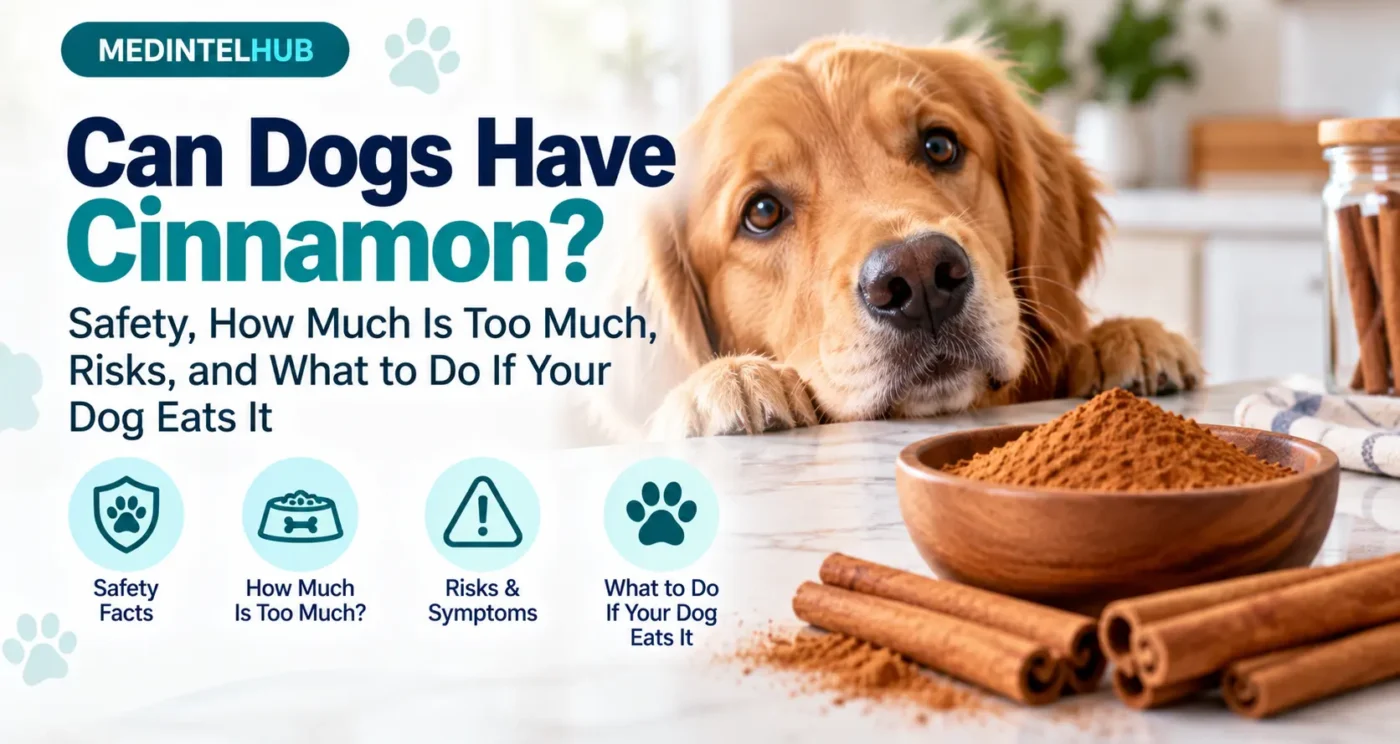
A dog licking a little cinnamon from the kitchen floor is very different from a dog chewing into a jar of cinnamon powder or getting cinnamon essential oil on its coat. Those situations may all involve the same spice, but they do not carry the same level of risk.
The short answer is that ordinary cinnamon is not classified as toxic to dogs by the ASPCA. A small accidental taste of ground cinnamon is unlikely to poison an otherwise healthy dog. That does not make cinnamon a good treat, though. Larger amounts can irritate the mouth and stomach, inhaled powder can irritate the airways, and concentrated cinnamon essential oil is much more concerning.
The food around the cinnamon can matter even more than the spice itself. A cinnamon roll, sugar-free pastry, pumpkin-spice dessert, or flavored oatmeal may contain ingredients such as xylitol, raisins, chocolate, nutmeg, caffeine, or a large amount of fat and sugar. Some of those can pose a more serious risk to a dog than the cinnamon.
If your dog has eaten cinnamon, the most useful first questions are simple: What form was it in? How much might be missing? What else was in the product? How big is your dog? Is your dog coughing, vomiting, weak, trembling, or having trouble breathing? Those details help determine whether home observation may be reasonable or whether veterinary advice is needed right away.
Can Dogs Have Cinnamon?
Dogs can be exposed to small amounts of cinnamon without developing poisoning, and the ASPCA lists cinnamon (*Cinnamomum zeylanicum*) as non-toxic to dogs. In everyday terms, that means a light dusting of cinnamon accidentally licked from the floor is usually a very different situation from exposure to a known canine poison such as xylitol.
“Non-toxic,” however, is not the same as “recommended.” Cinnamon can irritate a dog’s mouth, throat, and digestive tract. A dog that gets a larger amount may develop vomiting or diarrhea, and a dog that inhales dry powder may cough, choke, or have difficulty breathing.
The concentrated oil is a separate issue. Cinnamon essential oil contains a much higher concentration of active compounds than the spice in a kitchen jar. Veterinary toxicology guidance treats essential-oil exposure much more seriously because ingestion and skin exposure can both cause illness.
For most owners, the practical rule is straightforward: there is no reason to intentionally add cinnamon to a dog’s diet unless a veterinarian has recommended a specific product for a specific purpose.
Is Cinnamon Toxic to Dogs?
The ASPCA’s toxic and non-toxic plant database classifies cinnamon as non-toxic to dogs, cats, and horses. That classification is useful, but it should not be interpreted as a guarantee that any amount or any form is harmless.
Pet Poison Helpline notes that larger exposures to ground cinnamon can cause problems, including vomiting, diarrhea, changes in heart rate, low blood sugar, and liver injury. The same source warns that inhaling cinnamon powder can irritate the lungs and trigger coughing, choking, breathing difficulty, or bronchospasm.
The risk therefore depends on the exposure rather than the ingredient name alone. A pinch of spice, a spoonful of dry powder, a cinnamon stick, a flavored baked good, and a bottle of cinnamon essential oil should not all be handled the same way.
How Much Cinnamon Is Too Much for a Dog?
There is no veterinarian-approved household “safe dose” of cinnamon that applies to every dog.
Pet Poison Helpline has stated that more than about 1 teaspoon of cinnamon powder can cause problems for many pets. That number is best understood as toxicology context, not a serving recommendation. It does not mean that one teaspoon is safe for every dog or that smaller quantities cannot cause irritation.
A Chihuahua, a Labrador Retriever, and a Great Dane differ greatly in body size. Age, existing liver disease, diabetes, medication use, and the form of cinnamon can also change the picture. A concentrated essential oil may cause concern at a much smaller quantity than kitchen cinnamon powder.
If you know or suspect that your dog swallowed a large amount of cinnamon, call your veterinarian or an animal poison-control service rather than trying to calculate a safe dose at home.
Why body size matters
The same spoonful represents a much larger exposure for a 7-pound dog than for a 70-pound dog. Small dogs and puppies also have less margin for error if vomiting, diarrhea, low blood sugar, or dehydration develops.
Body weight is one of the first pieces of information poison-control specialists ask for when assessing a possible exposure. If you call, have your dog’s approximate weight ready along with the product packaging and your best estimate of the amount involved.
Why “one teaspoon” is not a feeding recommendation
The frequently quoted one-teaspoon figure comes from poison-control guidance about when problems may occur in many pets. It should not be turned into a recipe or routine dose.
A dog does not need cinnamon nutritionally, and there is no well-established canine health benefit that requires adding it to meals. If the goal is flavor, there are simpler dog-safe treats. If the goal is a supplement for blood sugar, inflammation, or another condition, that is a discussion to have with a veterinarian rather than a reason to experiment with kitchen spices.
What Happens If a Dog Eats Too Much Cinnamon?
A large cinnamon exposure can affect several parts of the body.
The first problem may be local irritation. Cinnamon powder can be irritating to the lips, mouth, throat, and stomach. Dogs may drool, lick their lips, paw at the mouth, refuse food, vomit, or develop diarrhea.
With larger exposures, veterinary toxicology sources describe potential changes in heart rate, low blood sugar, and liver injury. These are not what usually happens after a tiny accidental taste, but they are reasons not to dismiss a large ingestion simply because cinnamon is labeled “non-toxic.”
Powder that is inhaled rather than swallowed creates a different concern. The fine particles can irritate the respiratory tract, leading to coughing, choking, wheezing, or labored breathing. ASPCA guidance also notes that aspiration of cinnamon can contribute to pneumonia.
Essential oil exposure deserves even more caution because the product is concentrated and can be rapidly absorbed through the mouth or skin.
Symptoms to Watch for After Cinnamon Exposure
A dog that has only licked a tiny amount of ordinary cinnamon and remains completely normal may not develop any symptoms. After a larger or uncertain exposure, watch for changes such as:
- Drooling, lip licking, or pawing at the mouth
- Vomiting or diarrhea
- Refusing food
- Coughing, choking, gagging, or wheezing
- Fast, difficult, or noisy breathing
- Weakness or unusual sleepiness
- Tremors or poor coordination
- An unusually fast or slow heart rate
- Collapse
- Signs of mouth or skin irritation after contact with essential oil
Breathing difficulty, collapse, seizures, marked weakness, or significant essential-oil exposure should be treated as urgent veterinary concerns.
What Should You Do If Your Dog Eats Cinnamon?
Start by identifying what the dog actually got into. “Cinnamon” may mean a light sprinkle of spice, a container of dry powder, a cinnamon stick, a frosted pastry, or essential oil. The response can change substantially depending on that answer.
If possible, gather the package or recipe and note the following:
- The exact product or food
- The ingredients
- How much may have been eaten
- Approximately when it happened
- Your dog’s weight
- Any symptoms already present
- Whether the dog inhaled powder or had oil on the skin or fur
For a small amount of ordinary ground cinnamon with no symptoms, your veterinarian may advise simple observation. For a large amount, an unknown amount, essential oil, inhaled powder, or a food containing another hazardous ingredient, call your veterinarian or animal poison control promptly.
Do not automatically make your dog vomit. ASPCA Poison Control and Pet Poison Helpline both advise owners to get professional guidance before giving home remedies or trying to induce vomiting after a suspected poisoning. In some exposures, inducing vomiting can create additional risk.
When Is Cinnamon Exposure an Emergency?
Seek urgent veterinary help if your dog has trouble breathing, repeated choking or coughing, collapse, seizures, severe weakness, significant tremors, or rapidly worsening symptoms.
Urgent advice is also appropriate if the exposure involved cinnamon essential oil, especially if the amount is unknown or the dog is already drooling, vomiting, weak, trembling, or showing mouth or skin irritation.
A cinnamon-containing food may also turn an apparently minor exposure into an emergency. If the product contains xylitol, contact a veterinarian or emergency animal hospital immediately. The FDA warns that xylitol can trigger a rapid, dangerous drop in blood sugar in dogs and can also cause liver failure.
If you are unsure whether another ingredient is dangerous, keep the packaging with you and call rather than waiting for symptoms to appear.
Can Dogs Inhale Cinnamon Powder?
Yes, and this is one reason dumping cinnamon directly onto a dog’s food is not a good idea.
Dry cinnamon is a fine powder. A dog that puts its nose into a spilled container or inhales while licking a large pile may draw particles into the respiratory tract. Pet Poison Helpline and ASPCA guidance describe coughing, choking, difficulty breathing, bronchospasm, and respiratory irritation after inhalation.
If your dog has a brief sneeze or cough after getting close to cinnamon but then returns to normal, monitor carefully. Persistent coughing, labored breathing, wheezing, blue or pale gums, or obvious distress warrants veterinary care.
Do not force food or water into a dog that is actively coughing or struggling to breathe.
Can Dogs Eat Cinnamon Sticks?
A cinnamon stick is not a good chew for a dog.
Although the spice itself is not classified as toxic, chewing a stick can expose the mouth to a concentrated amount of cinnamon and cause irritation. Pieces may also be hard to swallow comfortably, particularly for a small dog.
If a dog merely licks a cinnamon stick and seems normal, serious poisoning is unlikely. If the dog has swallowed a large piece, is gagging, drooling heavily, vomiting, or having difficulty swallowing or breathing, contact a veterinarian.
Cinnamon Powder vs. Cinnamon Essential Oil
The difference between kitchen cinnamon and cinnamon essential oil is one of the most important distinctions in this topic.
Ground cinnamon is the dried spice. Most small accidental tastes cause either no signs or mild irritation. Problems become more likely with larger quantities or inhalation.
Cinnamon essential oil is a highly concentrated product. VCA Animal Hospitals lists cinnamon oil among essential oils that can be poisonous to dogs. Both ingestion and skin exposure can be harmful, and signs can include drooling, weakness, tremors, vomiting, and burns or redness of the lips, gums, tongue, or skin.
If cinnamon oil gets on a dog’s fur or skin, keep the dog from licking the area and contact a veterinarian or poison-control service promptly. VCA advises washing contaminated fur or skin with liquid dishwashing detergent while arranging professional guidance.
Never apply undiluted cinnamon essential oil to a dog as a home remedy.
Is Cinnamon Essential Oil Safe Around Dogs?
Using essential oils around pets requires more caution than using culinary spices.
Dogs can be exposed by licking spills, contacting liquid on the skin or coat, chewing diffuser equipment, or inhaling concentrated vapors in a poorly ventilated area. Individual products vary widely in concentration, carrier ingredients, and method of use.
The safest approach is to keep cinnamon essential oil and liquid potpourri products out of reach and avoid applying them directly to a dog unless a veterinarian specifically directs you to use a veterinary product.
If a dog has direct contact with concentrated oil or develops drooling, vomiting, tremors, weakness, coughing, or breathing trouble after exposure, seek veterinary advice promptly.
Ceylon Cinnamon vs. Cassia Cinnamon for Dogs
Ceylon and cassia are different types of cinnamon, and they differ chemically. That distinction is often discussed in human nutrition because cassia typically contains more coumarin.
For dog owners, however, it is not useful to treat Ceylon cinnamon as a proven “safe” supplement or cassia as automatically poisonous. Veterinary poison-control guidance focuses more on amount, concentration, route of exposure, and symptoms than on recommending one culinary cinnamon species for routine canine use.
If a dog has eaten a tiny amount of either common culinary type, the same practical approach applies: identify the amount and other ingredients, watch for symptoms, and seek veterinary advice for a large or uncertain exposure.
Can Dogs Eat Cinnamon Rolls?
A cinnamon roll is a human dessert, not a dog treat.
The cinnamon itself may be the least concerning ingredient. Cinnamon rolls are usually high in sugar and fat, and some recipes or sugar-free products may contain ingredients that are unsafe for dogs.
Before deciding what to do after a dog eats a cinnamon roll, check whether it contained:
- Xylitol or another sugar substitute
- Raisins or currants
- Chocolate
- Nutmeg
- Macadamia nuts
- Coffee or espresso flavoring
- Alcohol-containing glaze or flavoring
A rich, fatty pastry can also cause vomiting or diarrhea and may contribute to pancreatitis in susceptible dogs.
If the product was sugar-free, do not assume that makes it safer. Check the label immediately for xylitol, which may also appear as birch sugar, wood sugar, or birch bark extract.
Can Dogs Eat Cinnamon Toast?
A bite of plain toast with a light dusting of cinnamon is unlikely to cause cinnamon poisoning in most dogs, but there is little reason to offer it intentionally.
Butter, sugar, syrups, and spreads can add unnecessary calories and may create their own risks. Sugar-free toppings or baked products should be checked carefully for xylitol.
If your dog steals a small corner of ordinary cinnamon toast and remains normal, monitoring may be all that is needed. A much larger amount, repeated vomiting, or a questionable ingredient list is a reason to call your veterinarian.
Can Dogs Have Cinnamon in Oatmeal?
Plain cooked oatmeal may be suitable for some dogs in small portions, but cinnamon does not need to be added for health reasons.
The bigger issue is what else is in the bowl. Packaged flavored oatmeal may contain large amounts of sugar, raisins, artificial sweeteners, or other ingredients a dog should not have. A plain spoonful of oatmeal with a trace of cinnamon is very different from a packet of cinnamon-raisin or sugar-free flavored oatmeal.
Always read the ingredient list before sharing a human food with a dog.
Can Dogs Eat Apples With Cinnamon?
Plain apple flesh can be offered to many dogs in small pieces after the seeds, core, and stem are removed. Adding cinnamon is unnecessary but a light accidental dusting is unlikely to create toxicity in most dogs.
Apple pie, apple crisp, and cinnamon-apple desserts are a different story. They may contain nutmeg, raisins, high amounts of sugar and butter, alcohol flavorings, or sugar substitutes.
A dog-safe apple snack is simpler: a few plain, seedless apple pieces appropriate to the dog’s size.
When a dog eats a cinnamon-flavored product, owners often focus on the word “cinnamon” and overlook the rest of the label. In many cases, the accompanying ingredients are the more urgent concern.
Xylitol
Xylitol is one of the most important ingredients to rule out. The FDA warns that dogs can absorb xylitol rapidly, causing a powerful release of insulin and a potentially life-threatening drop in blood sugar. Signs can begin quickly and include vomiting, weakness, difficulty walking, collapse, tremors, and seizures. Liver failure can also occur.
If a dog eats a product containing xylitol, contact a veterinarian or emergency animal hospital immediately. Do not wait for symptoms.
Chocolate
Chocolate-containing cinnamon desserts bring an entirely separate toxicity risk. The amount and type of chocolate, together with the dog’s body weight, determine the degree of concern.
If chocolate is listed in the product, give that information to your veterinarian or poison-control service when you call.
Raisins and currants
Raisins and currants may be found in cinnamon breads, oatmeal, pastries, and holiday desserts. Grape and raisin toxicity in dogs can cause acute kidney injury, and the dangerous amount is not reliably predictable for an individual dog.
A dog that has eaten raisins or currants should receive veterinary advice promptly rather than being watched only for cinnamon-related symptoms.
Nutmeg
Cinnamon and nutmeg frequently appear together in baked goods and pumpkin-spice mixtures. They do not have the same safety profile.
Nutmeg contains myristicin. In larger amounts it can cause disorientation, increased heart rate, high blood pressure, tremors, difficulty walking, hallucination-like behavior, and seizures. A small amount baked into food may not cause toxicity, but a dog that gets into a container of nutmeg or consumes a large amount should be evaluated by a veterinarian or poison-control professional.
Fat and sugar
Even when a cinnamon dessert contains no classic toxin, rich foods can still make dogs sick. Large amounts of butter, frosting, cream, sugar, and pastry can lead to vomiting or diarrhea and may contribute to pancreatitis in susceptible dogs.
That is one reason a “non-toxic” ingredient does not automatically make a human dessert dog-safe.
Cinnamon vs. Nutmeg: They Are Not the Same Risk
Because cinnamon and nutmeg are paired in so many recipes, it is easy to assume they are interchangeable from a pet-safety standpoint.
They are not.
Cinnamon itself is listed by the ASPCA as non-toxic to dogs, although large amounts can still cause irritation and illness. Nutmeg contains myristicin and can produce neurologic and cardiovascular effects after a substantial exposure.
If your dog ate a pumpkin-spice mix or baked product, do not assume the ingredient was cinnamon alone. Check the label or recipe for nutmeg and other spices.
Does Cinnamon Have Health Benefits for Dogs?
Cinnamon is sometimes promoted online for inflammation, blood sugar control, heart health, or antimicrobial effects. Much of that discussion comes from human studies, laboratory research, or general wellness claims.
That is not the same as evidence that sprinkling cinnamon on a dog’s food improves health.
AKC guidance cautions against automatically applying human cinnamon claims to dogs and recommends discussing supplements with a veterinarian. That is particularly important for a dog with diabetes, liver disease, gastrointestinal disease, or one taking medication that affects blood sugar or clotting.
If a veterinarian is trying to improve a dog’s joint function, weight, glucose control, or inflammation, there are better-established ways to build a treatment or nutrition plan than experimenting with kitchen cinnamon.
Should You Give Your Dog Cinnamon as a Supplement?
For most dogs, there is no compelling reason to do so.
A supplement should have a defined purpose, an appropriate dose, a known product formulation, and a reasonable evidence base. Kitchen cinnamon does not automatically meet those standards just because it is natural.
If you are considering a cinnamon-containing supplement marketed for pets, show the label to your veterinarian. The veterinarian can look at the amount, other ingredients, your dog’s medications, and whether there is any meaningful reason to use it.
Avoid homemade essential-oil remedies entirely unless specifically directed by a veterinarian.
Practical Cinnamon Exposure Examples
A dog licks a little cinnamon from the floor
A healthy medium-size dog licks a small dusting of ground cinnamon that spilled during baking and remains completely normal. Significant toxicity would be unlikely from such a tiny exposure. Offer access to water, keep the spice container out of reach, and monitor for mouth irritation, vomiting, or coughing.
A small dog gets into a container of cinnamon powder
This is more concerning because the amount may be large relative to body size and the dog may inhale powder while eating it. Call a veterinarian or poison-control service with the dog’s weight, the estimated missing amount, and any respiratory or gastrointestinal symptoms.
A dog eats a sugar-free cinnamon pastry
The label matters immediately. If xylitol is listed, this is not primarily a cinnamon problem; it is a potential xylitol emergency. Contact a veterinarian or emergency animal hospital right away.
A dog licks cinnamon essential oil
Treat concentrated essential-oil exposure more seriously than a lick of kitchen spice. Prevent further licking, save the bottle or packaging, and contact a veterinarian or poison-control service promptly.
A dog eats cinnamon-raisin bread
The raisins are the more important toxicology concern. Contact a veterinarian or poison-control service rather than waiting for symptoms.
What Not to Do After a Possible Cinnamon Poisoning
Do not rely on internet antidotes.
Do not give milk, oil, salt, activated charcoal, hydrogen peroxide, or another home treatment unless a veterinarian or poison-control professional specifically tells you to do so for your dog’s exact situation.
Do not induce vomiting automatically. The appropriate response depends on what was eaten, how long ago the exposure occurred, whether the dog is alert, and whether there is a risk of aspiration.
Do not throw away the packaging. The ingredient list, concentration, product size, and amount remaining can be extremely useful when a veterinarian is assessing the exposure.
How to Prevent Accidental Cinnamon Exposure
Most cinnamon-related problems are preventable with ordinary kitchen and household precautions.
Keep spice containers in closed cabinets rather than on low shelves or counters a dog can reach. Clean spilled powder promptly so a curious dog does not lick or inhale it. Keep cinnamon sticks out of mugs, simmer pots, and craft displays that pets can access.
Essential oils deserve stricter storage. Keep bottles closed, upright, and out of reach, and do not leave diffusers or liquid potpourri where a dog can knock them over or drink from them.
During holidays, ask guests not to feed the dog cookies, pastries, cinnamon rolls, or pumpkin-spice foods. A guest may not know that a sugar-free dessert contains xylitol or that a raisin-filled cinnamon bread can be dangerous.
Frequently Asked Questions
Is cinnamon poisonous to dogs?
Ordinary culinary cinnamon is not classified as toxic to dogs by the ASPCA. Large amounts can still cause irritation and illness, and cinnamon essential oil can be toxic.
Can a dog have a small amount of cinnamon?
A tiny accidental taste is unlikely to poison most healthy dogs. There is no need to intentionally feed cinnamon, however, and larger amounts can cause problems.
How much cinnamon can a dog safely eat?
There is no universal safe dose. Pet Poison Helpline notes that more than about one teaspoon of powder may cause problems for many pets, but that is not a recommended serving amount. Small dogs may be affected by less, and essential oils are more concentrated.
My dog ate cinnamon. Should I make my dog vomit?
Not unless a veterinarian or animal poison-control professional specifically instructs you to. Inducing vomiting can be inappropriate or dangerous in some situations.
Can cinnamon make a dog vomit?
Yes. Larger amounts can irritate the gastrointestinal tract and lead to vomiting or diarrhea.
Can cinnamon hurt a dog’s lungs?
Inhaled cinnamon powder can irritate the respiratory tract. Veterinary poison-control sources describe coughing, choking, breathing difficulty, bronchospasm, and possible pneumonia after significant inhalation.
Is cinnamon essential oil safe for dogs?
Concentrated cinnamon oil can be poisonous to dogs through ingestion or skin exposure. Direct application is not recommended unless specifically directed by a veterinarian using an appropriate veterinary product.
Can dogs eat cinnamon rolls?
Cinnamon rolls are not appropriate dog treats. Besides being high in fat and sugar, they may contain xylitol, raisins, chocolate, nutmeg, or other risky ingredients.
Can dogs eat cinnamon apples?
A few plain apple pieces without seeds or core may be suitable for many dogs. A tiny amount of cinnamon is unlikely to create toxicity, but sweetened cinnamon-apple desserts can contain other problematic ingredients.
Can dogs have cinnamon oatmeal?
Plain oatmeal is different from flavored packets. Cinnamon-raisin or sugar-free oatmeal may contain ingredients that pose additional risks. Check the label before sharing any prepared human food.
Can dogs eat Ceylon cinnamon?
Ceylon cinnamon is still cinnamon. It should not be treated as a proven canine supplement or as risk-free in large amounts. Exposure amount and form matter more than using the name “Ceylon” as a safety guarantee.
Is cassia cinnamon toxic to dogs?
Cassia cinnamon is not generally classified as a classic canine poison, but large amounts can still cause irritation and illness. Do not use it as a routine supplement without veterinary guidance.
Is cinnamon good for diabetic dogs?
There is not enough established canine evidence to recommend kitchen cinnamon as a diabetes treatment. A diabetic dog’s diet and medication should be managed with a veterinarian.
Can dogs have pumpkin spice?
Pumpkin-spice blends commonly include cinnamon and nutmeg, and the foods containing them may also include caffeine, chocolate, xylitol, raisins, or high amounts of fat and sugar. It is safer not to share pumpkin-spice products with dogs.
When should I call a veterinarian after cinnamon exposure?
Call if the amount was large or unknown, the dog is very small, the exposure involved essential oil, powder was inhaled, another toxic ingredient may be present, or the dog develops vomiting, weakness, tremors, coughing, choking, or breathing difficulty.
When to Call Your Veterinarian or Pet Poison Control
If you are uncertain about the exposure, professional advice is preferable to guessing.
Your veterinarian knows your dog’s medical history and can decide whether home observation, an examination, blood testing, or supportive treatment is appropriate.
For poisoning concerns in the United States, the ASPCA Animal Poison Control Center is available 24/7 at (888) 426-4435; a consultation fee may apply. Pet Poison Helpline is also available 24/7 at (855) 764-7661.
Have the product container, ingredient list, dog’s weight, estimated amount, and approximate exposure time available when you call.
The Bottom Line
A tiny amount of ordinary cinnamon is unlikely to poison a dog. That is the reassuring part.
The important part is recognizing when the situation is no longer “just a little cinnamon.” A spoonful of powder, inhaled spice, concentrated essential oil, or a cinnamon-flavored food containing xylitol, raisins, chocolate, or nutmeg deserves more attention.
Do not use the commonly quoted one-teaspoon figure as a feeding guideline. Dogs vary in size and health, and concentrated oils behave very differently from kitchen spice. If the amount is large or uncertain, another risky ingredient is involved, or your dog develops symptoms, contact a veterinarian or animal poison-control service.
Resources
ASPCA — Cinnamon Toxicity Listing
The ASPCA identifies cinnamon as non-toxic to dogs while its poison-control materials explain that larger exposures can still cause irritation and respiratory problems.
ASPCA — Cinnamon Toxicity Listing
Pet Poison Helpline — Nutmeg and Cinnamon Toxicity
Pet Poison Helpline discusses larger cinnamon-powder exposures, essential-oil risk, respiratory irritation, and potential systemic effects.
Pet Poison Helpline — Nutmeg and Cinnamon Toxicity
VCA Animal Hospitals — Essential Oil and Liquid Potpourri Poisoning in Dogs
VCA explains why concentrated essential oils, including cinnamon oil, can be harmful through ingestion or skin exposure and describes signs that require veterinary attention.
VCA Animal Hospitals — Essential Oil and Liquid Potpourri Poisoning in Dogs
U.S. Food and Drug Administration — Xylitol Is Toxic to Dogs
FDA guidance explains why xylitol in sugar-free baked goods and other products can be a medical emergency for dogs.
U.S. Food and Drug Administration — Xylitol Is Toxic to Dogs
ASPCA — Poison Control
ASPCA Poison Control provides 24/7 veterinary toxicology assistance for possible poison exposures.
American Kennel Club — Can Dogs Eat Cinnamon?
AKC provides a practical overview of culinary cinnamon, baked goods, essential oil, nutmeg, and supplementation questions for dog owners.
American Kennel Club — Can Dogs Eat Cinnamon?
Editorial Guidelines & Veterinary Disclaimer
This article is provided for general educational and informational purposes. It is not intended to diagnose poisoning, calculate a patient-specific toxic dose, prescribe treatment, or replace advice from a veterinarian or veterinary toxicology professional.
Risk depends on the dog’s body weight, age, health status, the exact product, the amount involved, the route of exposure, and other ingredients. A small accidental exposure to culinary cinnamon is different from inhaling a large amount of powder or contacting concentrated cinnamon essential oil.
If your dog has difficulty breathing, seizures, collapse, severe weakness, repeated vomiting, significant essential-oil exposure, or possible exposure to xylitol or another known toxin, seek veterinary help promptly.
MedIntelHub uses authoritative veterinary, poison-control, regulatory, and professional sources and reviews content for clarity and accuracy. For more information about sourcing, updates, and corrections, review the MedIntelHub Editorial Policy:
https://medintelhub.com/editorial-policy/

David Bennett
David Bennett is an author at MedIntelHub, where he creates clear, practical, and well-researched content about healthcare, medical billing, insurance, and patient education. His goal is to make complex healthcare topics easier for readers to understand and use in everyday situations. David emphasizes accuracy, transparency, and reliable sourcing, using information from trusted organizations and official healthcare resources whenever possible. Content published by David is intended for educational purposes and should not replace advice from qualified medical, legal, or healthcare professionals.