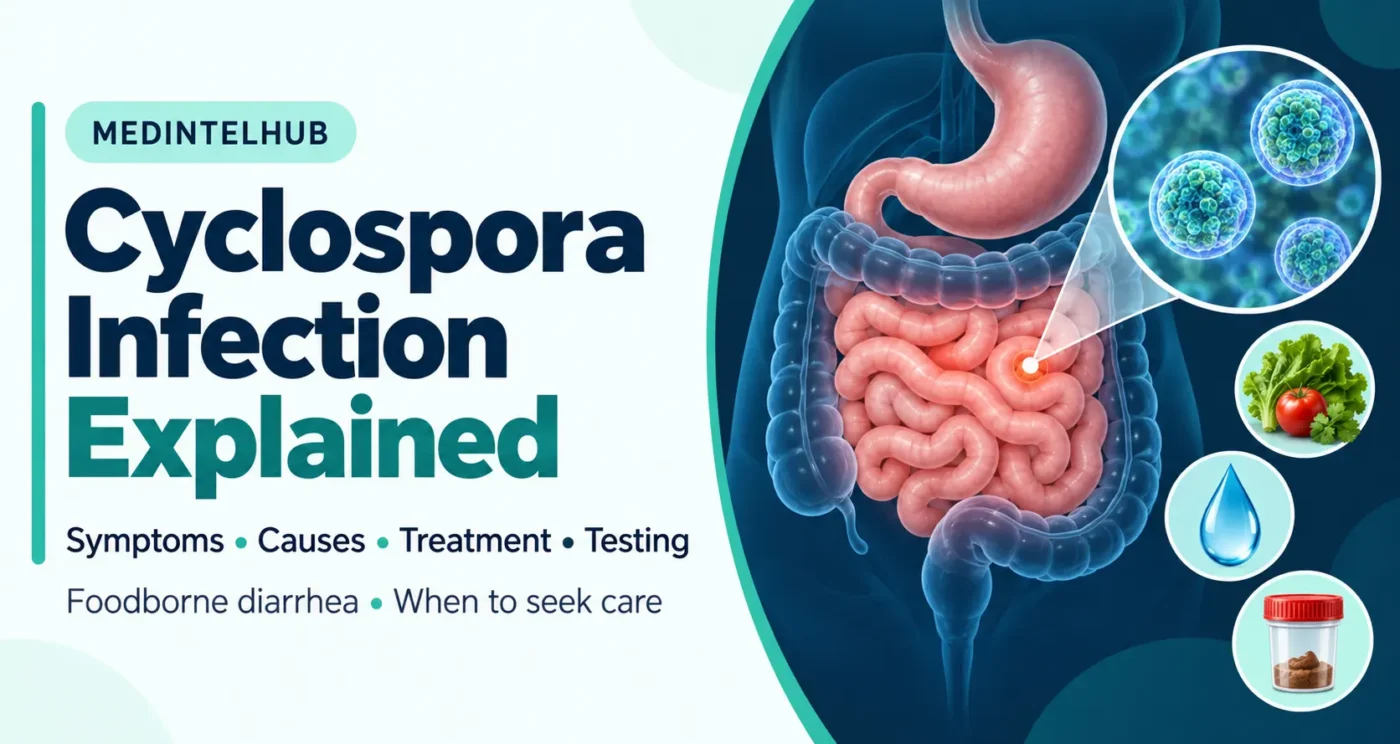
A stomach bug that lasts a day or two is unpleasant. Diarrhea that continues for a week, seems to improve, and then unexpectedly returns is a different experience—and one possible cause is Cyclospora.
Cyclospora cayetanensis is a microscopic parasite that infects the small intestine. The illness it causes is called cyclosporiasis. People usually become infected after eating food or drinking water contaminated with the parasite. Fresh produce has been linked to numerous outbreaks, but Cyclospora can also be acquired during travel to areas where the infection occurs regularly.
The most recognizable symptom is watery, often frequent diarrhea. Loss of appetite, stomach cramps, bloating, gas, nausea, fatigue, and unintended weight loss can occur as well. Symptoms typically start about a week after exposure, although the interval can be shorter or considerably longer. Without effective treatment, illness can persist for weeks and sometimes follows a frustrating pattern in which diarrhea improves and then returns.
Cyclospora can also be surprisingly difficult to diagnose. A routine stool test does not necessarily include appropriate testing for the parasite, and people may shed too few organisms at a given moment for one sample to detect the infection. That makes the patient’s history—including recent travel, food exposures, outbreaks, and the duration of diarrhea—particularly useful.
This guide explains what Cyclospora infection feels like, where it comes from, how doctors test for it, which treatment works best, how to reduce exposure, and when prolonged diarrhea requires medical attention.
Cyclospora at a Glance
| Question | Key point |
|---|---|
| What is Cyclospora? | A microscopic single-celled parasite called Cyclospora cayetanensis. |
| What illness does it cause? | Cyclosporiasis, an infection of the small intestine. |
| Main symptom | Watery, frequently recurring diarrhea. |
| When do symptoms begin? | Usually about one week after exposure, but roughly 2 days to 2 weeks or longer is possible. |
| How does it spread? | Mainly through contaminated food or water. |
| Is direct person-to-person spread common? | No. The parasite generally needs at least 1–2 weeks outside the body to become infectious. |
| Can you get it in the United States? | Yes. U.S. outbreaks have repeatedly been associated with contaminated fresh produce. |
| How is it diagnosed? | Stool testing specifically capable of detecting Cyclospora. Multiple specimens may occasionally be needed. |
| Preferred treatment | Prescription trimethoprim-sulfamethoxazole, or TMP-SMX. |
| Can it clear without treatment? | Some otherwise healthy people eventually recover, but illness can be prolonged or relapse. |
| Can washing produce guarantee removal? | No. Washing reduces general food-safety risks but cannot reliably remove all Cyclospora. |
| When should you seek care? | Persistent or recurrent diarrhea, dehydration, significant weight loss, high-risk health conditions, or severe symptoms warrant evaluation. |
What Is Cyclospora?
Cyclospora cayetanensis is a microscopic protozoan parasite. When a person swallows infectious forms of the parasite in contaminated food or water, Cyclospora reaches the digestive tract and infects cells lining the small intestine. The resulting gastrointestinal illness is called cyclosporiasis.
The organism is far too small to see in food or water. Contaminated produce usually does not look, smell, or taste different.
That makes Cyclospora quite different from food that has visibly spoiled. Someone could eat an attractive salad, bowl of herbs, berries, or another fresh food and have no reason to suspect contamination at the time.
Cyclospora is also different from many familiar intestinal infections in the way it spreads. The parasite passed in an infected person’s stool is not normally capable of infecting another person immediately. It must mature in the environment first.
That unusual life cycle explains why direct transmission between people is considered unlikely.
What Are the Symptoms of Cyclospora Infection?
The hallmark symptom is watery diarrhea, often accompanied by frequent bowel movements.
CDC lists several other common symptoms:
- loss of appetite
- unintended weight loss
- abdominal cramps or discomfort
- bloating
- increased gas
- nausea
- fatigue
Less-common symptoms can include:
- vomiting
- headache
- body aches
- low-grade fever
- other flu-like symptoms
Some infected people develop few symptoms or none at all, particularly in areas where exposure to the parasite occurs more regularly.
What Does Cyclospora Diarrhea Look Like?
The classic description is watery diarrhea.
The number of bowel movements varies from person to person. Some people experience frequent episodes throughout the day, while others have a less dramatic but persistent change in their usual bowel pattern.
Stool color alone cannot diagnose Cyclospora. Green, yellow, or brown watery stool can occur for many reasons, including rapid movement of intestinal contents.
Visible blood is not a typical defining feature of cyclosporiasis. Bloody diarrhea deserves medical evaluation because bacterial infections, inflammatory bowel disease, ischemic conditions, and other disorders may need to be considered.
Symptoms May Develop Gradually
Cyclospora does not always produce the dramatic overnight onset associated with certain types of food poisoning.
A person might first notice loose stools and extra gas, then find that several days later they are eating less, feeling drained, and losing weight because diarrhea has continued.
That slower course can make the connection to a meal from the previous week difficult to recognize.
Fatigue Can Be Significant
People sometimes focus so heavily on the diarrhea that fatigue receives less attention.
Prolonged fluid losses, reduced food intake, disrupted sleep, and the intestinal infection itself can leave someone unusually tired. CDC notes that fatigue can sometimes continue after the gastrointestinal symptoms have stopped.
For someone who normally exercises, works long shifts, or cares for children, the change may be noticeable: routine activities begin to feel disproportionately exhausting.
Weight Loss Can Occur
Repeated watery stools and poor appetite may result in unintended weight loss.
A small temporary change in weight during gastrointestinal illness often reflects a combination of reduced intake and fluid loss. More substantial or ongoing weight loss is a reason to seek medical evaluation, particularly if diarrhea continues.
How Soon Do Cyclospora Symptoms Start?
Symptoms usually appear about one week after exposure.
CDC gives a broader possible range of approximately 2 days to 2 weeks or longer after consuming contaminated food or water.
That relatively long incubation period makes food-source investigations difficult.
Imagine developing diarrhea on a Monday. The contaminated food might not have been Sunday’s dinner or even something eaten over the weekend. Exposure could have occurred the previous week.
During outbreaks, public-health investigators therefore ask patients detailed questions about foods eaten over an extended period rather than only the most recent meals.
How Long Does Cyclospora Last?
The duration varies considerably.
Without treatment, CDC says cyclosporiasis may last anywhere from a few days to a month or longer. Symptoms can disappear and then return one or more times.
This remitting-relapsing pattern is one of the more characteristic features of Cyclospora infection.
Someone may experience several difficult days of diarrhea, begin to improve, return to a normal diet and schedule, and then develop watery stools again.
That temporary improvement does not necessarily mean a new infection occurred.
Why Does Cyclospora Diarrhea Come Back?
Cyclospora can remain in the intestine when untreated infection has not completely resolved.
As the intensity of infection and the body’s response change, symptoms may temporarily settle before returning.
Repeated episodes of diarrhea over several weeks are not specific to Cyclospora, however. Giardia, other parasites, medication effects, inflammatory bowel conditions, post-infectious syndromes, and several other problems can also produce persistent or fluctuating symptoms.
Testing is therefore more useful than trying to identify the cause solely from the pattern.
What Causes Cyclospora Infection?
Cyclosporiasis develops after a person swallows infectious Cyclospora organisms, usually in food or water contaminated by human fecal material.
The phrase “fecal contamination” does not necessarily mean that visible feces were present on someone’s meal.
Contamination can occur much earlier in the food-production chain through contaminated water, sanitation failures, handling practices, environmental exposure, or other routes.
Fresh fruits, vegetables, and herbs are especially relevant because many are eaten raw and therefore never go through a cooking step capable of killing the parasite.
Can Cyclospora Spread From Person to Person?
Direct person-to-person transmission is considered unlikely.
This is one of the most useful facts for understanding Cyclospora.
When the parasite leaves an infected person’s body in stool, it is not normally infectious immediately. CDC states that Cyclospora generally needs at least one to two weeks in the environment before it becomes capable of causing another infection.
That differs from pathogens such as norovirus, which can spread efficiently and directly between people.
It does not mean sanitation is unimportant. Human fecal contamination is still ultimately involved in Cyclospora transmission. An infected person’s waste can contaminate the environment, water, or food-production systems, where the parasite can later mature and become infectious.
Good sanitation and hand hygiene remain fundamental food-safety measures.
What Foods Have Been Linked to Cyclospora?
U.S. Cyclospora outbreaks have repeatedly involved fresh produce.
FDA and CDC have identified past associations with products including:
- leafy greens
- raspberries
- basil
- cilantro
- parsley
- cabbage
- broccoli
- snow peas
- sugar snap peas
- other fresh fruits, vegetables, and herb products
The exact foods involved vary from outbreak to outbreak.
This does not mean these foods are normally unsafe.
Millions of people eat fresh produce safely every day. The issue arises when a particular product or batch becomes contaminated somewhere along the growing, harvesting, processing, packing, or distribution chain.
During an identified outbreak, the most useful action is to follow the specific recall or public-health advisory rather than avoiding an entire food category indefinitely.
Can You Get Cyclospora in the United States?
Yes.
Cyclospora was once primarily discussed in the context of international travel, but domestically acquired infections and foodborne outbreaks are now well documented in the United States.
In fact, U.S. public-health agencies have investigated numerous outbreaks associated with fresh produce.
A lack of international travel therefore does not exclude the diagnosis.
2026 Cyclospora Outbreak Update
Cyclospora has been particularly prominent in U.S. surveillance during 2026.
CDC reported a marked increase in laboratory-confirmed domestically acquired cases beginning in May 2026 and has been investigating multiple clusters. One large multistate outbreak was linked through epidemiologic and traceback investigations to processed iceberg lettuce sourced from central Mexico.
Because outbreak investigations change as new evidence becomes available, readers concerned about a recent food exposure should check the latest CDC and FDA food-safety alerts rather than relying on older lists of implicated products.
FDA Foodborne Outbreak Investigations
Where in the World Is Cyclospora Common?
Cyclosporiasis occurs in many countries and is especially associated with tropical and subtropical regions.
The infection appears to have seasonal patterns in areas where it occurs regularly, although the timing varies by location and is not completely understood.
Travel is therefore an important part of the history when someone develops persistent watery diarrhea.
A traveler may not become ill until after returning home, since symptoms commonly begin days after exposure.
Anyone who develops prolonged diarrhea after international travel should mention both the destination and the timing of travel to the clinician evaluating the illness.
Who Is More Likely to Become Seriously Ill?
Anyone can develop cyclosporiasis.
For many otherwise healthy people, the infection is uncomfortable and prolonged rather than life-threatening. Certain individuals, however, may have a harder time with the illness or with the dehydration it causes.
Greater concern is warranted for:
- people with weakened immune systems
- people taking immunosuppressive medications
- people living with certain immune-compromising conditions
- older adults who become dehydrated easily
- young children with substantial fluid losses
- anyone unable to maintain adequate fluid intake
- people already medically fragile or nutritionally compromised
FDA notes that children, older adults, and people with weakened immune systems may experience more severe illness or complications related to dehydration.
People with compromised immune systems may also experience more prolonged illness and can require individualized treatment plans.
How Is Cyclospora Diagnosed?
Diagnosis is made by identifying evidence of Cyclospora in a stool sample.
That sounds straightforward, but Cyclospora testing has several limitations that patients may not realize.
Routine Stool Testing May Not Automatically Include Cyclospora
A doctor can order an “ova and parasite” stool examination for persistent diarrhea, but Cyclospora requires specialized laboratory methods that are not routinely performed by every laboratory.
CDC specifically advises healthcare professionals to request Cyclospora testing when the infection is suspected.
Similarly, modern gastrointestinal PCR panels can test for many pathogens at once—but not every GI PCR panel includes Cyclospora.
A patient can therefore receive a negative gastrointestinal test without necessarily having undergone an appropriate test for this parasite.
Why Can Cyclospora Be Missed?
Even people with significant diarrhea may shed Cyclospora organisms in relatively small numbers or intermittently.
One stool specimen collected on one particular day may contain too little material for detection.
CDC consequently notes that several specimens collected on different days may sometimes be needed. A single negative sample does not always exclude cyclosporiasis when the clinical suspicion remains strong.
This does not mean everyone with diarrhea needs repeated parasite testing. The decision depends on duration, exposures, travel, immune status, outbreak information, and other possible diagnoses.
What Laboratory Tests Can Detect Cyclospora?
Depending on the laboratory, detection methods can include:
- molecular testing such as PCR
- microscopic examination after special concentration techniques
- modified acid-fast staining
- modified safranin staining
- ultraviolet fluorescence microscopy
Cyclospora oocysts have characteristic microscopic features, and molecular tests look for genetic material from the parasite.
For patients, the practical point is simpler: the test has to be capable of looking specifically for Cyclospora.
What Should You Tell Your Doctor if Cyclospora Is Possible?
A clear history can help clinicians decide which tests to request.
Mention:
- how long the diarrhea has lasted
- whether it is watery or bloody
- whether symptoms disappeared and returned
- recent international travel
- foods eaten before symptoms started
- whether anyone else who ate the same food became ill
- known exposure to a food recall or outbreak
- recent antibiotics
- immune-suppressing medications or conditions
- fever, vomiting, significant abdominal pain, or weight loss
Do not limit the food history to what you ate the day before symptoms appeared. Cyclospora commonly has an incubation period of about a week.
Cyclospora vs Other Causes of Diarrhea
Symptoms alone cannot reliably distinguish Cyclospora from every other gastrointestinal illness.
| Condition | Typical clues |
|---|---|
| Cyclospora | Watery diarrhea, often persistent or relapsing; bloating, gas, appetite loss, fatigue; food/water exposure or travel may be present |
| Giardia | Prolonged diarrhea, gas, bloating, cramps; stools may be greasy or foul-smelling; often associated with contaminated water |
| Cryptosporidium | Watery diarrhea; can follow contaminated drinking or recreational water exposure; may be prolonged in immunocompromised people |
| Viral gastroenteritis | Often more abrupt onset; diarrhea and vomiting may spread rapidly through households or groups |
| Bacterial foodborne infection | Can cause diarrhea, fever, abdominal pain, and sometimes blood or mucus depending on the organism |
| Medication-related diarrhea | Begins or worsens after a medication change, antibiotic course, supplement, or other exposure |
| Inflammatory bowel disease | Can produce persistent or recurrent diarrhea, abdominal pain, bleeding, weight loss, and symptoms unrelated to a recent infection |
CDC’s Yellow Book recognizes Cyclospora as an important cause of persistent diarrhea in travelers and notes that protozoal illnesses can persist much longer than typical viral gastroenteritis.
The correct treatment varies considerably among these conditions, which is why persistent diarrhea should not automatically be treated with whichever antibiotic happened to work for a previous stomach infection.
How Is Cyclospora Treated?
The treatment of choice for cyclosporiasis is the prescription antibiotic combination trimethoprim-sulfamethoxazole, usually abbreviated TMP-SMX.
It may also be recognized by brand names such as Bactrim or Septra.
The appropriate prescription regimen depends on the patient’s age, health, immune status, medication history, pregnancy status, kidney function, allergies, and other clinical considerations. For that reason, this article does not provide individualized dosing instructions.
How Quickly Does Treatment Work?
Effective antimicrobial treatment can shorten the illness, although the exact speed of improvement varies.
Someone who has already been ill for weeks may need time for appetite, bowel habits, hydration, and energy levels to return to normal even after the parasite has been treated.
Persistent symptoms after treatment should be reassessed rather than automatically leading to repeated self-treatment.
Possible explanations include incomplete response, reinfection, another gastrointestinal infection, medication effects, post-infectious intestinal symptoms, or an unrelated digestive disorder.
Can Cyclospora Go Away Without Antibiotics?
Yes, some otherwise healthy people eventually recover without treatment.
CDC states that most people with healthy immune systems will ultimately recover, but untreated illness can persist for a few days to a month or longer and may relapse.
That does not mean prolonged diarrhea should simply be ignored.
Weeks of diarrhea can lead to dehydration, weight loss, disruption of nutrition, missed work, and significant fatigue. Treatment can also be especially relevant for people with compromised immune systems or prolonged symptoms.
If Cyclospora is suspected or confirmed, the decision about treatment should be made with a healthcare professional.
What If You Are Allergic to Sulfa Drugs?
This is one of the more difficult aspects of Cyclospora treatment.
CDC states that no highly effective alternative equivalent to TMP-SMX has been identified for people who cannot tolerate the medication. Management can involve supportive care or other clinician-directed strategies depending on the severity of illness and the nature of the allergy.
Patients should not assume that another common antiparasitic drug will work just as well.
For example, CDC reports that drugs including metronidazole, tinidazole, azithromycin, doxycycline, and trimethoprim used alone have not shown useful activity against Cyclospora based on available evidence.
This matters because metronidazole and tinidazole are commonly associated with treatment of other intestinal parasites. Cyclospora is different.
People with a history of serious medication allergy should tell the prescribing clinician exactly what reaction occurred rather than simply saying they “cannot take antibiotics.”
Do not attempt a medication rechallenge or allergy desensitization on your own.
Treatment During Pregnancy and Breastfeeding
Pregnancy or breastfeeding changes how medication risks and benefits are assessed.
Someone who is pregnant, could be pregnant, or is breastfeeding should tell the clinician before starting treatment for cyclosporiasis.
The choice to treat, the medication selected, and the timing of treatment need to take into account the severity of infection, dehydration risk, stage of pregnancy, infant factors where breastfeeding is involved, and the individual’s medical history.
Do not avoid necessary medical evaluation simply because treatment decisions are more complicated during pregnancy. Significant or prolonged diarrhea can itself create problems through dehydration and inadequate nutrition.
Fluids and Supportive Care
Replacing lost fluids is an important part of managing any significant diarrheal illness.
For mild cases, regular fluids may be enough. When diarrhea is frequent, oral rehydration solutions can replace both water and electrolytes more effectively than relying entirely on plain water.
Small, frequent sips may be easier to tolerate if nausea is present.
As appetite returns, food can usually be reintroduced according to tolerance rather than following an unnecessarily restrictive diet for days.
Children, older adults, and medically vulnerable people can become dehydrated more quickly and may need earlier evaluation.
Be Careful With Anti-Diarrheal Medicines
Over-the-counter medicines that slow bowel movements can sometimes help selected adults with uncomplicated watery diarrhea.
They are not appropriate for every diarrheal illness.
People with bloody stools, significant fever, severe abdominal pain, suspected invasive infection, or substantial illness should seek medical advice rather than automatically suppressing diarrhea.
Children and people with significant underlying medical conditions also need individualized guidance.
Can Cyclospora Cause Complications?
Most people recover, and cyclosporiasis is not usually life-threatening.
The most practical complications are consequences of prolonged diarrhea, including:
- dehydration
- electrolyte disturbances
- reduced food intake
- unintended weight loss
- fatigue
- nutritional problems
CDC has also reported less-common complications including malabsorption, cholecystitis, and reactive arthritis. These are not what most people with Cyclospora experience, but they have been described.
Dehydration
The body loses both water and electrolytes with repeated watery stools.
Possible signs of dehydration include:
- unusually dry mouth
- strong thirst
- dark urine
- urinating much less frequently
- dizziness when standing
- weakness
- unusual sleepiness
- rapid heartbeat
More severe dehydration can cause confusion, fainting, very little urine, or difficulty staying awake and requires urgent medical attention.
Malabsorption and Weight Loss
Because Cyclospora affects the small intestine, prolonged infection can interfere with normal absorption of nutrients.
For most otherwise healthy people this does not progress to severe nutritional disease, but continued diarrhea accompanied by noticeable weight loss deserves evaluation.
How Can You Prevent Cyclospora Infection?
There is currently no vaccine for Cyclospora. Prevention focuses on safer food and water practices and following current food-recall information.
Wash Hands Before Preparing Food
Wash hands with soap and water before and after handling fresh fruits and vegetables.
Hand hygiene reduces many types of foodborne contamination even though Cyclospora’s unusual life cycle makes immediate direct person-to-person spread unlikely.
Rinse Fresh Produce Under Running Water
CDC recommends washing fruits and vegetables thoroughly under clean running water before eating, cutting, or cooking them.
Firm produce such as cucumbers or melons can be scrubbed with a clean produce brush.
Damaged or bruised portions should be removed.
Washing Cannot Guarantee Removal
This limitation is important.
Cyclospora can adhere to fresh produce in ways that make complete removal difficult. Thorough rinsing is still worthwhile, but it does not guarantee that contaminated produce has been made safe.
A person should therefore follow official recalls even if they intend to wash the product carefully.
Do Not Wash Produce With Soap or Bleach
FDA advises consumers not to use soap or bleach on produce.
These products are not appropriate substitutes for proper produce handling, and standard chlorine-based sanitizers are not reliably effective against Cyclospora.
Use clean running water for routine produce washing.
Cooking Can Kill Cyclospora
For produce that is normally cooked, heat provides an additional layer of protection.
CDC’s August 2026 prevention guidance states that cooking produce to at least 158°F (70°C) can kill Cyclospora.
Obviously, many foods associated with outbreaks—salad greens, herbs, and some fruits—are normally eaten raw, which limits the usefulness of this strategy.
Avoid Recalled Foods
If CDC, FDA, or a state health department identifies a particular product in an outbreak or recall, follow those instructions even if the food looks normal.
Do not rely on smell or appearance to identify Cyclospora contamination.
Clean surfaces and containers that may have contacted a recalled product according to official food-safety instructions.
How Can Travelers Reduce Their Risk?
People traveling to tropical or subtropical areas where cyclosporiasis occurs regularly should be particularly thoughtful about food and water.
General travel precautions include choosing foods that are thoroughly cooked and served hot, using safer water sources, and being cautious with raw produce when its handling cannot be verified.
Routine chemical disinfection is less reassuring for Cyclospora than it is for some other microorganisms because the parasite is resistant to commonly used chemical sanitization methods.
The CDC Yellow Book provides current destination-specific recommendations for travelers.
CDC Yellow Book: Travelers’ Diarrhea
Can You Get Cyclospora More Than Once?
Yes.
Previous infection does not guarantee lifelong protection. CDC notes that people can become infected with Cyclospora more than once and that symptomatic reinfection can occur.
A previous confirmed episode therefore should not automatically be used to rule out Cyclospora if compatible symptoms develop after a new exposure.
At the same time, recurrent diarrhea has many possible causes, so repeat testing may be appropriate rather than simply assuming the parasite has returned.
When Should You See a Doctor for Possible Cyclospora?
A brief episode of mild diarrhea often resolves without specialized testing.
Cyclospora becomes more relevant when diarrhea is persistent, recurrent, or associated with compatible exposure history.
Consider medical evaluation when:
- watery diarrhea lasts more than several days
- diarrhea repeatedly improves and returns
- you are losing noticeable weight
- you are struggling to maintain hydration
- fatigue is becoming significant
- symptoms began after recent international travel
- you may have eaten food involved in a Cyclospora outbreak
- other people who shared a meal developed similar illness
- you have a weakened immune system
- symptoms are unusually severe
- diarrhea continues despite an initial negative stool test
FDA specifically advises people to seek medical care for diarrhea or other severe symptoms lasting more than three days after a potentially contaminated food exposure.
Do not postpone persistent gastrointestinal symptoms simply because you have a routine preventive visit scheduled in the future. MedIntelHub’s guide to what actually happens during an annual physical explains why new or ongoing symptoms may require a separate problem-focused evaluation.
When Is Diarrhea an Emergency?
Most Cyclospora infections do not require emergency treatment.
Urgent or emergency assessment becomes appropriate when diarrhea is causing major dehydration or when symptoms suggest that something more serious may be occurring.
Seek urgent medical care for:
- inability to keep fluids down
- very little or no urine
- severe dizziness or fainting
- confusion or unusual difficulty staying awake
- profound weakness
- signs of severe dehydration
- substantial or persistent blood in the stool
- severe or worsening abdominal pain
- persistent high fever
- rapidly worsening illness
- serious symptoms in a medically fragile or immunocompromised person
Infants and young children can deteriorate more quickly from fluid loss, so reduced urination, unusual sleepiness, a very dry mouth, or difficulty drinking should prompt medical attention.
Blood in the stool or severe abdominal pain should not automatically be blamed on Cyclospora simply because watery diarrhea occurred first.
Frequently Asked Questions About Cyclospora
What Is Cyclospora?
Cyclospora is a microscopic single-celled parasite. The species known to infect humans, Cyclospora cayetanensis, causes an intestinal illness called cyclosporiasis.
People usually acquire the infection from food or water contaminated with infectious forms of the parasite.
Is Cyclospora a Bacteria?
No.
Cyclospora is a protozoan parasite, not a bacterium or virus.
That distinction helps explain why some antibiotics commonly prescribed for bacterial diarrhea do not reliably treat it.
What Does Cyclospora Diarrhea Look Like?
The most characteristic feature is watery diarrhea, often with frequent bowel movements.
Color can vary and cannot confirm the diagnosis. Blood is not a classic defining feature of cyclosporiasis, so visible blood deserves medical assessment for other possible causes.
How Quickly Do Cyclospora Symptoms Start?
Usually about one week after exposure.
CDC reports a possible range from approximately two days to two weeks or longer.
Because of this delay, the food responsible may have been eaten many days before symptoms began.
How Long Does Cyclospora Last?
Untreated illness can last from several days to a month or longer.
Symptoms—especially diarrhea—may improve and then return. Fatigue can remain after the main gastrointestinal illness has settled.
Does Cyclospora Go Away on Its Own?
It can.
Most people with healthy immune systems eventually recover, but untreated infection may be prolonged and can relapse. Prescription TMP-SMX is the treatment of choice for cyclosporiasis.
People with persistent symptoms should not rely on spontaneous recovery without considering medical evaluation.
What Antibiotic Treats Cyclospora?
Trimethoprim-sulfamethoxazole (TMP-SMX) is the treatment of choice recommended by CDC.
The exact regimen should be prescribed according to the patient’s medical circumstances.
Does Metronidazole Treat Cyclospora?
It is not considered an effective treatment.
Although metronidazole treats certain other intestinal infections, CDC lists it among drugs for which available evidence suggests a lack of useful activity against Cyclospora.
Do not substitute leftover metronidazole or another antibiotic for proper diagnosis and treatment.
What Happens if I Am Allergic to Sulfa Drugs?
Tell your healthcare provider.
There is currently no alternative medication with the same established effectiveness as TMP-SMX for Cyclospora. The best approach depends on the severity of illness, immune status, and the type and seriousness of the previous allergic reaction.
Do not attempt to take a medication that previously caused a serious allergic reaction without appropriate medical supervision.
How Do Doctors Test for Cyclospora?
Cyclospora is diagnosed through stool testing.
Depending on the laboratory, this may involve PCR or specialized microscopic techniques. Because Cyclospora testing is not automatically included in every routine parasite examination or GI PCR panel, clinicians sometimes need to request it specifically.
Can a Stool Test Miss Cyclospora?
Yes.
Cyclospora may be shed intermittently and in small amounts. A single negative specimen therefore does not always exclude infection, and multiple samples collected on different days may occasionally be needed.
Whether additional testing is appropriate depends on the overall clinical picture.
Is Cyclospora Contagious From Person to Person?
Direct transmission is unlikely.
Freshly shed Cyclospora generally needs at least one to two weeks in the environment before it becomes infectious.
The parasite still ultimately spreads through fecal contamination of food, water, or the environment, which is why sanitation remains essential.
What Foods Are Most Commonly Linked to Cyclospora?
Past U.S. outbreaks have been associated primarily with fresh produce, including leafy greens, basil, cilantro, raspberries, and several other fruits, vegetables, and herbs.
The implicated product changes between outbreaks, so current public-health alerts are more useful than permanently avoiding one particular food.
Can Washing Vegetables Remove Cyclospora?
Washing is recommended, but it cannot guarantee removal.
Rinse produce thoroughly under clean running water and scrub firm produce with a clean brush. If a product has been recalled because of Cyclospora contamination, washing it should not be used as a substitute for following the recall.
Does Chlorine Kill Cyclospora?
Cyclospora is relatively resistant to routine chlorine-based sanitization.
That is one reason contaminated fresh produce can be challenging to make completely safe through washing or chemical treatment alone.
Can You Get Cyclospora From Drinking Water?
Yes.
Water contaminated with infectious Cyclospora can transmit the parasite. Food and water precautions are particularly relevant when traveling to regions where cyclosporiasis is endemic.
Can You Get Cyclospora From a Swimming Pool?
Cyclospora is not best known as a recreational-water infection in the way Cryptosporidium is.
The major recognized routes are ingestion of contaminated food or water. If diarrhea follows a swimming exposure, several other pathogens may need to be considered as well.
Does Cyclospora Cause Fever?
It can, but fever is not usually the dominant symptom.
A low-grade fever is among the less-common symptoms reported by CDC. Watery diarrhea, appetite loss, cramping, bloating, gas, nausea, weight loss, and fatigue are more characteristic.
A high or persistent fever may point toward another or additional cause and deserves evaluation.
Can Cyclospora Cause Weight Loss?
Yes.
Persistent diarrhea combined with reduced appetite can lead to unintended weight loss. Prolonged intestinal illness may also interfere with normal nutrient absorption.
Significant or continuing weight loss warrants medical evaluation.
Can Cyclospora Come Back After Treatment?
Symptoms that return deserve reassessment.
A person can be infected with Cyclospora more than once, but recurrent gastrointestinal symptoms can also have causes other than a new infection. Testing can help distinguish reinfection or persistent infection from post-infectious bowel symptoms or a different gastrointestinal condition.
When Should I Worry About Cyclospora?
Seek medical assessment when watery diarrhea persists, repeatedly returns, causes noticeable weight loss, or makes it difficult to stay hydrated.
People with weakened immune systems should generally seek care earlier.
Severe dehydration, fainting, confusion, very little urine, significant blood in the stool, severe abdominal pain, or rapidly worsening illness requires urgent medical attention.
Conclusion
Cyclospora is easy to overlook because its symptoms can resemble several other forms of gastroenteritis. The timing is also deceptive. Diarrhea may not begin until about a week after contaminated food or water was consumed, and symptoms can briefly improve before returning.
Two practical details make a major difference.
First, a generic stool test does not necessarily rule out Cyclospora. The laboratory may need a specific request, and one specimen can occasionally miss an infection because the parasite is shed intermittently.
Second, not every drug used for an intestinal parasite works against Cyclospora. TMP-SMX remains the established treatment of choice, while several familiar medications—including metronidazole—are not considered effective substitutes.
Most infections are not life-threatening, but prolonged watery diarrhea should not simply become the new normal. Persistent symptoms, dehydration, unexpected weight loss, recent travel, or a connection to a foodborne outbreak are good reasons to get evaluated.
The memorable point is simple: when watery diarrhea keeps returning, the timeline and the right stool test may matter as much as the symptoms themselves.
Resources
Centers for Disease Control and Prevention — About Cyclosporiasis
Current patient information covering transmission, timing, diagnosis, treatment, and the relapsing nature of the infection.
CDC: About Cyclosporiasis
Centers for Disease Control and Prevention — Symptoms of Cyclosporiasis
Detailed information on watery diarrhea, fatigue, appetite loss, weight loss, cramps, bloating, and symptom duration.
CDC: Cyclospora Symptoms
Centers for Disease Control and Prevention — Clinical Guidance for Cyclosporiasis
Useful information about specialized stool testing, PCR panels, and why Cyclospora may require a specific laboratory request.
CDC: Clinical Guidance for Cyclosporiasis
Centers for Disease Control and Prevention — Clinical Care of Cyclosporiasis
Current treatment guidance, including TMP-SMX and considerations when a patient cannot take the preferred medication.
CDC: Clinical Care of Cyclosporiasis
Centers for Disease Control and Prevention — Preventing Cyclosporiasis
Updated August 2026 guidance on produce washing, cooking, food safety, and the limitations of routine sanitization.
CDC: Preventing Cyclosporiasis
U.S. Food and Drug Administration — Cyclospora
Information on foodborne transmission, fresh-produce outbreaks, food handling, and FDA investigations.
FDA: Cyclospora Information
CDC Yellow Book — Travelers’ Diarrhea
Clinical and prevention guidance for diarrheal illness associated with international travel, including cyclosporiasis.
CDC Yellow Book: Travelers’ Diarrhea
MedIntelHub Editorial Policy
Learn how MedIntelHub approaches medical research, sourcing, review, and health-information standards.
Read the MedIntelHub Editorial Policy
Editorial Disclaimer
This article is intended for general educational and informational purposes. It does not diagnose Cyclospora infection, determine the cause of diarrhea, or replace individualized evaluation by a qualified healthcare professional.
Persistent diarrhea can have infectious and noninfectious causes that require different testing and treatment. A negative routine stool examination does not necessarily exclude Cyclospora because specialized testing may be required and organisms may be shed intermittently.
Do not start leftover antibiotics or substitute medications used for other intestinal infections solely on the basis of information in this article. Prescription treatment should take into account allergies, pregnancy or breastfeeding, age, immune status, kidney function, other medications, and the patient’s overall clinical condition.
Seek urgent medical care for severe dehydration, fainting, confusion, inability to maintain fluid intake, very little urine, significant blood in the stool, severe or worsening abdominal pain, or rapidly worsening illness. Infants, young children, older adults, immunocompromised people, and medically vulnerable individuals may require earlier assessment.

David Bennett
David Bennett is an author at MedIntelHub, where he creates clear, practical, and well-researched content about healthcare, medical billing, insurance, and patient education. His goal is to make complex healthcare topics easier for readers to understand and use in everyday situations. David emphasizes accuracy, transparency, and reliable sourcing, using information from trusted organizations and official healthcare resources whenever possible. Content published by David is intended for educational purposes and should not replace advice from qualified medical, legal, or healthcare professionals.